

Young, single mothers from economically disadvantaged households are among those at highest risk of killing their own children before taking their own lives, according to a recent poll conducted by a team at the Taiwan Associa-tion Against Depression for the Social and Economic Burden of Depression initiative.
The initiative was launched in 2002 by Norman Sartorius, the former director of the WHO's mental health program, to engage medical, economic and political figures around Asia in an effort to address the consequences of depression in the region.
Taiwanese mothers in all age groups are beleaguered with different problems and difficulties, Lai Teh-jen (
The team found that mothers in their 20s were mostly burdened by financial problems, those in their 30s and 40s were usually worried about their children's educational problems, while those above 50 were mostly concerned about their health.
Single mothers appear to carry a heavier emotional load since they have to face multiple challenges, including finances, their children's education and personal health, Lee said.
At the news conference, Lee Ming-been (李明濱), the director of the Suicide Prevention Center, highlighted the tragedy of seeing mothers killing their own children before taking their own lives because they couldn't bear the thought of leaving their young ones alone.
The past 14 years have lay witness to 198 such incidents, with 101 cases of mothers dying together with their children and 22 cases involving the deaths of entire families, Lee said.

McDonald’s Taiwan today said it has halted sales of its limited edition Sea Flavor Fried Shrimp Burger and its double-patty version, after the importer notified the company last night that the shrimp patties contained nitrofurans — a group of synthetic antibiotics — and their metabolites. Sales of the shrimp burgers were suspended nationwide at 10:30am today and customers who purchased them yesterday or in the early hours of this morning would be eligible for refunds, the company said, adding that more details would be announced within a week. McDonald’s Taiwan said it was notified last night that subsequent batch testing had found
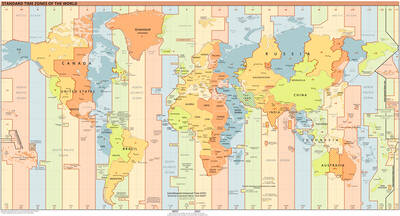
UNNECESSARY?: While some said that the switch would mean more sunlight exposure for workers, others said the government should promote flexible working hours instead An online debate has resurfaced on whether Taiwan should switch to the same time zone as Japan, with supporters citing its geographic location and saying that China would have no right to object. The debate erupted on Threads when users suggested that Taiwan should stop using the same time zone as China, Malaysia and Singapore, GMT+8, and instead switch one hour ahead to the same time zone as Japan and South Korea, GMT+9, which it is geographically closer to. Under GMT+9 the sun would set later year-round, meaning that people would see sunlight after getting off work even in the winter and

Malaysian Prime Minister Anwar Ibrahim’s remarks that Taiwan is a Chinese province seeking independence threaten regional peace and stability and could undermine Taiwanese businesses’ confidence in investing in Malaysia, the Ministry of Foreign Affairs (MOFA) said today. Anwar recently made remarks implying that Taiwan is a province seeking to separate from China, effectively legitimizing Beijing’s position on using force to take Taiwan, the ministry said in a statement. The Republic of China, Taiwan, is a sovereign, independent country and is not subordinate to the People’s Republic of China, MOFA said, adding that that fact would not be changed no matter
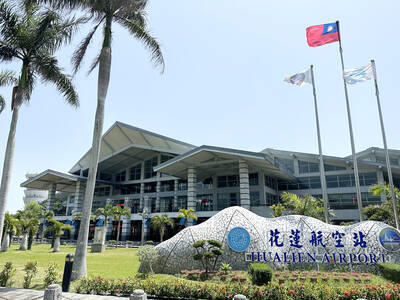
The Civil Aviation Administration (CAA) yesterday confirmed that Uni Air has submitted an application to suspend its Taipei-Hualien flights due to persistently low passenger rates. The airline, which is the only operator of the Taipei-Hualien route, proposed to suspend the service after Mandarin Airlines, another domestic flight carrier, applied to suspend flights to Hualien departing from Kaohsiung and Taichung earlier this year. The average load factor of the Taipei-Hualien flights during the first six months was 24.2 percent, CAA data showed. The average seat occupancy rate dropped even further to 17 percent last month, even though it was the beginning


 RSS
RSS