


More than 1,000 Thai workers at Formosa Plastics Group's (FPG) plant in Mailiao (
Labor and management reached an agreement after nearly eight hours of negotiations. While the workers will continue to pay NT$2,500 for accommodation out of their pockets, the NT$18,000 brokerage service fee will be shouldered by the employer if the worker maintains a perfect attendance record.
Deputy director-general of the bureau of employment and vocational training, Lin San-quei (
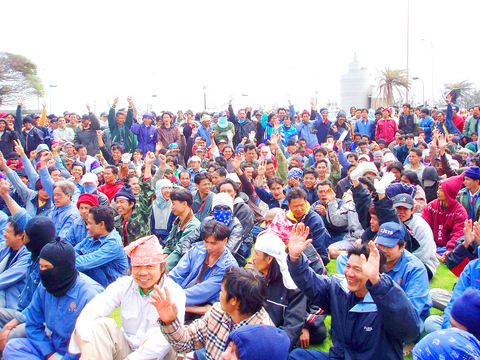
PHOTO: CHUANG YU-FENG, TAIPEI TIMES
"The atmosphere [of the negotiation] was peaceful," said Lin, adding that minor disagreements among all the parties involved on several issues were inevitable.
Lin said the local labor bureau in Yunlin will now be in charge of following up the case.
With regards to the frequent foreign labor disputes at FPG, Lin said they pointed to a management problem but could be resolved through the negotiation mechanism.
"Large-scale protests may just break out any time," Lin said. "Management has to know how to read the signs and be quick to identify these problems."
The strike began on Monday with a relatively mild sit-in protest. Early yesterday, however, the protest turned violent as the 1,300 Thai workers were joined by Filipino workers at the plant.
The protesters marched on an 8km, four-lane road outside the plant, waved iron bars in the air, pounded them on water jugs and blocked the entrance to FPG's administrative offices.
Approximately 3,000 protesters participated in the second day of the strike yesterday.
Representatives from CTCI Corp (
The workers presented several requests on Monday, including severance pay for workers who wish to terminate their employment contract early but have worked on the project for less than a year, medical coverage by the National Health Insurance and additional work opportunities. They also asked that they be freed from paying accommodation and brokerage charges.
The Council of Labor Affairs (CLA) issued a statement on Monday that management and labor had reached an agreement on the majority of the requests, but continued to differ on the issue of accommodation and brokerage charges.
FPG entrusted CTCI and a Korean company with the task of recruiting foreign laborers to work on the project in its Mailiao plant.
The Thai workers employed by CTCI were said to have signed and approved the content of the contracts before they arrived in Taiwan.
However, after starting work in Taiwan and coming into contact with the workers hired by the Korean firm, they learned that the Korean company did not charge the workers for accommodation and brokerage services. This seemingly unfair treatment then triggered the protests.
A CTCI spokesperson, who declined to be identified, said yesterday that everything the company did was legal, adding that the dissatisfaction expressed by the Thai workers was merely a problem of miscommunication.
She said that the workers misinterpreted the difference between the contracts with CTCI and with the Korean firm. The pay given by the Korean company already factors in deductions for accommodation and brokerage charges, whereas CTCI, as stated in its contract, does not include these fees. When considered from this perspective, she said, the wages are actually the same.
Although the dispute ended in harmony, labor rights advocates noted that these issues have continued to plague the Mailiao area for years.
"Mailiao is the black hole of the law," said Wu Jing-ru (吳靜如), a rep-resentative of Taiwan International Workers' Association (TIWA), adding that the area had been inaccessible to outsiders since the first labor dispute broke out a decade ago, making it difficult to assess the real situation.
"I don't think these workers will wage such a big protest simply because of money for meals," Wu said.
According to estimates by the Yunlin police department, FPG has recruited 3,384 workers from Thailand and 1,729 from the Philippines as of last week.
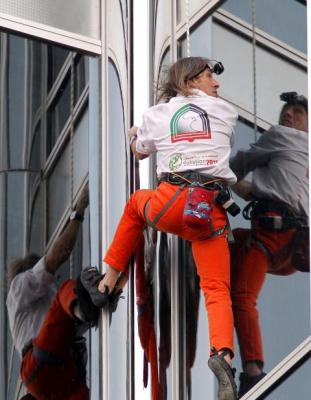
Alain Robert, known as the "French Spider-Man," praised Alex Honnold as exceptionally well-prepared after the US climber completed a free solo ascent of Taipei 101 yesterday. Robert said Honnold's ascent of the 508m-tall skyscraper in just more than one-and-a-half hours without using safety ropes or equipment was a remarkable achievement. "This is my life," he said in an interview conducted in French, adding that he liked the feeling of being "on the edge of danger." The 63-year-old Frenchman climbed Taipei 101 using ropes in December 2004, taking about four hours to reach the top. On a one-to-10 scale of difficulty, Robert said Taipei 101
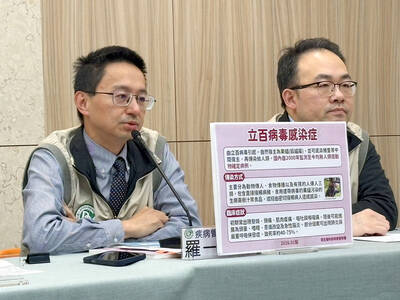
Nipah virus infection is to be officially listed as a category 5 notifiable infectious disease in Taiwan in March, while clinical treatment guidelines are being formulated, the Centers for Disease Control (CDC) said yesterday. With Nipah infections being reported in other countries and considering its relatively high fatality rate, the centers on Jan. 16 announced that it would be listed as a notifiable infectious disease to bolster the nation’s systematic early warning system and increase public awareness, the CDC said. Bangladesh reported four fatal cases last year in separate districts, with three linked to raw date palm sap consumption, CDC Epidemic Intelligence
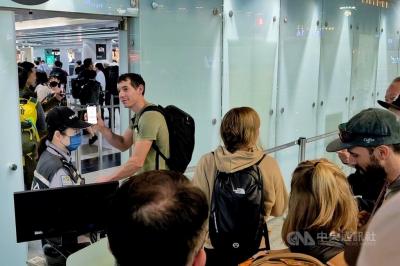
US climber Alex Honnold left Taiwan this morning a day after completing a free-solo ascent of Taipei 101, a feat that drew cheers from onlookers and gained widespread international attention. Honnold yesterday scaled the 101-story skyscraper without a rope or safety harness. The climb — the highest urban free-solo ascent ever attempted — took just more than 90 minutes and was streamed live on Netflix. It was covered by major international news outlets including CNN, the New York Times, the Guardian and the Wall Street Journal. As Honnold prepared to leave Taiwan today, he attracted a crowd when he and his wife, Sanni,
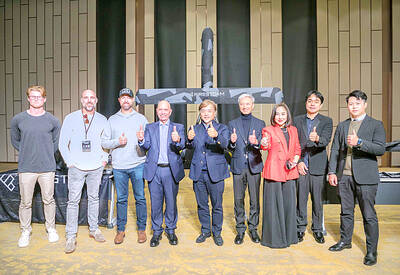
Taiwanese and US defense groups are collaborating to introduce deployable, semi-autonomous manufacturing systems for drones and components in a boost to the nation’s supply chain resilience. Taiwan’s G-Tech Optroelectronics Corp subsidiary GTOC and the US’ Aerkomm Inc on Friday announced an agreement with fellow US-based Firestorm Lab to adopt the latter’s xCell, a technology featuring 3D printers fitted in 6.1m container units. The systems enable aerial platforms and parts to be produced in high volumes from dispersed nodes capable of rapid redeployment, to minimize the risk of enemy strikes and to meet field requirements, they said. Firestorm chief technology officer Ian Muceus said


 RSS
RSS