


■ Politics
Former premier dies at 93
Former premier Sun Yun-suan (孫運璿), hailed as the architect of Taiwan's dynamic economic growth since the 1980s, died of heart failure yesterday. He was 93. A senior adviser to the president, Sun was hospitalized for heart and lung complications last month and died early yesterday at the Veterans General Hospital in Taipei, his doctors said. President Chen Shui-bian (陳水扁) sent condolences to Sun's family and hailed him as the "creator" of Taiwan's "economic miracle." Born in China, Sun arrived in Taiwan in 1945 and was assigned by the Chinese Nationalist Party (KMT) regime to rebuild the nation's power supply system. The nation's per capita GNP was US$320 when Sun, an engineer by training, became economic minister in 1969. By the time he stepped down from the premiership in 1984, per capita GNP had risen to US$3,000. Sun is also remembered for his decision to set up a government-funded industrial research institute and develop the Hsinchu Science-based Industrial Park. He is survived by his wife and four children.
■ Foreign affairs
Diplomat suspected of graft
The Taiwanese representative to New Zealand has been accused of corruption and forgery by the Ministry of Foreign Affairs, according to a statement released last night. Victor Chin (秦日新), a veteran diplomat, has been accused of forging receipts in relation to expenses incurred in the performance of his duties as the director of the ministry's North American Affairs Department. A section chief of the department is also suspected of involvement. The case has been forwarded to the Taipei City branch office of the Bureau of Investigation for possible criminal charges. Minister of Foreign Affairs James Huang (黃志芳) said that ministry personnel must uphold the highest possible ethical standards in the performance of their duties. Huang also reminded ministry officials that they are not allowed to accept gifts while in office.
■ Diplomacy
Don't say `Taiwan': Vietnam
Vietnam's deputy foreign minister warned local reporters yesterday to avoid offending China by not using the name Taiwan when Vietnam hosts the APEC meeting later this year. Le Cong Phung also urged the press not to uses words like "country" or "nation" to describe any member of the group, instead using the agreed-on euphemism "member economies." "The official name for Taiwan in APEC is `Chinese Taipei' and the official name for Hong Kong is `Hong Kong-China,'" Phung said. "At the previous summit in the Republic of Korea, the host country had to abolish about 80,000 booklets, since in those booklets there was a mistake in referring to the APEC economies as `countries' or 'nations' and that was rejected very strongly by China," Phung said.
■ Politics
DPP forms poll task force
The Democratic Progressive Party (DPP) yesterday established a seven-member task force to handle nominations for the Taipei and Kaohsiung mayoral elections. The task force will also serve as a campaign team. DPP Chairman Yu Shyi-kun will lead the task force, which has been set the goal of defending Kaohsiung and winning Taipei. Yu said that the candidates will be determined by a primary that will include a public poll and a vote among party members. Meanwhile, Chinese Nationalist Party (KMT) Legislator Ting Shou-chung (丁守中) announced yesterday that he will take part in his party's primary in May to vie for its nomination for the Taipei mayoral election.

Actor Darren Wang (王大陸) was sentenced to six months in prison, commutable to a fine, by the New Taipei District Court today for contravening the Personal Data Protection Act (個人資料保護法) in a case linked to an alleged draft-dodging scheme. Wang allegedly paid NT$3.6 million (US$114,380) to an illegal group to help him evade mandatory military service through falsified medical documents, prosecutors said. He transferred the funds to Chen Chih-ming (陳志明), the alleged mastermind of a draft-evasion ring, although he lost contact with him as he was already in detention on fraud charges, they said. Chen is accused of helping a

SECURITY: Starlink owner Elon Musk has taken pro-Beijing positions, and allowing pro-China companies to control Taiwan’s critical infrastructure is risky, a legislator said Starlink was reluctant to offer services in Taiwan because of the nation’s extremely high penetration rates in 4G and 5G services, the Ministry of Digital Affairs said yesterday. The ministry made the comments at a meeting of the legislature’s Transportation Committee, which reviewed amendments to Article 36 of the Telecommunications Management Act (電信管理法). Article 36 bans foreigners from holding more than 49 percent of shares in public telecommunications networks, while shares foreigners directly and indirectly hold are also capped at 60 percent of the total, unless specified otherwise by law. The amendments, sponsored by Chinese Nationalist Party (KMT) Legislator Ko
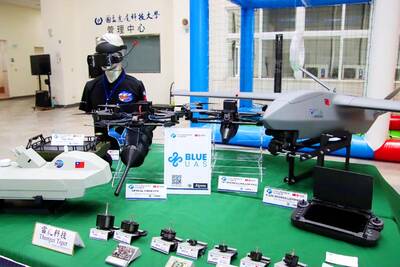
NON-RED SUPPLY: Boosting the nation’s drone industry is becoming increasingly urgent as China’s UAV dominance could become an issue in a crisis, an analyst said Taiwan’s drone exports to Europe grew 41.7-fold from 2024 to last year, with demand from Ukraine’s fight against Russian aggression the most likely driver of growth, a study showed. The Institute for Democracy, Society and Emerging Technology (DSET) in a statement on Wednesday said it found that many of Taiwan’s uncrewed aerial vehicle (UAV) sales were from Poland and the Czech Republic. These countries likely transferred the drones to Ukraine to aid it in its fight against the Russian invasion that started in 2022, it said. Despite the gains, Taiwan is not the dominant drone exporter to these markets, ranking second and fourth
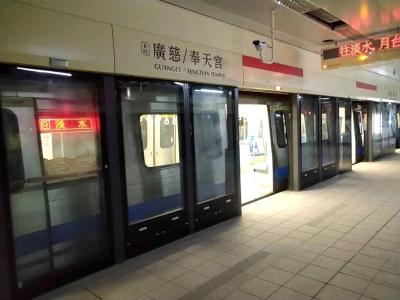
The eastern extension of the Taipei MRT Red Line could begin operations as early as late June, the Taipei Department of Rapid Transit Systems said yesterday. Taipei Rapid Transit Corp said it is considering offering one month of free rides on the new section to mark its opening. Construction progress on the 1.4km extension, which is to run from the current terminal Xiangshan Station to a new eastern terminal, Guangci/Fengtian Temple Station, was 90.6 percent complete by the end of last month, the department said in a report to the Taipei City Council's Transportation Committee. While construction began in October 2016 with an


 RSS
RSS