


The Ministry of National Defense and defense industry insiders yesterday denied a report in a Chinese-language newspaper that the military has decided to purchase 72 AH-64D Longbow Apache attack helicopters from Boeing.
The ministry said that no decision had been made regarding the procurement.
Speaking on condition of anonymity, industry insiders also denied the report, saying that Bell Helicopter had already reached an agreement to supply Taiwan with the AH-1Z King Cobra attack helicopter.
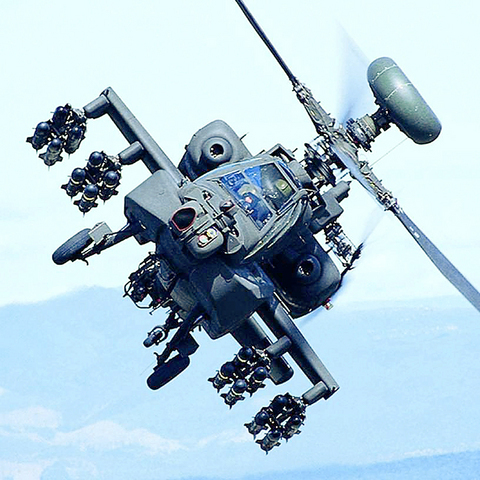
PHOTO: GLOBALSECURITY.ORG
The United Evening News reported the alleged deal with Boeing on the front page of yesterday's edition. The paper cited unnamed sources for the information in the report.
The deal is worth NT$90 billion (US$2.72 billion), according to the report, and a budget will be submitted for approval to the Legislative Yuan next year, with delivery of the helicopters to begin in 2007.
The report, however, contradicts a number of previous articles that have said Boeing's rival, Bell Helicopter, was on track to win the multi-billion dollar procurement deal.
According to an article last month in the defense magazine Jane's Defence Weekly, Bell received a formal request from Taiwan's Industrial Development Bureau to produce the AH-1Z King Cobra in cooperation with Taiwan's state-run Aerospace Industrial Development Corp.
According to the Jane's report, which cited Bell Taiwan's vice president of operations, Jeff Cromar, as a source, the AH-64D was rejected by the government because Boeing refused to allow co-production of the helicopter with Taiwan.
As Taiwan's army currently operates the AH-1W Super Cobra, an earlier variant of the King Cobra, many defense officials have been pushing for Taiwan to stick with Bell Helicopter to reduce maintenance costs, the United Evening News said in its report.
When asked about the report yesterday, Lieutenant Colonel Henry Liu (劉得詮) of the ministry's Office of the Military Spokesman cited an official statement that said the Army General Headquarters was pursuing future acquisition of weapons systems necessary for Taiwan's defense, but that no decision had been reached at this time.
The AH-64D is designed primarily for ground attack and anti-tank missions, and is equipped with a 30mm machine gun and hellfire anti-armor missiles.
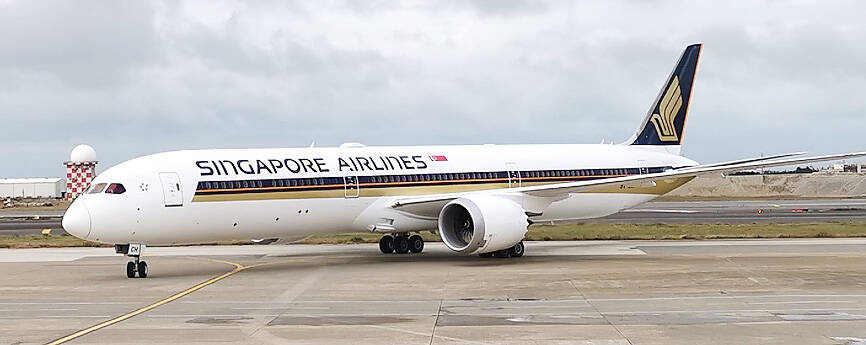
INCREASED CAPACITY: The flights on Mondays, Wednesdays, Fridays and Sundays would leave Singapore in the morning and Taipei in the afternoon Singapore Airlines is adding four supplementary flights to Taipei per week until May to meet increased tourist and business travel demand, the carrier said on Friday. The addition would raise the number of weekly flights it operates to Taipei to 18, Singapore Airlines Taiwan general manager Timothy Ouyang (歐陽漢源) said. The airline has recorded a steady rise in tourist and business travel to and from Taipei, and aims to provide more flexible travel arrangements for passengers, said Ouyang, who assumed the post in July last year. From now until Saturday next week, four additional flights would depart from Singapore on Monday, Wednesday, Friday
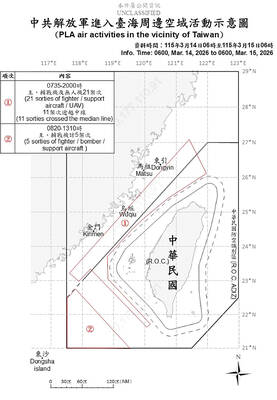
The Ministry of National Defense yesterday reported the return of large-scale Chinese air force activities after their unexplained absence for more than two weeks, which had prompted speculation regarding Beijing’s motives. China usually sends fighter jets, drones and other military aircraft around the nation on a daily basis. Interruptions to such routine are generally caused by bad weather. The Ministry of National Defense said it had detected 26 Chinese military aircraft in the Taiwan Strait over the previous 24 hours. It last reported that many aircraft on Feb. 25, when it spotted 30 aircraft, saying Beijing was carrying out another “joint combat

Taiwan successfully defended its women’s 540 kilogram title and won its first-ever men’s 640 kg title at the 2026 World Indoor Tug of War Championships in Taipei yesterday. In the women’s event, Taiwan’s eight-person squad reached the final following a round-robin preliminary round and semifinals featuring teams from Ukraine, Japan, Thailand, Vietnam, the Basque Country and South Korea. In the finals, they swept the Basque team 2-0, giving the team composed mainly of National Taiwan Normal University students and graduates its second championship in a row, and its fourth in five years. Team captain
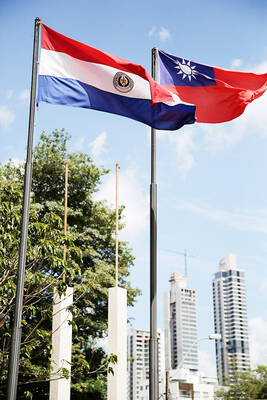
When Paraguayan opposition lawmaker Leidy Galeano returned from an all-expenses-paid tour of six Chinese cities late last year, she was convinced Paraguay risked missing out on major economic gains by sticking with longtime ally Taipei over Beijing — a message that participants on the trip heard repeatedly from Chinese officials. “Everything I saw there, I wanted for my country,” said Galeano, a member of the newly-formed Yo Creo party whose senior figures have spoken favorably about China. This trip and others like it — which people familiar with the visits said were at the invitation of the Chinese consulate in Sao Paulo


 RSS
RSS