


Among diverse municipal concerns, the encouragement of better utilization of public transportation systems and promotion of physical exercise were two top priorities addressed yesterday, as 47 mayors and city representatives from around the world shared experiences and sought solutions to these issues.
On the second day of the International Healthy Cities Conference, participating city leaders met at the City Leaders Roundtable in Taipei to continue discussions of healthy-city issues. Prior to the roundtable, mayors and city representatives signed the "2005 Taipei Healthy City Declaration" as a strong commitment to improve the physical, socio-economic and environmental health of citizens.
As the host of the roundtable, Taipei Mayor Ma Ying-jeou (
Many participating cities, including Scotland's capital Edinburgh, Copenhagen (Denmark) and Lilongwe (Malawi), addressed the importance of the establishment of public transportation and ways to encourage citizens to take good advantage of it.
Deputy Mayor of Edinburgh Steve Cardowni said the city has been trying to "get people out of their cars" and use public transport. One thing the city is planning is a "congestion-charge policy," which would require vehicles crossing the central area of the city to pay a ?2 (US$3.55) fee per day.
The policy, which is already in effect in London, was however turned down by voters in a referendum earlier this year. Cardowni said it may take years before citizens understand the benefits of the policy, but efforts to carry out the plan, as well as other measures such as park-and-ride schemes, will continue.
Morris Hanna, mayor of Marrickville in Australia, said the city has introduced "walk to work" and "walk to school" programs, encouraging people to adopt "pollution-free" and "healthy" alternatives to the sedentary lifestyle.
The "walk to school" program has also been introduced in Taipei along with the annual "Care Free Month" event. Other cities like Lilongwe have adopted similar alternative concepts.
Besides the transportation concern, Deputy Mayor of Turku (Finland), Kaija Hartiala, raised the physical-exercise issue. Taking her city as an example, Hartiala said that politicians have been promoting the exercise energetically. Good cooperation between the city government, community members and universities has successfully persuaded those who declined to do exercise out of "laziness" to start doing it for fun and get more healthy at the same time.
Ma agreed that "the laziness of people" is the most difficult part to overcome when promoting physical exercise in any city. He said that is why it is important for a city to make exercise facilities accessible and affordable to attract more people to enjoy exercising in a more convenient way.
"So the Taipei City Government has remodeled many community swimming pools and built jogging paths and bikeways around the city, so that there won't be any excuses for citizens not to exercise," he said.
The Healthy Cities Conference ends today.

Yangmingshan National Park authorities yesterday urged visitors to respect public spaces and obey the law after a couple was caught on a camera livestream having sex at the park’s Qingtiangang (擎天崗) earlier in the day. The Shilin Police Precinct in Taipei said it has identified a suspect and his vehicle registration number, and would summon him for questioning. The case would be handled in accordance with public indecency charges, it added. The couple entered the park at about 11pm on Thursday and began fooling around by 1am yesterday, the police said, adding that the two were unaware of the park’s all-day live
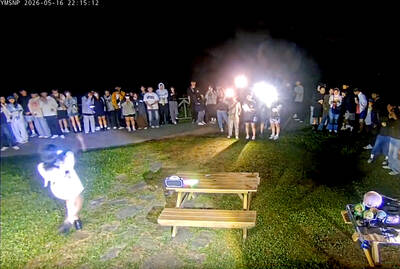
Yangmingshan National Park’s Qingtiangang (擎天崗) nature area has gone viral after a park livestream camera observed a couple in the throes of intimate congress, which was broadcast live on YouTube, drawing large late-night crowds and sparking a backlash over noise, bright lights and disruption to wildlife habitat. The area’s livestream footage appeared to show a couple engaging in sexual activity on a picnic table in the park on Friday last week, with the uncensored footage streamed publicly online. The footage quickly spread across social media, prompting a tide of visitors to travel to the site to “check in” and recreate the
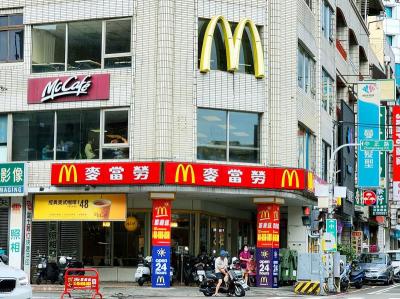
Fast food chain McDonald's is to raise prices by up to NT$5 on some products at its restaurants across Taiwan, starting on Wednesday next week, the company announced today. The prices of all extra value meals and sharing boxes are to increase by NT$5, while breakfast combos and creamy corn soup would go up by NT$3, the company said in a statement. The price of the main items of those meals, if ordered individually, would remain the same. Meanwhile, the price of a medium-sized lemon iced tea and hot cappuccino would rise by NT$3, extra dipping sauces for chicken nuggets would go up

Minister of Digital Affairs Lin Yi-ching (林宜敬) yesterday cited regulatory issues and national security concerns as an expert said that Taiwan is among the few Asian regions without Starlink. Lin made the remarks on Facebook after funP Innovation Group chief executive officer Nathan Chiu (邱繼弘) on Friday said Taiwan and four other countries in Asia — China, North Korea, Afghanistan and Syria — have no access to Starlink. Starlink has become available in 166 countries worldwide, including Ukraine, Malaysia, the Philippines and Vietnam, in the six years since it became commercial, he said. While China and North Korea block Starlink, Syria is not


 RSS
RSS