


The Mainland Affairs Council released a pamphlet highlighting Taiwan's "longstanding goodwill" toward China at an international press conference yesterday.
The pamphlet, entitled Taipei's Olive Branches, marks the first time that a government publication has been issued in simplified Chinese characters.
"[Chinese] visiting Taiwan will have access to this pamphlet. We sincerely believe that as long as we make an effort to let the seeds of goodwill and peace flourish in the heart of the Chinese people, we will be rewarded with the fruits of our labors," Mainland Affairs Council Council Chairman Joseph Wu (
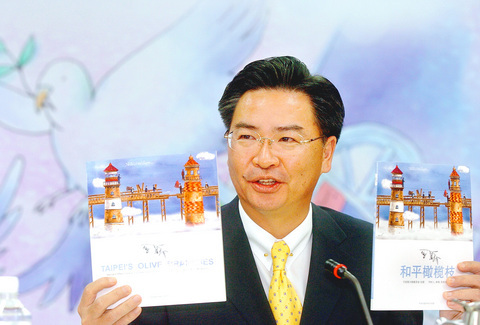
PHOTO: CHU PEI-HSIUNG, TAIPEI TIMES
The pamphlet includes 30 individual "olive branches" offered by the Democratic Progressive Party since it took executive power in 2000.
Because the government's main priorities in cross-strait negotiations -- such as fruit exports, direct charter flights and tourism liberalization -- are slow in producing results, Wu said that Taiwan's goodwill could be spread to China more directly and efficiently through the pamphlet.
In response to a question on negotiations over cross-strait charter flights, Wu said that progress had been limited despite the government marking this as a priority issue.
"We haven't come to the point where negotiations can take place. The Chinese side doesn't seem to be very eager to talk with Taiwan," he said.
While admitting there were difficulties in cross-strait negotiations, Wu said that this did not mean that there was no chance of talks taking place.
"I would urge the Chinese government to take negotiations with Taiwan seriously," he said.
As for Chinese President Hu Jintao's (胡錦濤) latest proposal that the US and China jointly safeguard peace and stability across the Taiwan Strait, Wu responded by saying that the international community should jointly demand that the Chinese government not use military force against Taiwan.

The military has spotted two Chinese warships operating in waters near Penghu County in the Taiwan Strait and sent its own naval and air forces to monitor the vessels, the Ministry of National Defense (MND) said. Beijing sends warships and warplanes into the waters and skies around Taiwan on an almost daily basis, drawing condemnation from Taipei. While the ministry offers daily updates on the locations of Chinese military aircraft, it only rarely gives details of where Chinese warships are operating, generally only when it detects aircraft carriers, as happened last week. A Chinese destroyer and a frigate entered waters to the southwest
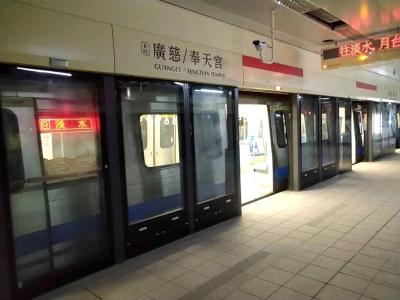
The eastern extension of the Taipei MRT Red Line could begin operations as early as late June, the Taipei Department of Rapid Transit Systems said yesterday. Taipei Rapid Transit Corp said it is considering offering one month of free rides on the new section to mark its opening. Construction progress on the 1.4km extension, which is to run from the current terminal Xiangshan Station to a new eastern terminal, Guangci/Fengtian Temple Station, was 90.6 percent complete by the end of last month, the department said in a report to the Taipei City Council's Transportation Committee. While construction began in October 2016 with an
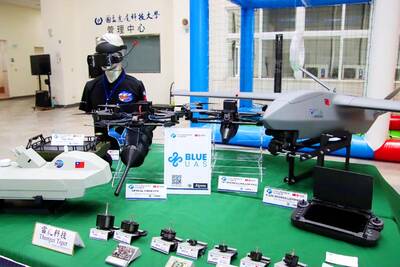
NON-RED SUPPLY: Boosting the nation’s drone industry is becoming increasingly urgent as China’s UAV dominance could become an issue in a crisis, an analyst said Taiwan’s drone exports to Europe grew 41.7-fold from 2024 to last year, with demand from Ukraine’s fight against Russian aggression the most likely driver of growth, a study showed. The Institute for Democracy, Society and Emerging Technology (DSET) in a statement on Wednesday said it found that many of Taiwan’s uncrewed aerial vehicle (UAV) sales were from Poland and the Czech Republic. These countries likely transferred the drones to Ukraine to aid it in its fight against the Russian invasion that started in 2022, it said. Despite the gains, Taiwan is not the dominant drone exporter to these markets, ranking second and fourth
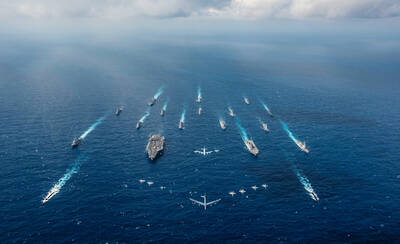
Japanese Prime Minister Sanae Takaichi’s comment last year on Tokyo’s potential reaction to a Taiwan-China conflict has forced Beijing to rewrite its invasion plans, a retired Japanese general said. Takaichi told the Diet on Nov. 7 last year that a Chinese naval blockade or military attack on Taiwan could constitute a “survival-threatening situation” for Japan, potentially allowing Tokyo to exercise its right to collective self-defense. Former Japan Ground Self-Defense Force general Kiyofumi Ogawa said in a recent speech that the remark has been interpreted as meaning Japan could intervene in the early stages of a Taiwan Strait conflict, undermining China’s previous assumptions


 RSS
RSS