


Senior presidential adviser Yeh Chu-lan (
"Given that the assembly delegates' task is quite simple, which is to vote on constitutional amendments, it is reasonable for them not to receive so many expenses," Yeh said at a news conference yesterday morning. "It is our responsibility to save taxpayers' money and accomplish efficiently the constitutional reforms that are supported by more than 75 percent of the people of Taiwan."
The budget passed by the Legislative Yuan gives each assembly delegate NT$230,000 for the month-long sitting that starts on May 30. Each delegate is entitled to a NT$180,000 salary and NT$50,000 for transportation costs and accommodation fees.
Yeh suggested that delegates give up NT$180,000 of this amount. Around 20 DPP delegates have already backed Yeh's call and signed a statement committing themselves to this action yesterday.
"I believe that all of the 127 DPP delegates will support this suggestion because they have committed themselves to accomplishing constitutional reforms," Yeh said.
Yeh also said that because Saturday's election showed that more than 75 percent of the public support constitutional amendments, she expected the Legislative Yuan not to fall short of public expectations and pass a bill governing the National Assembly's exercise of power as soon as possible.
As for how many days the National Assembly should sit, Yeh said the DPP would discuss this with other parties soon.
"The DPP thinks it should be as short a time as possible. If we can finish the voting process in three days then we don't have to spend four days doing it," Yeh said. "However, we cannot make the public feel as if we are being perfunctory about constitutional reforms."
Taiwan Solidarity Union Secretary-General Chen Chien-ming (陳建銘) yesterday said the TSU basically approved of Yeh's suggestion.
"The TSU has agreed to reducing the sitting hours from one month to one week and that delegates should automatically curtail their salary," Chen said. "However, the delegates should be paid a reasonable salary."
Chinese Nationalist Party (KMT) spokesman Chang Jung-kung (張榮恭), who is also an assembly delegate, said he could not understand why the legislature bothered to pass the budget if delegates would not receive their salaries.
People First Party (PFP) delegate Chin Hui-chu (秦慧珠) said her party has yet to discuss the matter.
Meanwhile, the legislature's Organic Laws and Statutes Committee yesterday agreed to void the Statute Governing the Salaries and Expenses of National Assembly Members (國民大會代表報酬及費用支給條例) and passed the first review of draft amendments to the Organic Law of the National Assembly (國民大會組織法).
The amendment would pay assembly members similar salaries to lawmakers and high-ranking civil servants, except for expenses relating to assistants and electoral expenses. The salaries would mainly cover the assembly members' transportation, lodging, food and insurance.
The total cost of salaries and expenses for the 300 assembly members for the one-month sitting is estimated at NT$63 million (US$2 million).
Additional reporting by Ko Shu-ling

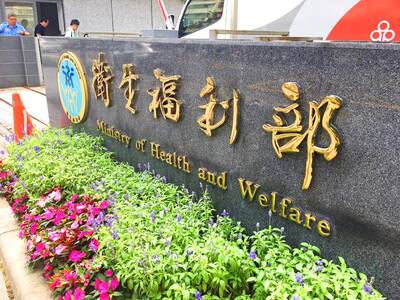
POLAM KOPITIAM CASE: Of the two people still in hospital, one has undergone a liver transplant and is improving, while the other is being evaluated for a liver transplant A fourth person has died from bongkrek acid poisoning linked to the Polam Kopitiam (寶林茶室) restaurant in Taipei’s Far Eastern Sogo Xinyi A13 Department Store, the Ministry of Health and Welfare said yesterday, as two other people remain seriously ill in hospital. The first death was reported on March 24. The man had been 39 years old and had eaten at the restaurant on March 22. As more cases of suspected food poisoning involving people who had eaten at the restaurant were reported by hospitals on March 26, the ministry and the Taipei Department of Health launched an investigation. The Food and

A fourth person has died in a food poisoning outbreak linked to the Xinyi (信義) branch of Malaysian restaurant chain Polam Kopitiam (寶林茶室) in Taipei, Deputy Minister of Health and Welfare Victor Wang (王必勝) said on Monday. It was the second fatality in three days, after another was announced on Saturday. The 40-year-old woman experienced multiple organ failure in the early hours on Monday, and the family decided not to undergo emergency resuscitation, Wang said. She initially showed signs of improvement after seeking medical treatment for nausea, vomiting and diarrhea, but her condition worsened due to an infection, he said. Two others who
MEDICAL: The bills would also upgrade the status of the Ethical Guidelines Governing the Research of Human Embryos and Embryonic Stem Cell Research to law The Executive Yuan yesterday approved two bills to govern regenerative medicine that aim to boost development of the field. Taiwan would reach an important milestone in regenerative medicine development with passage of the regenerative medicine act and the regenerative medicine preparations ordinance, which would allow studies to proceed and treatments to be developed, Deputy Minister of Health and Welfare Victor Wang (王必勝) told reporters at a news conference after a Cabinet meeting. Regenerative treatments have been used for several conditions, including cancer — by regenerating blood cells — and restoring joint function in soft tissue, Wang said. The draft legislation requires regenerative treatments

Taiwanese should be mindful when visiting China, as Beijing in July is likely to tighten the implementation of policies on national security following the introduction of two regulations, a researcher said on Saturday. China on Friday unveiled the regulations governing the law enforcement and judicial activities of national security agencies. They would help crack down on “illegal” and “criminal” activities that Beijing considers to be endangering national security, according to reports by China’s state media. The definition of what constitutes a national security threat in China is vague, Taiwan Thinktank researcher Wu Se-chih (吳瑟致) said. The two procedural regulations are to provide Chinese


 RSS
RSS