

In response to PFP Chairman James Soong's (
"Everyone in Taiwan is free to go to China since Taiwan is a democratic society," Su said. "But I once again call on them to respect the country's laws when it comes to matters involving the government's authority."
On the question of whether there will be another meeting between President Chen Shui-bian (陳水扁) and Soong before Soong's trip to China, Su said he is not aware of Soong's intentions, but that but the more communication between politicians and the government, the better off the country will be.
Echoing Su's remark, DPP legislative whip Lai Ching-teh (
Lai said he thinks it likely that Lien will indeed make a visit to China, after he was invited by Chinese President Hu Jintao (
Lien is set to visit China later this month. The visit will make Lien the first KMT chairman to set foot on Chinese soil since the KMT withdrew to Taiwan more than five decades ago. Soong will likely visit Beijing in early May, also at the invitation of Hu.
Meanwhile, the Taiwan Solidarity Union (TSU) suggested yesterday that Soong hold a second meeting with President Chen to get government authorization before he visits China. TSU whip Lo Chih-ming (
The TSU is opposed to visits by political party leaders to China without government authorization because such visits, even if made in private capacities, erode Taiwan's sovereignty and undermine the president's legal status as head of state, Lo said.
Chen and Soong met on Feb. 24 and clinched a 10-point agreement pledging, among other things, to maintain the national title of the Republic of China and not to declare Taiwanese independence, in a move to mitigate cross-strait tensions.
TSU Legislator Ho Min-hao (
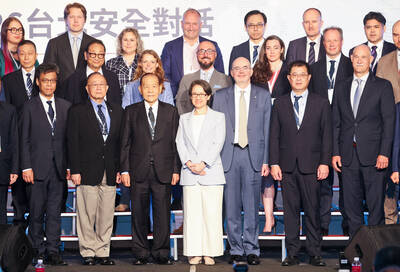
Taiwan’s growing defense preparations might be sending a stronger signal to the US than to Beijing, highlighting the need for Taipei to tailor its deterrence efforts to different audiences, a US security academic said yesterday. Stanford University Freeman Spogli Institute for International Studies fellow Oriana Skylar Mastro made the comment during a Taipei Security Dialogue panel examining lessons Taiwan could draw from the wars in Ukraine and the Middle East. Mastro said she was impressed by Taiwan’s increased defense spending, emphasis on asymmetric capabilities and efforts to prepare society for conflict, but questioned whom those initiatives were influencing. She said when she asked
A total of 400 foreign “high- level” professionals have been naturalized as Republic of China (Taiwan) citizens over the past decade as the government has eased nationality rules to attract talent from a wider range of fields, the Ministry of the Interior said yesterday. The 400th high-level professional, who works in the electronics industry, was approved for ROC citizenship on Aug. 26, the MOI said. The MOI quoted the newly naturalized citizen as saying that Taiwan is a leader in fields such as semiconductors, electronics manufacturing, artificial intelligence development and energy technology. He also said
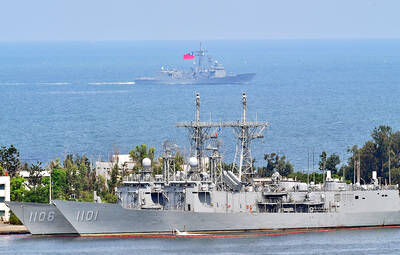
SIZE MATTERS: Large ships are politically attractive as visible symbols of national defense, but small surface combatants are more likely to survive an initial strike Taiwan needs to restructure its naval fleet from focusing on large warships, which are “sitting ducks” for China’s advanced tracking technology, to smaller, stealthy corvettes that are harder to detect but retain sufficient firepower to deter a Chinese invasion, a Taiwanese academic and a former US military commander said in an article published on Friday in the journal Foreign Affairs. Taiwan does not need a fleet capable of competing with the Chinese navy for traditional control of the Taiwan Strait, but rather “sea denial” capabilities that would prevent China from freely using the waterway, Taiwanese aerospace and security expert Holmes Liao
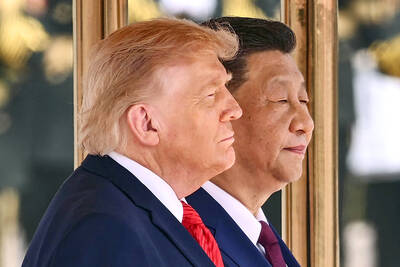
China has warned that it could cancel a planned US-China leaders’ summit if Washington approves new arms sales to Taiwan, a Japanese media outlet quoted sources as saying yesterday. US President Donald Trump, “apparently eager to showcase some diplomatic achievements ahead of November’s midterm congressional elections, places great importance on holding the summit with Chinese President Xi Jinping (習近平),” Japan’s Kyodo News reported. “While preparing for Xi’s upcoming trip, China has restated its position that the Taiwan issue is a ‘red line’ in bilateral relations,” the report said. The report said that when Xi met with Trump in Beijing in May, Xi said


 RSS
RSS