


US congressmen have launched a signature drive urging US President George W. Bush to review the longstanding "one China" policy, a Democratic Progressive Party (DPP) lawmaker said yesterday.
"While China has become the US government's biggest enemy after the end of the Cold War and the fall of the Soviet Union, many US congressmen have been wondering whether the `one China' policy makes sense any more and whether it is necessary to re-examine, or even better yet, revise it to a `one China, one Taiwan' policy," DPP Legislator Chiang Chao-yi (
He was quoting US congressmen, who are members of the pro-Taiwan sub-group in the US Congress -- the Taiwan Caucus.
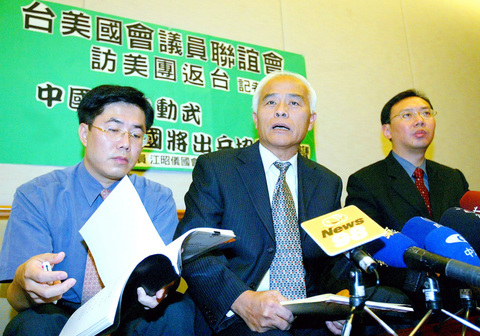
PHOTO: WANG YI-SOONG
Chiang made the remark yesterday morning in the legislature after returning from his six-day trip to the US, where he met with think tank experts, congressmen and officials from the National Security Council, Department of Defense and State Department, including Deputy Assistant Secretary of State Randall Shriver.
According to Chiang, Shriver told the 10-person visiting group during a breakfast meeting last Monday that the US will deal with contingencies in the Taiwan Strait in compliance with the Taiwan Relations Act.
Shriver also told the group that China is not as strong as it seems but rather weak, because Beijing had sent officials to Washington twice before the "Anti-Secession" Law was adopted on March 14 in an attempt to convince the US of its validity.
In addition to warning Beijing about the consequences of enacting the law, Chiang said that the US government has made it very clear that such legislation would be unhelpful and a step in the wrong direction.
Delegation members were also present at a hearing in the House International Relations Committee last Wednesday, when Shriver addressed the passage of the "Anti-Secession" Law and its impact on cross-strait and US-China relations.
During the hearing, Chiang said, Shriver outlined the US government's efforts to let Beijing know their views of the legislation.
The efforts included the meeting between former deputy secretary Richard Armitage and director of China's Taiwan Affairs Office Chen Yunlin (
In a February visit to Beijing, National Security Council Senior Director for Asian Affairs Michael Green told Chinese leaders that passage of the legislation would undermine cross-strait stability.
The US ambassador to Beijing also urged China not to pass the legislation on the eve of the ratification vote by the National People's Congress, Chiang quoted Shriver as saying.
After talking with members of the US National Security Council, members of congress and think tank experts, Chiang said that most of them agreed that Beijing eventually opted to ignore the US warnings and forge ahead with the enactment of the controversial law because it was under a tremendous amount of pressure at home.
"In the face of rampant corruption, the huge gap between the rich and the poor as well as Chinese people's increasing distrust of the Chinese Communist Party, Chinese President Hu Jintao (
When asked to comment on Chinese National Party (KMT) Vice Chairman Chiang Pin-kun's (
"They think that the KMT puts its own future at stake and runs counter to the will of the Taiwanese people, because more than 90 percent of the people of Taiwan are opposed to the Anti-Secession Law," heg said.
"They also think that what the KMT is doing is unbelievable, because it used to educate the public about the evils of communism during its 50-year reign, but now they, as an opposition party, are sucking up to the CCP," he said.
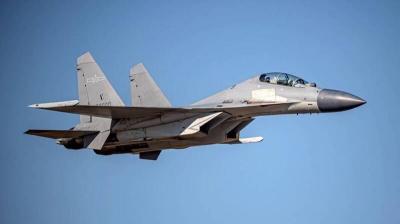
Eight Chinese naval vessels and 24 military aircraft were detected crossing the median line of the Taiwan Strait between 6am yesterday and 6am today, the Ministry of National Defense said this morning. The aircraft entered Taiwan’s northern, central, southwestern and eastern air defense identification zones, the ministry said. The armed forces responded with mission aircraft, naval vessels and shore-based missile systems to closely monitor the situation, it added. Eight naval vessels, one official ship and 36 aircraft sorties were spotted in total, the ministry said.
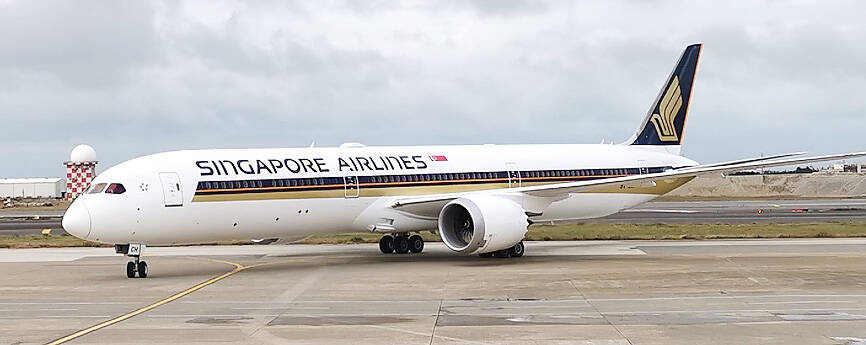
INCREASED CAPACITY: The flights on Mondays, Wednesdays, Fridays and Sundays would leave Singapore in the morning and Taipei in the afternoon Singapore Airlines is adding four supplementary flights to Taipei per week until May to meet increased tourist and business travel demand, the carrier said on Friday. The addition would raise the number of weekly flights it operates to Taipei to 18, Singapore Airlines Taiwan general manager Timothy Ouyang (歐陽漢源) said. The airline has recorded a steady rise in tourist and business travel to and from Taipei, and aims to provide more flexible travel arrangements for passengers, said Ouyang, who assumed the post in July last year. From now until Saturday next week, four additional flights would depart from Singapore on Monday, Wednesday, Friday
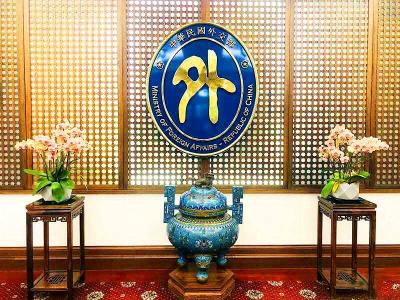
The Ministry of Foreign Affairs (MOFA) today said that if South Korea does not reply appropriately to its request to correct Taiwan’s name on its e-Arrival card system before March 31, it would take corresponding measures to alter how South Korea is labeled on the online Taiwan Arrival Card system. South Korea’s e-Arrival card system lists Taiwan as “China (Taiwan)” in the “point of departure” and “next destination” fields. The ministry said that it changed the nationality for South Koreans on Taiwan’s Alien Resident Certificates from “Korea” to “South Korea” on March 1, in a gesture of goodwill and based on the
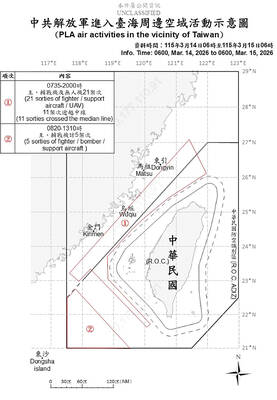
The Ministry of National Defense yesterday reported the return of large-scale Chinese air force activities after their unexplained absence for more than two weeks, which had prompted speculation regarding Beijing’s motives. China usually sends fighter jets, drones and other military aircraft around the nation on a daily basis. Interruptions to such routine are generally caused by bad weather. The Ministry of National Defense said it had detected 26 Chinese military aircraft in the Taiwan Strait over the previous 24 hours. It last reported that many aircraft on Feb. 25, when it spotted 30 aircraft, saying Beijing was carrying out another “joint combat


 RSS
RSS