


The traditional Chinese orchestra played music called Peikuan. Then a dragon dance took place with deafening firecrackers thrown about. Vendors offered various types of food. The government-organized Lantern Festival celebration yesterday was all about the Hakka spirit.
Hakka rituals such as Peikuan music, also called Luantan, and the Beng Long ceremony, along with booths featuring traditional Hakka foods and crafts, drew crowds to the Presidential Office in the celebration of the Miaoli-based cultural exhibition.
"Miaoli is prosperous and rich with Hakka heritage. The city's culture is a unique mixture of tradition and modernity, and is worth exploring,"
said Presidential Office Secretary General Yu Shyi-kun, commenting on Hakka culture as the theme of the exhibition in the opening ceremony yesterday.
Yu said that the event provided a Hakka cultural experience for the public. On behalf of the Presidential Office, he invited people to come and enjoy the activities.
The celebration was co-organized by the Presidential Office, the Council for Cultural Affairs, the Council for Hakka Affairs and the Miaoli County government.
Following the Peikuan music played by traditional orchestra troupes, Yu, accompanied by Cultural Affairs Council Chairman Chen Chi-nan (陳其南). Hakka Affairs Council Vice Chairman Chuang Ching-hua (莊錦華) and Miaoli County Commissioner Fu Hsueh-peng (傅學鵬), lit fireworks to begin the Beng Long ceremony.
Held around the time of the Lantern Festival, Beng Long, which means "bombing the dragon" in Hakka, has become the biggest event for Miaoli's Hakka community, according to the Miaoli County Government.
The ceremony follows steps of pasting, eye-painting, commemorating, bombing, and finally incinerating the dragon.
After the bamboo-framed dragon was pasted with fabric, it went through the eye-painting ceremony performed by a "dragon master" to become a holy dragon. As it dances around, people throw firecrackers at the dragon, a gesture believed to bring good fortune for the new year.
In the sound of drumming and firecrackers, the Beng Long ceremony ends with the burning of the dragon so it can ascend to Heaven, according to legend.
Inspired by Pingsi's lantern and Yanshui's fireworks festivals, the Miaoli city and county government have made the Beng Long festival a new holiday spectacle. The county government said that since 2000, the ceremony has attracted around 100,000 tourists to Miaoli.
Besides participating in the Beng Long ceremony, Yu and the three other officers also made Yuanxiao (also called Tangyuan), the traditional food for the Lantern Festival, during the event and shared the hand-made rice balls with visitors.
The event was filled with Hakka music, dragon dances and various Hakka foods. Despite the near freezing temperature, thousands of people attending the event lined up for free Yuanxiao soup.
In addition to the event, Miaoli County Government also welcomed the public to attend the Miaoli cultural exhibition in the Presidential Office. The exhibition featured Miaoli historical themes, local customs, handicrafts, reconstruction of local industries and community-building.
The Miaoli cultural exhibition runs through March 31 from 9am to 12pm every Monday until Friday.

The military has spotted two Chinese warships operating in waters near Penghu County in the Taiwan Strait and sent its own naval and air forces to monitor the vessels, the Ministry of National Defense (MND) said. Beijing sends warships and warplanes into the waters and skies around Taiwan on an almost daily basis, drawing condemnation from Taipei. While the ministry offers daily updates on the locations of Chinese military aircraft, it only rarely gives details of where Chinese warships are operating, generally only when it detects aircraft carriers, as happened last week. A Chinese destroyer and a frigate entered waters to the southwest
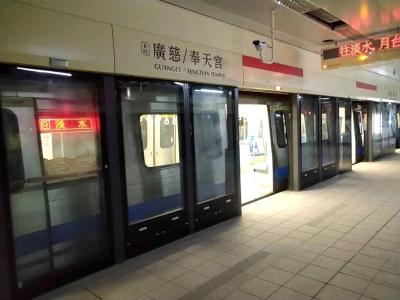
The eastern extension of the Taipei MRT Red Line could begin operations as early as late June, the Taipei Department of Rapid Transit Systems said yesterday. Taipei Rapid Transit Corp said it is considering offering one month of free rides on the new section to mark its opening. Construction progress on the 1.4km extension, which is to run from the current terminal Xiangshan Station to a new eastern terminal, Guangci/Fengtian Temple Station, was 90.6 percent complete by the end of last month, the department said in a report to the Taipei City Council's Transportation Committee. While construction began in October 2016 with an
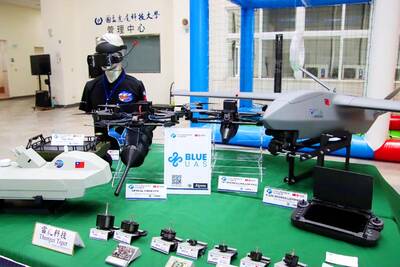
NON-RED SUPPLY: Boosting the nation’s drone industry is becoming increasingly urgent as China’s UAV dominance could become an issue in a crisis, an analyst said Taiwan’s drone exports to Europe grew 41.7-fold from 2024 to last year, with demand from Ukraine’s fight against Russian aggression the most likely driver of growth, a study showed. The Institute for Democracy, Society and Emerging Technology (DSET) in a statement on Wednesday said it found that many of Taiwan’s uncrewed aerial vehicle (UAV) sales were from Poland and the Czech Republic. These countries likely transferred the drones to Ukraine to aid it in its fight against the Russian invasion that started in 2022, it said. Despite the gains, Taiwan is not the dominant drone exporter to these markets, ranking second and fourth

Japanese Prime Minister Sanae Takaichi’s comment last year on Tokyo’s potential reaction to a Taiwan-China conflict has forced Beijing to rewrite its invasion plans, a retired Japanese general said. Takaichi told the Diet on Nov. 7 last year that a Chinese naval blockade or military attack on Taiwan could constitute a “survival-threatening situation” for Japan, potentially allowing Tokyo to exercise its right to collective self-defense. Former Japan Ground Self-Defense Force general Kiyofumi Ogawa said in a recent speech that the remark has been interpreted as meaning Japan could intervene in the early stages of a Taiwan Strait conflict, undermining China’s previous assumptions


 RSS
RSS