


■ Culture
Get some `zongzi' in you
The Council of Hakka Affairs held a press conference yesterday to urge people to sample Hakka-style zongzi (粽子), or glutinous rice dumplings, during this year's Dragon Boat Festival. Dressed in traditional Hakka costume, council Chairman Luo Wen-jia (羅文嘉) and his wife, Liu Chao-yi (劉昭儀), wrapped dumplings while explaining the differences between Hakka zongzi and traditional zongzi. Luo said there are three kinds of traditional Hakka-style zongzi: salty (鹹粽), sweet (鹼粽) and banzong (粄粽), a smaller, drier variety blending rice types which keeps longer. Many of the ingredients used in Hakka zongzi are familiar to non-Hakka people, Luo said. But instead of wrapping chunks of meat into the rice dumplings as is normally done, Hakka people mix finely-chopped meat in with the rice so that it can better absorb the flavor of the meat.
■ Crime
Record drug bust off Kinmen
Coast guard officers arrested a Chinese fisherman for drug trafficking in waters near Kinmen early yesterday. The officers also seized 30kg of ketamine, a proscribed drug, hidden in the fishing boat said to be owned by the fisherman, identified as Peng Chuitong (彭垂桐). It was the largest ketamine bust on record in or around Kinmen. The seized ketamine has an estimated street value of NT$15 million, the coast guard officers said. The fisherman claimed that he had been hired by an unidentified man to transport the ketamine, wrapped in 24 well-designed food packs, to waters near Kinmen where a prospective buyer was supposed to take delivery of the drug for shipment to Taiwan. Coast guard officers said they suspected that Peng's smuggling operation might be connected to a crime ring in northern Taiwan.
■ Olympic Games
Stipends to spur athletes
To encourage athletes to perform to the best of their ability at the Athens Olympics, the National Council of Physical Fitness and Sports is planning to award medalists lifelong stipends. Under the plan, the winner of a gold medal will receive NT$75,000 per month for life, silver medalists will get NT$38,000 and bronze medalists will receive NT$25,000. Council officials said that in order to provide long-term care and protection for athletes who perform well in the Olympics, they have emulated South Korea's practice of giving cash awards to outstanding athletes. The council has completed revisions to draft regulations on the presentation of medals and cash awards to athletes. Under the revised regulations, teams that take part in an event with less than 10 competitors and which place between fifth and eighth will be presented with medals by the government but receive no cash award.
■ Transportation
Museum slated for airport
A Democratic Progressive Party (DPP) legislator suggested that Taichung's Shuinan Airport be turned into an aviation museum. DPP Legislator Lee Ming-hsien (李明憲) said that the Shuinan terminal has been idle since March 6 after civil aviation operations were transferred to Chingchuankang (清泉崗) Airport, a former military facility that was converted for military and civilian use. Lee invited officials from the Ministry of National Defense and Ministry of Transportation and Communications to visit the Shuinan terminal, which was refurbished only three years ago, for an inspection yesterday. A comprehensive plan for a terminal museum has yet to be finalized, but Lee said that Shuinan had historical significance and should remain in the industry.
■ Arms budget
Legislators examine aircraft
Legislative Speaker Wang Jin-pyng (王金平) yesterday led a group of legislators in Hawaii to examine the P-3C aircraft that could be purchased from the US under the special budget of NT$610.8 billion (US$18.25 billion). It was the first time the US army allowed Taiwanese without a military background to visit the US Pacific Command. The group was received by Brigadier General Charles Neeley, chief of staff for the Strategic Planning and Policy Directorate. They were briefed about the aircraft and they also boarded to take a closer look. The legislators are scheduled to exchange opinions on security affairs in the Asia-Pacific region with US officers tomorrow. They will also attend a reception and dinner.
■ Agriculture
Lychees now in season
The Council of Agriculture urged consumers yesterday to seize the opportunity to enjoy lychees in view of their shorter harvest period this year. Officials from the Agriculture and Food Agency noted yesterday that lychees grown in Taichung, Nantou, Changhua, Chiayi, Tainan, Kaohsiung and Pingtung counties are now being harvested and will be in season until the middle of next month. The officials said that the crop this year is not as good as in previous years due to the weather. They estimated that annual production will be only 70,760 tonnes, 25 percent less than the 94,347 tonnes harvested last year. Despite the smaller crop, the officials said they will still assist farmers to promote the fruit and will help them market it to the US, Japan and Canada. They also suggested that consumers can keep the fruit fresh for a longer period by putting them in a light salt solution, drying them off and putting them in the refrigerator.

A magnitude 6.1 earthquake struck off the coast of Yilan County at 8:39pm tonight, the Central Weather Administration (CWA) said, with no immediate reports of damage or injuries. The epicenter was 38.7km east-northeast of Yilan County Hall at a focal depth of 98.3km, the CWA’s Seismological Center said. The quake’s maximum intensity, which gauges the actual physical effect of a seismic event, was a level 4 on Taiwan’s 7-tier intensity scale, the center said. That intensity level was recorded in Yilan County’s Nanao Township (南澳), Hsinchu County’s Guansi Township (關西), Nantou County’s Hehuanshan (合歡山) and Hualien County’s Yanliao (鹽寮). An intensity of 3 was
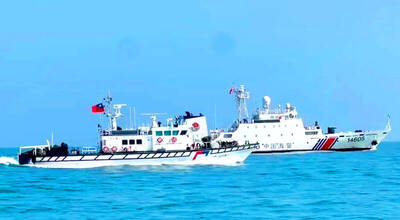
Instead of focusing solely on the threat of a full-scale military invasion, the US and its allies must prepare for a potential Chinese “quarantine” of Taiwan enforced through customs inspections, Stanford University Hoover fellow Eyck Freymann said in a Foreign Affairs article published on Wednesday. China could use various “gray zone” tactics in “reconfiguring the regional and ultimately the global economic order without a war,” said Freymann, who is also a nonresident research fellow at the US Naval War College. China might seize control of Taiwan’s links to the outside world by requiring all flights and ships entering or leaving Taiwan
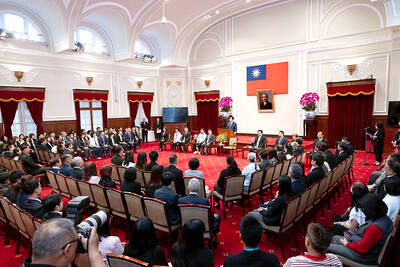
The next minimum wage hike is expected to exceed NT$30,000, President William Lai (賴清德) said yesterday during an award ceremony honoring “model workers,” including migrant workers, at the Presidential Office ahead of Workers’ Day today. Lai said he wished to thank the awardees on behalf of the nation and extend his most sincere respect for their hard work, on which Taiwan’s prosperity has been built. Lai specifically thanked 10 migrant workers selected for the award, saying that although they left their home countries to further their own goals, their efforts have benefited Taiwan as well. The nation’s industrial sector and small businesses lay
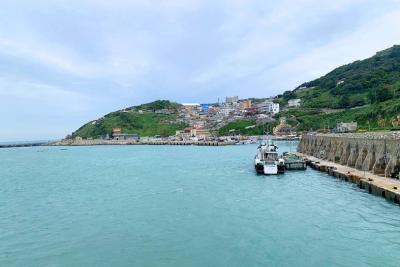
Taiwan has activated backup communications for its northernmost territory, the remote and strategically located island of Dongyin (東引), after poor weather conditions apparently shifted the wreckage of a ship onto an undersea cable causing it to break. The vulnerability of undersea communication cables linking Taiwan with its outlying islands has been a persistent cause of concern for Taipei, whose government has on several occasions blamed Chinese ships for intentionally causing damage. Dongyin, home to about 1,500 people, sits in a strategic position at the top of the Taiwan Strait and the island has a heavy military presence. It does not have an


 RSS
RSS