


Despite the pan-blue camp's declaration yesterday that the election result was invalid, President Chen Shui-bian (陳水扁) must immediately determine the line-up of his new Cabinet and the future direction of the Democratic Progressive Party (DPP) before the dispute is resolved.
One thing is for sure: Chen must continue at the party's helm. According to the DPP's charter, revised in April 2002, the head of state must lead the party while it is in power, while party members must directly elect its chairman when it is in opposition.
Although Premier Yu Shyi-kun might normally be expected to lead Cabinet officials in resigning en masse before the May inauguration, he may continue to lead the Cabinet until the year-end legislative elections before doing so, political observers said.
"The odds of the premier changing before May or even the year-end legislative election seem slim. One of the reasons for this is that Yu helped Chen earn 40,000 more votes than his rivals in Yu's home county of Ilan," said Bill Chang (
Although Yu has publicly announced that he aims to retire after the election to spend more time with his family, Chang interpreted Yu's words as a political gesture of modesty.
"I don't think he's so old
or feeble that he should stop working," Chang said.
"Besides, there's no reason for him to quit, since the DPP has won the presidential election and will probably prevail again in the year-end legislative election," he said.
Yu's premiership, however, would face a challenge after the legislative election, particularly after December next year when Taipei County Commissioner Su Tseng-chang's (
Su and Kaohsiung Mayor Frank Hsieh (謝長廷) are considered to be the party's top stars after Chen. Their reputations have been established through excellent administrative and electoral performances in northern and southern Taiwan.
Su might stand a better chance of becoming premier, however, because of his political charisma, according to a high-ranking official at DPP headquarters who asked not to be named.
The official also agreed with Chang that Yu would retain his post until the end of the year but that he would face a challenge after December next year.
It is also possible that Su may run in the Taipei City mayoral election in 2006 because incumbent Taipei Mayor Ma Ying-jeou (
In addition to Su and Hsieh, the official said that nobody could rule out Council for Hakka Affairs Chairwoman Yeh Chu-lan (
Yeh, a Hakka, served as a legislator between 1990 and 2000 and was the transportation and communications minister between 2000 and 2002.
Secretary General to the Presidential Office Chiou I-jen (邱義仁) might retain his post and continue to operate in his important position in a low-key manner, as befits his personality.
Chiou, whom Chen depends on, is considered a cunning strategist who generates a considerable number of innovative ideas.
As for DPP campaign spokesperson Wu Nai-jen (吳乃仁), the official said he might return to head one of the nation's state-run businesses, as he did before taking up the position of spokesman for the DPP's campaign office, because he has showed little interest in assuming government posts.
DPP Secretary-General Chang Chun-hsiung (張俊雄), who served as premier between 2000 and 2002 and as a legislator between 1983 and 2000, might fulfill his wish to helm the Control Yuan, leaving his position to be possibly filled by DPP Deputy Secretary-General Lee Ying-yuan (李應元).
Lee was the Cabinet secretary-general in 2002 and was elected to the legislature for the first
time in 1995 representing Taipei County.
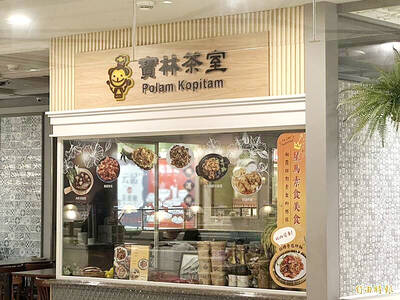
POLAM KOPITIAM CASE: Of the two people still in hospital, one has undergone a liver transplant and is improving, while the other is being evaluated for a liver transplant A fourth person has died from bongkrek acid poisoning linked to the Polam Kopitiam (寶林茶室) restaurant in Taipei’s Far Eastern Sogo Xinyi A13 Department Store, the Ministry of Health and Welfare said yesterday, as two other people remain seriously ill in hospital. The first death was reported on March 24. The man had been 39 years old and had eaten at the restaurant on March 22. As more cases of suspected food poisoning involving people who had eaten at the restaurant were reported by hospitals on March 26, the ministry and the Taipei Department of Health launched an investigation. The Food and

The long-awaited Taichung aquarium is expected to open next year after more than a decade of development. The building in Cingshui District (清水) is to feature a large ocean aquarium on the first floor, coral display area on the second floor, a jellyfish tank and Dajia River (大甲溪) basin display on the third, a river estuary display and restaurant on the fourth, and a cafe and garden on the fifth. As it is near Wuci Fishing Port (梧棲漁港), many are expecting the opening of the aquarium to bring more tourism to the harbor. Speaking at the city council on Monday, Taichung City Councilor
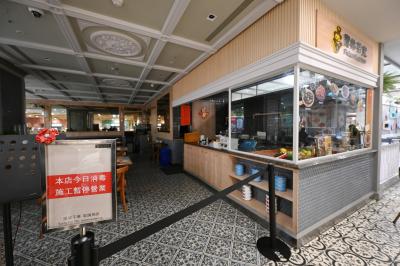
A fourth person has died in a food poisoning outbreak linked to the Xinyi (信義) branch of Malaysian restaurant chain Polam Kopitiam (寶林茶室) in Taipei, Deputy Minister of Health and Welfare Victor Wang (王必勝) said on Monday. It was the second fatality in three days, after another was announced on Saturday. The 40-year-old woman experienced multiple organ failure in the early hours on Monday, and the family decided not to undergo emergency resuscitation, Wang said. She initially showed signs of improvement after seeking medical treatment for nausea, vomiting and diarrhea, but her condition worsened due to an infection, he said. Two others who

Taiwanese should be mindful when visiting China, as Beijing in July is likely to tighten the implementation of policies on national security following the introduction of two regulations, a researcher said on Saturday. China on Friday unveiled the regulations governing the law enforcement and judicial activities of national security agencies. They would help crack down on “illegal” and “criminal” activities that Beijing considers to be endangering national security, according to reports by China’s state media. The definition of what constitutes a national security threat in China is vague, Taiwan Thinktank researcher Wu Se-chih (吳瑟致) said. The two procedural regulations are to provide Chinese


 RSS
RSS