


The military will strengthen its air and sea patrols in the lead-up to Saturday's election while keeping a close eye on China's ballistic missile and submarine deployments, the Ministry of National Defense announced yesterday.
"The armed forces will stay on alert around the clock during the election period. This is aimed at providing a secure and stable environment for the public to cast their votes on the election day," ministry spokesman Major General Huang Suei-sheng (黃穗生) said at a weekly press conference yesterday.
"Election day has been declared a day for `focused alert.' Our focus on that day and days before will be on air and sea patrols. Check and identification of targets is to be one of the priority tasks," Huang said.
"There is no sign to show that the Chinese military has any unusual deployments across the Taiwan Strait. But we will keep a close watch on the Chinese military, especially its ballistic missile and submarine forces," he said.
"The ministry has already in place rapid-response plans for any unusual deployments of the ballistic missile and submarine forces of the Chinese military," he said.
Huang, however, played down the significance of a joint Sino-French military exercise held off the coast of Qingdao, Shandong Province, yesterday.
"Two French warships were at Qingdao between March 12 and March 16 for a visit. The two ships then participated in an exercise with the Chinese navy," Huang said.
"The exercise is on maritime search and rescue, falling into the category of humanitarian aid. It is a basic and entry-level maneuver," he said.
The arrival of the French warships in the region coincided with the presence of the USS Kitty Hawk in the waters between China and Taiwan earlier this month. The ministry has declined to comment on the motives behind the Kitty Hawk presence.
However, the aircraft carrier's presence carries strong indications that the US does not want to see any conflict break out between the two sides of the Taiwan Strait at this moment.
Huang confirmed media reports that the military police has already deployed the Avenger pedestal-mounted Stinger anti-aircraft missile in Taipei. The Stinger is among the best man-portable surface-to-air missile in the world.
"The deployment started in December. It was part of the normal arms build-up," Huang said, declining to connect it with the election.
Yesterday was the first time the ministry made public its security plans for the election and officials appeared confident of providing a secure environment for election day.

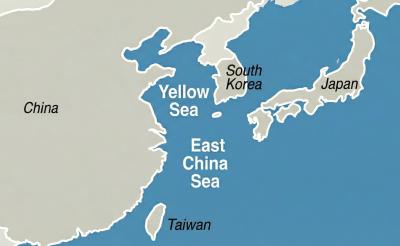
China has reserved offshore airspace in the Yellow Sea and East China Sea from March 27 to May 6, issuing alerts usually used to warn of military exercises, although no such exercises have been announced, the Wall Street Journal (WSJ) reported yesterday. Reserving such a large area for 40 days without explanation is an “unusual step,” as military exercises normally only last a few days, the paper said. These alerts, known as Notice to Air Missions (Notams), “are intended to inform pilots and aviation authorities of temporary airspace hazards or restrictions,” the article said. The airspace reserved in the alert is
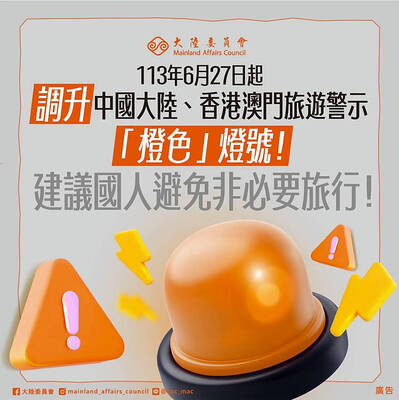
More than 6,000 Taiwanese students have participated in exchange programs in China over the past two years, despite the Mainland Affairs Council’s (MAC) “orange light” travel advisory, government records showed. The MAC’s publicly available registry showed that Taiwanese college and university students who went on exchange programs across the Strait numbered 3,592 and 2,966 people respectively. The National Immigration Agency data revealed that 2,296 and 2,551 Chinese students visited Taiwan for study in the same two years. A review of the Web sites of publicly-run universities and colleges showed that Taiwanese higher education institutions continued to recruit students for Chinese educational programs without
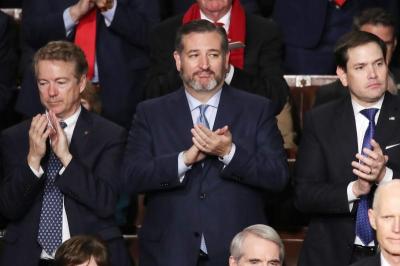
A bipartisan group of US senators has introduced a bill to enhance cooperation with Taiwan on drone development and to reduce reliance on supply chains linked to China. The proposed Blue Skies for Taiwan Act of 2026 was introduced by Republican US senators Ted Cruz and John Curtis, and Democratic US senators Jeff Merkley and Andy Kim. The legislation seeks to ease constraints on Taiwan-US cooperation in uncrewed aerial systems (UAS), including dependence on China-sourced components, limited access to capital and regulatory barriers under US export controls, a news release issued by Cruz on Wednesday said. The bill would establish a "Blue UAS
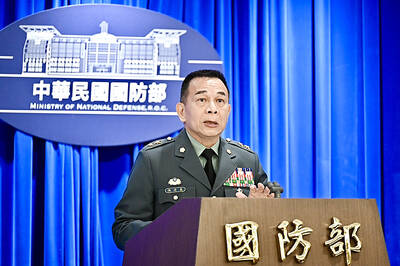
The Republic of China Army Command yesterday relieved Kinmen Defense Battalion commander after authorities indicted the officer on charges connected to using methamphetamine. The Kinmen District Prosecutors’ Office on Wednesday detained Colonel He (何) after the Coast Guard linked him to drug shipments and proceeded to charge him yesterday for using and possessing crystal meth. The man was released on a NT$50,000 bail and banned from leaving Kinmen, the office said. Army Chief of Staff Lieutenant General Chen Chien-yi (陳建義) told a news conference yesterday that He has been removed and another officer is taking over the unit as the acting commander. The military


 RSS
RSS