


Cementing ties with Taiwan's smaller allies is just as important as solving the diplomatic row with the US over the "defensive referendum," according to Minister of Foreign Affairs Eugene Chien (簡又新).
Chien, who caved in to pressure from Taiwanese media accusing him of sidestepping the problems now blighting US relations by visiting Kiribati and the Marshall Islands, returned to Taipei yesterday after dropping plans to visit Hawaii. Chien was originally not due to return until tomorrow.
The media uproar over the Chien's Pacific jaunt stands in stark contrast to the muted response it received when the foreign ministry first informed reporters about the trip in December.
Back then, a significant number of TV channels and newspapers showed no interest in signing up reporters to join the delegation, despite proposed meetings with Kiribati President Anote Tong and Marshall Islands President Kessai Note.
It's not surprising that many Taiwanese people think ties with big countries, such as the US and Japan, are more important than relations with tiny allies like Kiribati and the Marshall Islands.
These people, however, need to be reminded that because of the principle of "one country, one vote" that is adhered to by most international bodies, Taiwan needs as much support as it can muster as part of its efforts to join international organizations such as the UN and the World Health Organization.
The US has been a firm supporter of Taiwan's bids to enter the WHO, but it has also reminded Taiwan that no matter how supportive it might be, it still only has one vote in the health body, officials say.
That is why Kiribati and the Marshall Islands, both members of the UN, are important to Taiwan.
"Taiwan's diplomatic situation is very severe," Samuel Chen (
"Although we have many hardships here, we feel all our efforts are worthwhile when we think of how they can contribute to our country's diplomacy," Chen said.
It is difficult for people living in a modern society to imagine what life is like in Kiribati.
Electricity and water supplies are limited and unstable and most people live in primitive conditions.
Eighty percent of the people in Kiribati are unemployed, according to Randy Wang (汪漢源), a counselor in Taiwan's embassy in Kiribati.
The few employment opportunities mean that many Kiribatians raise pigs in wire fences built beside the roadside. For food, people go fishing or collect fruit.
Televisions, phones, computers and other electronic goods which are ubiquitous in modern life are mainly absent in Kiribati.
There are no lamp posts on the country's roads.
"If Kiribati wants to draw investment, it must first improve its electricity supply, develop its telecommunications network and build roads," said Kiven Tsai (
He had first visited Kiribati on a business trip.
Taiwan's financial aid to its small allies is often labeled "checkbook diplomacy," but Chen Lien-gene (陳連軍), Taiwan's ambassador to the Marshall Islands, said that helping these allies was the right thing to do.
Chen said that in the past, Taiwan had received a lot of foreign aid.
"Now we have the ability to help these small countries. Shouldn't we help them as others did to us?" the ambassador asked.
Kiribati President Tong once lived in the Marshall Islands for seven years, Chen said. When Tong returned to the Marshall Islands years later, he was astonished to find just how much the country had improved since it built ties with Taiwan, Chen said.
The significance of this was not lost on the foreign minister.
Chien told reporters during the trip that when Tong was elected president of Kiribati, he was keen to boost development and hoped Kiribati could improve itself with the help of Taiwanese aid.
And when announcing his earlier-than-expected return to Taiwan, Chien told reporters: "Now you have seen what Kiribati is like. Years later, you will all be witnesses to its improvement."
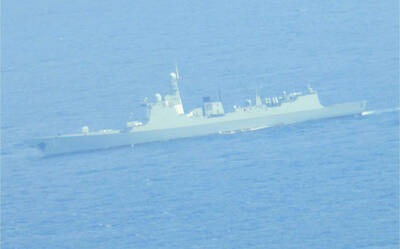
The military has spotted two Chinese warships operating in waters near Penghu County in the Taiwan Strait and sent its own naval and air forces to monitor the vessels, the Ministry of National Defense (MND) said. Beijing sends warships and warplanes into the waters and skies around Taiwan on an almost daily basis, drawing condemnation from Taipei. While the ministry offers daily updates on the locations of Chinese military aircraft, it only rarely gives details of where Chinese warships are operating, generally only when it detects aircraft carriers, as happened last week. A Chinese destroyer and a frigate entered waters to the southwest
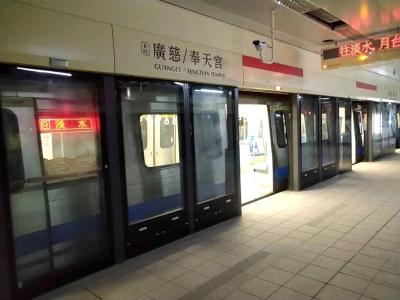
The eastern extension of the Taipei MRT Red Line could begin operations as early as late June, the Taipei Department of Rapid Transit Systems said yesterday. Taipei Rapid Transit Corp said it is considering offering one month of free rides on the new section to mark its opening. Construction progress on the 1.4km extension, which is to run from the current terminal Xiangshan Station to a new eastern terminal, Guangci/Fengtian Temple Station, was 90.6 percent complete by the end of last month, the department said in a report to the Taipei City Council's Transportation Committee. While construction began in October 2016 with an
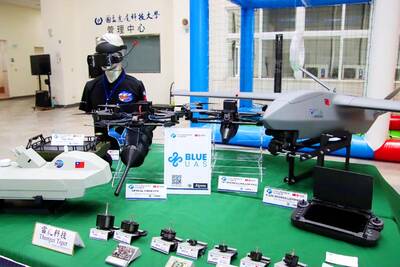
NON-RED SUPPLY: Boosting the nation’s drone industry is becoming increasingly urgent as China’s UAV dominance could become an issue in a crisis, an analyst said Taiwan’s drone exports to Europe grew 41.7-fold from 2024 to last year, with demand from Ukraine’s fight against Russian aggression the most likely driver of growth, a study showed. The Institute for Democracy, Society and Emerging Technology (DSET) in a statement on Wednesday said it found that many of Taiwan’s uncrewed aerial vehicle (UAV) sales were from Poland and the Czech Republic. These countries likely transferred the drones to Ukraine to aid it in its fight against the Russian invasion that started in 2022, it said. Despite the gains, Taiwan is not the dominant drone exporter to these markets, ranking second and fourth
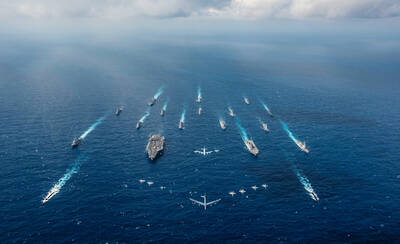
Japanese Prime Minister Sanae Takaichi’s comment last year on Tokyo’s potential reaction to a Taiwan-China conflict has forced Beijing to rewrite its invasion plans, a retired Japanese general said. Takaichi told the Diet on Nov. 7 last year that a Chinese naval blockade or military attack on Taiwan could constitute a “survival-threatening situation” for Japan, potentially allowing Tokyo to exercise its right to collective self-defense. Former Japan Ground Self-Defense Force general Kiyofumi Ogawa said in a recent speech that the remark has been interpreted as meaning Japan could intervene in the early stages of a Taiwan Strait conflict, undermining China’s previous assumptions


 RSS
RSS