


National Taiwan University (NTU) said yesterday it would apologize to philosophy professors who were accused of being leftists and fired in 1974.
NTU president Chen Wei-jao (
Chen said the university will send a formal letter to the victims and their families as an apology.
The university said it would welcome those professors to resume their teaching jobs at NTU. Those who do not want to go back to the university will receive NT$60,000 in compensation, Chen said.
Thirteen professors were forced to give up their teaching jobs at that time. Four decided to return to NTU and nine did not.
"This is the most unfortunate incident since NTU was founded. The school authorities felt sorry that political powers intervened in the university. Some did not tell the truth and even framed their colleagues as leftists, over which we feel deep regret," Chen said in a statement released at the press conference.
Ko Ching-ming (柯慶明), one member of the investigation committee set up by the NTU to piece together the truth, recounted the course of the incident at the press conference and said the belated justice demonstrated that academic freedom and loyalty to knowledge do exist.
Ko said that during the 1970s, when tensions arose over ownership of a small group of uninhabited islands northeast of Taiwan -- the Tiaoyutai, or Senkaku, islands, have long been a conflict between Taiwan, China and Japan, each of whom claim them as part of their territory.
The feud neared violence on a number of occasions since 1969, when the UN Economic Commission for Asia and the Far East reported possible hydrocarbon deposits under the islands.
The dispute stoked both nationalist sentiment and prompted cries for peace from several professors in NTU's philosophy department. As students became increasingly boisterous, the authorities ultimately forced the university to close its philosophy department and fire those professors who had been stirring the students to protest.
Ko said the tragedy was manipulated by "certain people with ulterior motives" to frame some professors and students.
According to Ko, former New Party legislator Elmer Fung (馮滬祥), then a philosophy graduate student, was one of the accomplices who instigated the incident under the Taiwan Garrison Command.
Chen Ku-ying (陳鼓應), a philosophy professor who was persecuted in the incident, said he was happy to see the victims' names cleared and appreciated Chen Wei-jao's courage to restore the truth.
He also said that then-KMT secretary-general Chiang Yang-shih (
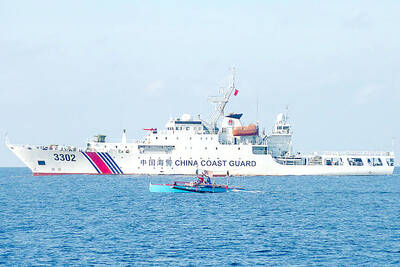
EXPANSIONIST: China deploys an average of 40 to 50 warships and coast guard vessels daily in the South China Sea, despite pledges not to militarize the region, an official said China is attempting to expand its influence across the First Island Chain and increase pressure on Japan by sending coast guard vessels into waters off of Taiwan under the pretext of maritime negotiations with Japan and the Philippines, a national security official said yesterday. China’s recent actions in the waters east of Taiwan and Japan and the Philippines’ exclusive economic zones (EEZ) are attempts to establish dominance in First Island Chain waters, said the official who declined to be named, adding that this is “expansion disguised as law enforcement.” Framing China’s actions solely as a cross-strait issue is a serious misjudgment that
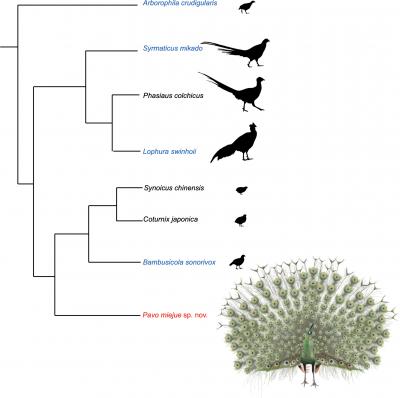
Through analyzing fossil evidence, a research team at National Taiwan University (NTU) discovered the largest endemic bird to have lived in Taiwan, naming it Pavo miejue, or extinct peafowl (滅絕孔雀). The Mikado pheasant, which is printed on the back of the NT$1,000 bank note, was previously believed to be the biggest endemic bird to Taiwan. The research team’s findings suggest that Pavo miejue lived during the Pleistocene epoch tens of thousands of years ago. It is the first endemic extinct bird species discovered and formally named in Taiwan. The study was coauthored by NTU Institute of Ecology and Evolutionary Biology professor Tsai Cheng-hsiu (蔡政修),
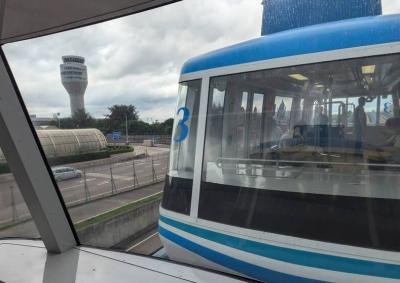
Taiwan Taoyuan International Airport is to suspend its automated Skytrain service connecting Terminal 1 and Terminal 2 starting on July 1 to facilitate connection works for the upcoming Terminal 3, the airport operator said today. Passengers and staff who need to travel between the two terminals after the suspension can instead use the Taoyuan MRT or the airport's 24-hour shuttle bus service, Taoyuan International Airport Corp said. The Taoyuan MRT Airport Line directly links the two terminals, while the shuttle buses are to operate around the clock, the company added. The Skytrain provides free transportation between the airport’s two terminals for travelers and
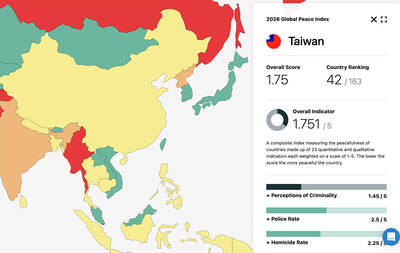
Taiwan ranked 42nd in terms of peacefulness among 163 countries, down five places from last year, according to this year’s Global Peace Index. With an overall score of 1.751, Taiwan dropped from 37th last year, the report published by the global Institute for Economics and Peace showed. The overall score measures a country’s level of peacefulness using 23 quantitative and qualitative indicators across three domains — ongoing domestic and international conflict, societal safety and security, and militarization. While Taiwan ranked 42nd worldwide, it was listed in ninth place among the 19 Asian-Pacific countries in the report, after New Zealand, Singapore, Japan, Malaysia,


 RSS
RSS