


President Chen Shui-bian (
Chen made the remark in speech at a symposium held by Academia Historica in the National Central Library and comes as debate on the new guidelines for high school history textbooks heats up.
In his speech, Chen said Academia Historica has made a great contribution under curator Chang Yen-hsien's (
"Although people in Taiwan have gone through Japan's colonization and the Chinese Nationalist Party's (KMT) autocracy for the past century, we still created a democratic miracle because of our thirst for democracy," Chen said. "But we still need to work on integrating different historical perspectives and experiences with tolerance and practicing the value of democracy in our daily life."
Chen criticized opposition parties for boycotting the establishment of a national human rights commission.
"But I do not believe they [opposition parties] can keep resisting the democratic trend," Chen said.
Although the three-day event is entitled Symposium of History of the Republic of China, it focuses on the development of Taiwan's democracy in the 20th century, the history of Taiwan's democratic movement since 1895, the KMT's reign and the process of the nation's constitutional government.
More than 70 academics specializing in history, sociology and political science attended the symposium and 31 dissertations will be announced and reviewed.
Retired National Taiwan University law professor Lee Hung-hsi (
Lee Hung-hsi said the Republic of China was overthrown by the People's Republic of China in 1949, while the KMT continued its sovereignty by occupying Taiwan without effective international backing.
Chen Chun-kai (
"At this point, Taiwan still faces a critical challenge because of the opposition parties' unreasonable boycott, which [is why] I call today's democracy in Taiwan a `nominal democracy,'" Chen Chun-kai said.
"Only by looking into Taiwan's history can we clarify today's situation and make out the road for the future," he said.

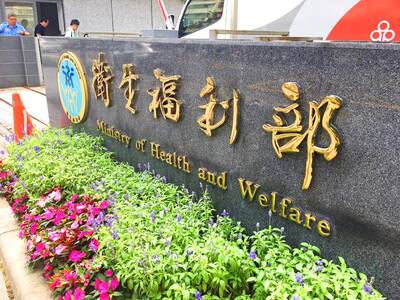
POLAM KOPITIAM CASE: Of the two people still in hospital, one has undergone a liver transplant and is improving, while the other is being evaluated for a liver transplant A fourth person has died from bongkrek acid poisoning linked to the Polam Kopitiam (寶林茶室) restaurant in Taipei’s Far Eastern Sogo Xinyi A13 Department Store, the Ministry of Health and Welfare said yesterday, as two other people remain seriously ill in hospital. The first death was reported on March 24. The man had been 39 years old and had eaten at the restaurant on March 22. As more cases of suspected food poisoning involving people who had eaten at the restaurant were reported by hospitals on March 26, the ministry and the Taipei Department of Health launched an investigation. The Food and

A fourth person has died in a food poisoning outbreak linked to the Xinyi (信義) branch of Malaysian restaurant chain Polam Kopitiam (寶林茶室) in Taipei, Deputy Minister of Health and Welfare Victor Wang (王必勝) said on Monday. It was the second fatality in three days, after another was announced on Saturday. The 40-year-old woman experienced multiple organ failure in the early hours on Monday, and the family decided not to undergo emergency resuscitation, Wang said. She initially showed signs of improvement after seeking medical treatment for nausea, vomiting and diarrhea, but her condition worsened due to an infection, he said. Two others who
MEDICAL: The bills would also upgrade the status of the Ethical Guidelines Governing the Research of Human Embryos and Embryonic Stem Cell Research to law The Executive Yuan yesterday approved two bills to govern regenerative medicine that aim to boost development of the field. Taiwan would reach an important milestone in regenerative medicine development with passage of the regenerative medicine act and the regenerative medicine preparations ordinance, which would allow studies to proceed and treatments to be developed, Deputy Minister of Health and Welfare Victor Wang (王必勝) told reporters at a news conference after a Cabinet meeting. Regenerative treatments have been used for several conditions, including cancer — by regenerating blood cells — and restoring joint function in soft tissue, Wang said. The draft legislation requires regenerative treatments

Taiwanese should be mindful when visiting China, as Beijing in July is likely to tighten the implementation of policies on national security following the introduction of two regulations, a researcher said on Saturday. China on Friday unveiled the regulations governing the law enforcement and judicial activities of national security agencies. They would help crack down on “illegal” and “criminal” activities that Beijing considers to be endangering national security, according to reports by China’s state media. The definition of what constitutes a national security threat in China is vague, Taiwan Thinktank researcher Wu Se-chih (吳瑟致) said. The two procedural regulations are to provide Chinese


 RSS
RSS