


The relationship with China has become increasingly ambiguous, with the desire for independence at odds with the drive for greater economic integration, experts on cross-strait relations said at a recent meeting in Tokyo.
The scale of investment in China has amassed to a staggering US$70 billion since 1987.
The flow of people across the Strait has also been steady, with one million locals settling in, or returning to China, roughly 400,000 of them in and around Shanghai, experts at the conference organized by Tokyo's Keio University late last month said.
The migration is largely due to the relocation of production bases in China by local semiconductor and personal computer manufacturing contractors, said Leng Tse-Kang, a political economist from Taipei's National Chengchi University.
"The main reason for the new initiative is to cut costs, enhance international competitiveness and maintain global production networks," Leng said.
Such companies are largely immune from the risk of a takeover by Chinese interests if cross-strait relations deteriorate seriously due to the involvement by their brand-holding partners -- usually Japanese or US firms.
Industry, which puts profit before politics, must internationalize operations if they want to retain their technological advantage and remain competitive, Leng said, but the government of the island has imposed some limits on investment in the name of national security.
"Many domestic factors constrain policy flexibility and efficiency. Taiwan's democratic politics and its desire to preserve the democratic system have [become] entangled with business initiatives to explore the booming Chinese market," he said.
Industry pressure has prompted a call from Premier Yu Shyi-kun to resume dialogue on the restoration of transport, trade and postal communications dirct links.
The move follows Taipei's decision to allow Taiwan-based carriers to operate charter flights to China during Lunar New Year holidays, that made brief stops in Hong Kong and Macau -- the first since direct links were severed in 1949 at the end of a civil war.
The landmark flights only got off the ground after heated debate and the government rejected an appeal from lawmakers to allow direct flights, invoking security fears.
Samuel Wu (
"With the direct link it would take one and a half hours to go from Shanghai to Taipei: It would be possible for executives to do the trip in one day. Most likely they would then choose Taipei as their headquarters," he said.
Wu said the country should be bold in efforts to increase ties with China because it risks isolation from an international community eagerly courting China.
"Economically the two sides are becoming closer and closer, but militarily and politically the two sides are becoming more and more apart," he said.
"Taiwan should locate itself in a strategic way in international trade and politics. If foreign investors perceive it as a strategic gateway [to China], then Taiwan will gain respect and money," he said, noting the island could influence China in culture and politics.
While the process of economic integration may seem unstoppable, a military stand-off still casts its pall.
Current cross-strait relations may seem less strained, but President Chen Shui-bian's (
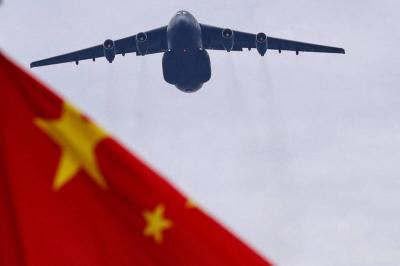
Beijing could eventually see a full amphibious invasion of Taiwan as the only "prudent" way to bring about unification, the US Department of Defense said in a newly released annual report to Congress. The Pentagon's "Annual Report to Congress: Military and Security Developments Involving the People's Republic of China 2025," was in many ways similar to last year’s report but reorganized the analysis of the options China has to take over Taiwan. Generally, according to the report, Chinese leaders view the People's Liberation Army's (PLA) capabilities for a Taiwan campaign as improving, but they remain uncertain about its readiness to successfully seize
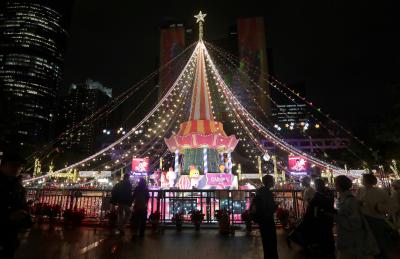
Taiwan is getting a day off on Christmas for the first time in 25 years. The change comes after opposition parties passed a law earlier this year to add or restore five public holidays, including Constitution Day, which falls on today, Dec. 25. The day marks the 1947 adoption of the constitution of the Republic of China, as the government in Taipei is formally known. Back then the Chinese Nationalist Party (KMT) governed China from Nanjing. When the KMT, now an opposition party in Taiwan, passed the legislation on holidays, it said that they would help “commemorate the history of national development.” That

Taiwan has overtaken South Korea this year in per capita income for the first time in 23 years, IMF data showed. Per capita income is a nation’s GDP divided by the total population, used to compare average wealth levels across countries. Taiwan also beat Japan this year on per capita income, after surpassing it for the first time last year, US magazine Newsweek reported yesterday. Across Asia, Taiwan ranked fourth for per capita income at US$37,827 this year due to sustained economic growth, the report said. In the top three spots were Singapore, Macau and Hong Kong, it said. South

Snow fell on Yushan (Jade Mountain, 玉山) yesterday morning as a continental cold air mass sent temperatures below freezing on Taiwan’s tallest peak, the Central Weather Administration (CWA) said. Snowflakes were seen on Yushan’s north peak from 6:28am to 6:38am, but they did not fully cover the ground and no accumulation was recorded, the CWA said. As of 7:42am, the lowest temperature recorded across Taiwan was minus-5.5°C at Yushan’s Fengkou observatory and minus-4.7°C at the Yushan observatory, CWA data showed. On Hehuanshan (合歡山) in Nantou County, a low of 1.3°C was recorded at 6:39pm, when ice pellets fell at Songsyue Lodge (松雪樓), a


 RSS
RSS