


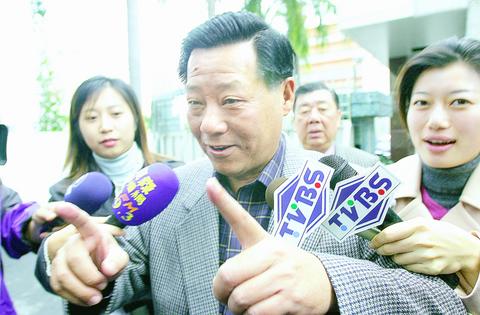
Newly elected Kaohsiung City Council Speaker Chu An-hsiung (朱安雄) once said that serving as speaker was the biggest wish in his life. His dream came true in Wednesday's election, but the vote-buying allegations against him has cast a shadow on his victory.
Coming from the Chienchen District of Kaohsiung, Chu first ran in city council elections as an independent candidate in 1972. Wu Der-mei (吳德美), Chu's wife, was expelled from the KMT as a result. Chu served two terms on city council, followed by two terms -- or 12 years -- as a member of the Control Yuan.
Wu was also elected as a city councilor and then served two terms as a lawmaker.
TAIPEI TIMES FILE PHOTO
The couple put a premium on establishing connections with local factions. Their political influence increased during the period when the two served in public office and the couple became one of the three major political families in Kaohsiung.
In 1994, the KMT recommended that Chu run for the city council and planned to nominate him as the party's candidate for the council's speaker. But Chu backed down and instead ran for deputy speaker because of then-speaker Chen Tien-mao's (陳田錨) bid for re-election. But Chu was defeated by Chang Rui-der (張瑞德), Chen's running-mate for the deputy speaker, in the second round of voting.
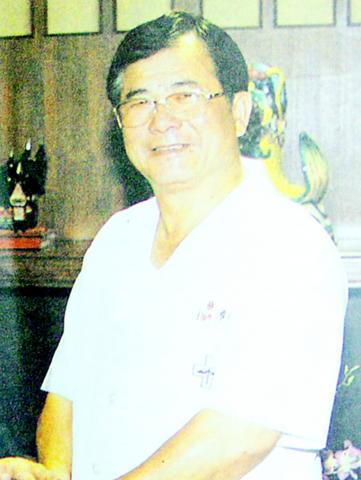
In 1997, Chu's metal companies faced a financial crisis, despite financial aid from KMT Business Management Committee Chairman Liu Tai-ying (
TAIPEI TIMES FILE PHOTO
Financial problems contributed to Chu's defeat in his second bid for the speakership in 1998.
In May 2000, Chu and his wife were indicted for accounting fraud and embezzlement. But so far, no court hearing on the case has been held.
Chu had expressed strong ambitions for the speakership when running for another term as a city councilor in the Dec. 7 elections. But many believed that he stood little chance after prosecutors indicted him on vote-buying charges on Dec. 9.
TAIPEI TIMES FILE PHOTO
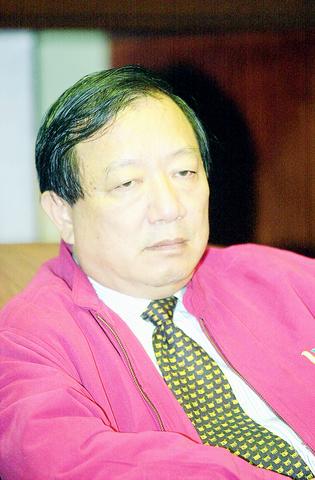
Despite his controversial background, Chu managed to secure the post.
Chan Yung-Lung
Chan Yung-lung (
Chan, a pharmacist, has twice before been nominated by the DPP to run for a councilor seat, but he only succeeded in this year's elections. Following his election, Chan and four other DPP councilors formed a faction which decided to support Chu. Chan said that if the DPP supported Chu for speaker, Chu would join the DPP after winning the election and help the party in the vice speakership race.
Wang Wen-Cheng
An arrest warrant has also been issued for Wang Wen-cheng (
During his time in the KMT, he served as a representative to the National Assembly, where he supported then-president Lee Teng-hui's Taiwan-first policies. He then joined the TIP, but when Hsieh decided to run for Kaohsiung mayor, Wang introduced Hsieh to Kaohsiung's political circles and helped him build a local contact network.
Once elected mayor, Hsieh appointed Wang director of the city's Bureau of Civil Affairs.

NATIONAL SECURITY: Authorities are working to confirm the identities of the military personnel involved and investigating possible illegal conduct and regulatory violations Authorities are probing possible national security implications after Kinmen police and immigration officers on Sunday found a Chinese woman allegedly posing as a tourist while engaging in prostitution involving more than 10 military personnel. The woman, surnamed Chen (陳), has since been deported, authorities said, adding that investigators are still working to confirm the identities of those implicated, as the records only listed code names and aliases. The case stemmed from a report received by the Kinmen District Prosecutors’ Office on Friday last week from the Jinhu Precinct of the Kinmen County Police Bureau. On Sunday, police, along with the National Immigration

GLOBALGIVING: ‘ Caving to external pressure is not acceptable for an organization that has cultivated justice reform and human rights for 30 years,’ one NGO said A slew of non-government organizations (NGOs) have withdrawn from the GlobalGiving fundraising platform after it announced it would use “Chinese Taipei” instead of “Taiwan” from next month. The Taiwan Good Rice Association wrote on Facebook on Friday that it was informed on April 28 via a teleconference call of the change, which was made because the platform wanted to operate in China. Taiwan Good Rice is to terminate all cooperative relationships with GlobalGiving in response to the platform’s “unilateral and non-negotiable” decision to remove references to Taiwan, the NGO said. “Taiwan is in the official name of Taiwan Good Rice Association and the

HEAVY WEATHER: Typhoon Jangmi is due to crash straight into the Ryukyus as airlines look to shift flights to larger aircraft or cancel flights to Okinawa entirely Taiwan’s international air carriers announced flight adjustments over the weekend as Typhoon Jangmi is forecast to hit the Ryukyu Islands today and tomorrow. The Central Weather Administration (CWA) upgraded Jangmi from a tropical storm to a typhoon at 8am yesterday, with the eye located 580km south of Naha city. It was moving north at 19kph. Today, China Airlines’ CI-120, CI-121, CI-122 and CI-123 flights between Taoyuan and Naha, Okinawa, have been canceled as well as CI-132 and CI-133 between Kaohsiung and Naha. EVA Air’s BR-112, BR-113, BR-186 and BR-185 flights between Taoyuan and Naha are also canceled. Low-cost carrier Tigerair Taiwan canceled IT-230,

Chinese Nationalist Party (KMT) Chairwoman Cheng Li-wun (鄭麗文) yesterday briefed her party’s Central Standing Committee regarding her scheduled visit to the US between Monday next week and June 16, saying that her purpose would be to persuade the US that the Republic of China (ROC) Constitution was a “one China” constitution that would foster stable and peaceful cross-strait relations. The ROC Constitution is the most important defense for all Taiwanese citizens, as it upholds our democracy and has contributed to our robust economy, which aligns with international and US interests, she said. “We would not be troublemakers and drag the US under,”


 RSS
RSS