

DPP lawmaker Cheng Yu-chen (
He reiterated his intent to divorce his wife and admitted fathering an illegitimate daughter with another woman two decades ago.
Cheng's estranged wife, Lu Pei-ying (

PHOTO: CNA
Cheng, whose triangular romance has drawn a lot of media attention, took a deep bow in an apologetic gesture during a news conference in Los Angeles but insisted he would not part with his assistant, Sophie Wang (
"I'm sorry my [romantic] affair has caused such a stir in Taiwan," said Cheng, flanked by Wang and his lawyer, Chiu Chang (邱彰). "I was like a drifter until I met Sophie. I will spend the rest of my life with her and hope the public will understand and wish us the best."
Cheng said he would quit the DPP and even resign as a lawmaker if his party and supporters found his decision unacceptable.
"I'm willing to withdraw from the party's caucus to take responsibility for my extramarital affair," he told reporters. "If this is not enough, I'm willing to quit the party and resign as a legislator."
Several people have reportedly phoned his Taipei office to condemn his "irresponsible" behavior and express sympathy for his wife.
Cheng, 56, said that since he turned 50, he no longer harbors ambitions of any kind. Calling himself crushed and disgraceful, he added he would not return to Taiwan until he obtains a divorce.
"As an old saying goes, a man must mend his household before seeking to serve his country. I don't have the nerve to face my constituents unless I put a end to this mess," the lawmaker said.
He conceded he lied about his marital status when he married Wang on July 2 in Las Vegas and that he would shoulder any legal consequences.
"I uphold the principle of monogamy," Cheng said. "So I plead that Lu will divorce me, as I love Wang and intend to go through any legal procedures to be with her."
His lawyer cited Nevada codes as saying that anyone who resides in the US state for six weeks may seek a divorce in local courts. She argued that Cheng's second marriage, conducted without an open wedding ceremony, would not be recognized in Taiwan and therefore Cheng could not be prosecuted.
Cheng broke into tears when a reporter read a letter from his daughter urging him to come home.
He expressed grave regrets that his other family members had been dragged into the matter but hoped they would be strong and independent.
"Be strong and more useful than your dad and take care of your mom," Cheng said. He and Lu had one son and one daughter during their 30-year marriage.
The lawmaker did not deny that he fathered another daughter out of wedlock more than 20 years ago and that he sought a divorce at that time.
"This time I will not relent, now that I have found my true love," Cheng said.
His emotional revelations drew a tearful reply from his first wife, who read out a letter to Cheng during a news conference in Taipei two hours later.
In the letter Lu said she had not seen her husband for a long time and that she didn't even know how to contact him.
She indirectly charged her husband of being promiscuous, but did not comment on the divorce request except to say she was worried about Cheng being guilty of bigamy.
"I am afraid he has violated marriage codes against bigamy here and in the US," a weeping Lu told reporters.
She pressed Cheng to come home soon, saying she didn't know how to help him otherwise.
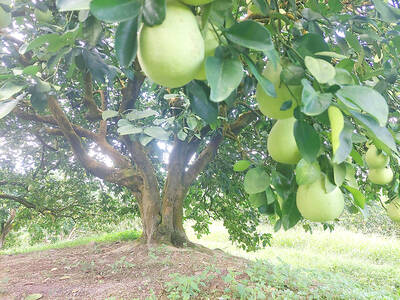
A Hualien pomelo farmer refused to sell to China after the country announced it would permit more Taiwanese pomelo imports, prompting widespread support from Taiwanese consumers, who rallied to buy his fruit. China’s Taiwan Affairs Office last month said that China’s General Administration of Customs registered an additional 79 Taiwanese pomelo orchards and packing facilities in Hualien County, allowing more Taiwanese producers to export pomelos to China. “I am a Hualien fruit farmer and I refuse to sell to China,” Liu Tzu-hao (劉子豪) from Ruisui Township (瑞穗) said in an online post. Liu is a well-known farmer in the community and has served
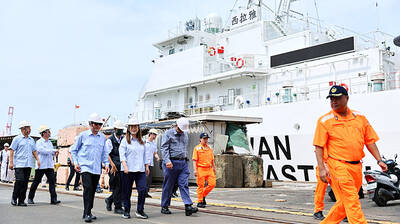
Ocean Affairs Council (OAC) Minister Kuan Bi-ling (管碧玲) on Wednesday said decommissioned coast guard vessels were given to the Philippines to enhance regional rescue capacity and would not affect Taiwanese fishers’ rights and benefits. Kuan made the remarks after confirmation on Tuesday that a 500-tonne Coast Guard Administration (CGA) patrol and rescue vessel would be given to the Philippine Coast Guard. The donation ceremony was reportedly done in Manila, but whether the vessel — previously numbered “CG123” and named Kinmen (金門) — has been handed over has yet to be confirmed. China’s Taiwan Affairs Office (TAO) on Wednesday criticized the donation for “taking
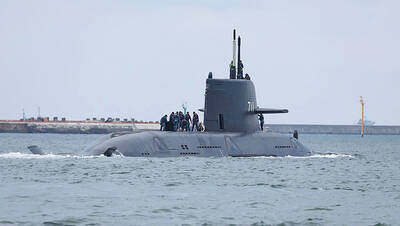
UPDATE: The submarine would need to undergo combined systems testing and crew training for navy personnel before it is ready for mission, an expert said Taiwan’s first domestically built submarine, the Hai Kun (Narwhal, 海鯤), could be delivered to the navy as early as next month, military expert and Taiwan Association for Security and Development chairman Chi Tung-yun (紀東昀) said yesterday. The submarine was yesterday morning observed departing for its 21st sea trial and its 15th submerged test. The vessel missed the initial delivery deadline of November last year due to “testing delays,” its primary contractor, shipbuilder CSBC Corp, Taiwan, said in June. The contractor also cited “political pressure from China” in procuring critical equipment. All testing operations are in the final stages, with the

Six NT$10 million (US$315,527) special prizes and seven NT$2 million grand prizes in Taiwan's May-June uniform invoice lottery remained unclaimed as of today, including one NT$10 million winner who spent only NT$10 on an Uber Eats delivery order, the Ministry of Finance said. The ministry said the 13 winners need to claim their prizes by Nov. 5. The eight-digit serial number that won the NT$10 million special prize for May-June was 38548029, with 18 winning receipts in total. The NT$2 million grand prize number was 10138845, of which there were 22 winning receipts, the ministry said. In addition to the receipt issued for an


 RSS
RSS