

A top adviser to President Chen Shui-bian (
"President Chen was a little frustrated," Nobel laureate Lee Yuan-tseh (
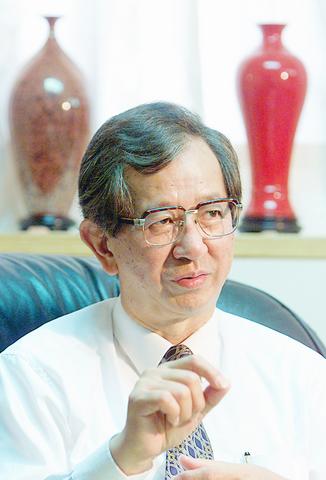
PHOTO: REUTERS
Chen said on Aug. 3 that the ability of Taiwan's 23 million to decide their future was a "basic human right" and there was "one country on each side" of the Taiwan Strait.
China reacted furiously to Chen's remarks, warning that he was leading Taiwan to "disaster." Beijing has threatened to attack if the country formally declares independence or drags its feet on unification talks.
Analysts said Chen was frustrated by China's diplomatic bullying, military build-up and refusal to deal with him.
Lee said he believes the two sides will mend fences.
"President Chen has goodwill to try to improve relations," said the co-winner of the Nobel prize in chemistry in 1986 and president of Academia Sinica, the nation's top academic institution.
"The people between Taiwan and China also have tremendous amount of goodwill toward each other," Lee said of civilian exchanges between the two sides that have boomed since detente began in the late 1980s.
"Once we have the way to communicate and try to understand each other, things will improve. I am not that pessimistic," he said without elaborating.
Chen has mellowed his pro-independence stance but a suspicious Beijing had largely ignored him.
Chinese experts on Taiwan policy say China's leaders are now debating whether they can deal with Chen at all after his boldest comments since 2000.
Chen said on Sunday that Taiwan would not be intimidated by China, but stopped short of repeating his controversial comments.
The premier said last week the government would proceed with referendum legislation only as a last resort.

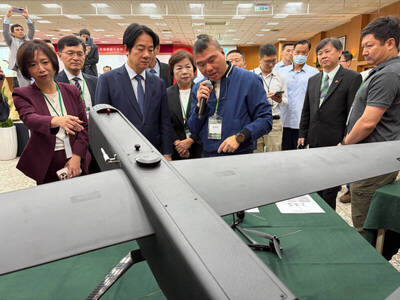
Two executives of drone supplier Jiin Ming Industry Co (錦明實業) have been detained and held incommunicado over the company's alleged use of prohibited China-made chips and camera lenses in drones supplied under recent military contracts, the Taoyuan District Prosecutors' Office said today. In a statement, prosecutors said they raided the offices of Jiin Ming — headquartered in Taoyuan — as well as those of its subsidiaries and its suppliers on Thursday last week. The raids followed a report that the company had breached its procurement contracts by putting the prohibited components into drones delivered to the military. During the raids, prosecutors summoned
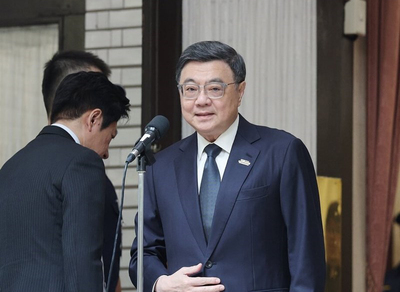
The government would continue monitoring online rumors that a pneumonic plague outbreak has spread from Russia into China and could enhance existing quarantine measures, Premier Cho Jung-tai (卓榮泰) said today. During a legislative meeting, Democratic Progressive Party Legislator Wang Ting-yu (王定宇) said rumors were circulating that the disease had spread across several Chinese provinces. He asked Cho whether the government was prepared to prevent the disease from spreading to Taiwan, given the frequent exchanges between Taiwan and China, and how concerned the government was about the alleged outbreak. The Ministry of Health and Welfare implemented border quarantine measures after briefing the Executive Yuan
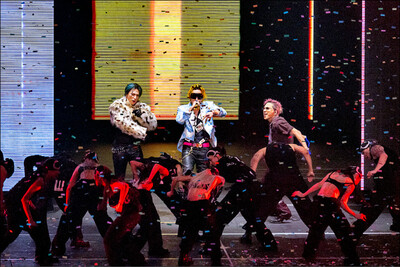
South Korean boy band BigBang drew 120,000 fans to three concerts at Taipei Dome from Friday through yesterday, as the band thanked them for their support over their 20-year career. The Taipei Dome concerts were part of BigBang's "2026-2027 World Tour XX: Cosmos." Friday's concert was BigBang's first performance in Taiwan in 11 years. During the encore, group leader G-Dragon (GD) shouted "I love you" in Chinese and said he was especially happy to perform in Taiwan with bandmates Taeyang and Daesung. "Taipei, I'm very grateful to you all," GD said in Chinese, asking fans to wait for the band's return. Daesung thanked
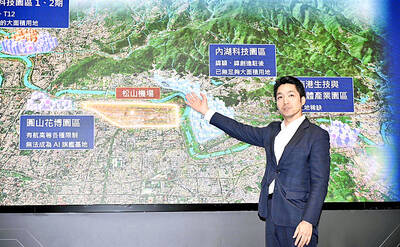
DETAILED PLAN NEEDED: Relocating the airport would affect not just travelers, but also undermine national defense and emergency medical services, a legislator said Taipei Mayor Chiang Wan-an (蔣萬安) yesterday proposed relocating Taipei International Airport (Songshan airport) and turning the site into an artificial intelligence (AI) park, drawing opposition from politicians across party lines. Chiang’s plan would turn the 300 hectares into an AI park featuring tech clusters, residential communities and green space. The industrial cluster would host 200 domestic enterprises, generate NT$12 trillion (US$376.47 billion) in output, and accommodate 65,000 jobs and 35,000 residents, he said. Cabinet spokeswoman Michelle Lee (李慧芝) said the Executive Yuan was surprised by the announcement, as the Taipei City Government did not discuss the proposal with the central government before making


 RSS
RSS