


The Mainland Affairs Council (MAC) announced a new plan yesterday to strengthen supplemental education for Taiwanese children of businesspeople working in China.
MAC Chairwoman Tsai Ing-wen (
The package proposals, according to the MAC's Deputy Director of the Department of Cultural and Educational Affairs Wang Ling-ling (王玲玲), will focus on encouraging children of Taiwanese businesspeople in China to return home to attend the supplemental education camp held by the government in the summer.
Other measures include helping teachers at Taiwanese schools in China return to Taiwan for further training, establishing scholarships for those students studying in China and strengthening exchanges between Taiwanese students in China and those at home.
Since the Chinese government can't face "the reality that there are two separate jurisdictions" over the two sides of the Taiwan Strait, "they simply [order the Taiwanese schools to] delete or change the context of Taiwan-published textbooks that involves [the nation's] ideology, values or democracratic development," MAC Vice Chairman Chen Ming-tong (
Chen said that the Chinese government's interference in the schools' curriculum has created "a separation of educational contexts that jeopardizes the consistency and completeness of the Taiwanese education system."
Chen remarked that "the establishment of schools for the Taiwanese businesspeople's children has a positive mission -- to shape values of democracy. In order to solve the difficulties encountered by those schools, the package plan will serve as a blueprint for how to help those children's education."
According to Executive Sectary of the Mainland Affairs Division of the Ministry of Education, Liu Meng-Yang (
The plan will be sent to the Executive Yuan for review next month. If approved, it is expected to be launched next year.
Currently, there are an estimated 1,200 students who study in the nation's two schools for Taiwanese businesspeople's children -- the Dongguan School for Taiwan Businesspeople's Children in Guandong Province and the East-China School for Taiwan Businesspeople's Children in Jiangsu Province.
"We are concerned about the education problems of Taiwanese businesspeople's children in China since the number of the students are growing" Chen said.

POLAM KOPITIAM CASE: Of the two people still in hospital, one has undergone a liver transplant and is improving, while the other is being evaluated for a liver transplant A fourth person has died from bongkrek acid poisoning linked to the Polam Kopitiam (寶林茶室) restaurant in Taipei’s Far Eastern Sogo Xinyi A13 Department Store, the Ministry of Health and Welfare said yesterday, as two other people remain seriously ill in hospital. The first death was reported on March 24. The man had been 39 years old and had eaten at the restaurant on March 22. As more cases of suspected food poisoning involving people who had eaten at the restaurant were reported by hospitals on March 26, the ministry and the Taipei Department of Health launched an investigation. The Food and

The long-awaited Taichung aquarium is expected to open next year after more than a decade of development. The building in Cingshui District (清水) is to feature a large ocean aquarium on the first floor, coral display area on the second floor, a jellyfish tank and Dajia River (大甲溪) basin display on the third, a river estuary display and restaurant on the fourth, and a cafe and garden on the fifth. As it is near Wuci Fishing Port (梧棲漁港), many are expecting the opening of the aquarium to bring more tourism to the harbor. Speaking at the city council on Monday, Taichung City Councilor
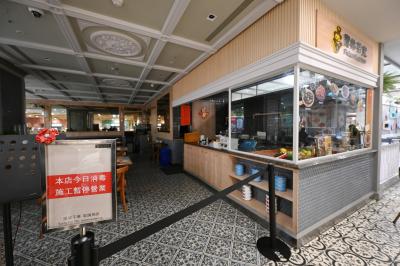
A fourth person has died in a food poisoning outbreak linked to the Xinyi (信義) branch of Malaysian restaurant chain Polam Kopitiam (寶林茶室) in Taipei, Deputy Minister of Health and Welfare Victor Wang (王必勝) said on Monday. It was the second fatality in three days, after another was announced on Saturday. The 40-year-old woman experienced multiple organ failure in the early hours on Monday, and the family decided not to undergo emergency resuscitation, Wang said. She initially showed signs of improvement after seeking medical treatment for nausea, vomiting and diarrhea, but her condition worsened due to an infection, he said. Two others who

Taiwanese should be mindful when visiting China, as Beijing in July is likely to tighten the implementation of policies on national security following the introduction of two regulations, a researcher said on Saturday. China on Friday unveiled the regulations governing the law enforcement and judicial activities of national security agencies. They would help crack down on “illegal” and “criminal” activities that Beijing considers to be endangering national security, according to reports by China’s state media. The definition of what constitutes a national security threat in China is vague, Taiwan Thinktank researcher Wu Se-chih (吳瑟致) said. The two procedural regulations are to provide Chinese


 RSS
RSS