


The International Cricket Council (ICC) yesterday unveiled a long-awaited, nine-nation Test championship in a bid to preserve the five-day format’s status following the rapid growth of Twenty20.
The Test league was among a raft of reforms agreed at an ICC board meeting in Auckland, New Zealand, including revamping the one-day international schedule and trialling four-day Tests.
“Our priority was to develop [a] structure that gave context and meaning across international cricket and particularly in the Test arena,” ICC chief David Richardson said in a statement.
The Test league is to start in 2019 and see nine teams play six series over two years — three home and three away. It will culminate in a final between the two top teams at Lord’s.
The ICC has argued for years that a Test championship is needed to boost the format’s popularity as crowds and TV viewers flock to the fast-paced, big-hitting Twenty20 version of the game.
It first appointed a committee to examine the concept back in 1998, but squabbling over formats and fears that some nations would be disadvantaged have twice stymied efforts to launch a league structure since 2010.
“Bringing context to bilateral cricket is not a new challenge, but this is the first time a genuine solution has been agreed on,” ICC chairman Shashank Manohar said.
The nine nations in the competition are Australia, Bangladesh, England, India, New Zealand, Pakistan, South Africa, Sri Lanka and West Indies.
Cricket Australia chief James Sutherland called it “a really significant moment in international cricket history.”
“It’s a tremendous step forward. The ICC and member countries have made a strong statement about international cricket and how we want to make sure it remains at the forefront of the three forms of the game.”
The ICC will hope it is a case of third time lucky for the Test championship after two previous attempts failed without a ball being bowled in anger.
A version was supposed to begin in 2013, but was scrapped because existing commercial arrangements meant the ICC was obliged to stage the one-day Champions Trophy instead.
Then plans for a June launch were scuppered when some of the game’s power brokers, including India, objected to a proposed two-tier league system, saying smaller teams would be disadvantaged.
There was also a reported lack of interest from television companies.
Purists view Test cricket as the pinnacle of the sport, but it has struggled, particularly in Asia, as lucrative T20 competitions such as the Indian Premier League caught the public’s imagination.
A recent innovation designed to reverse the trend is the introduction of day-night Test matches, which moves playing sessions to more spectator-friendly hours after dark.
The Auckland meeting also agreed to experiment with four-day Tests, with South Africa and Zimbabwe set to trial the first in December.
Richardson emphasized that the shorter Test matches were only being trialled and their results would not be part of the new Test championship.
“Throughout the discussions about the future of Test cricket it became clear... we must also consider alternatives and trial initiatives that may support the future viability of Test cricket,” he said.

When Paddy Dwyer arrived in China in 1976, crowds jostled to catch a glimpse of him and his companions — the first Western soccer team to play in the country. China was emerging from the chaos of the Cultural Revolution, and on the brink of market reforms that would take the country from economic stagnation to explosive growth. “All we could see was lines of people running beside our bus, trying to look in the windows, to see their first visual of a white person,” he said. “It was all bicycles,” he said. “There were very few cars to be seen.” Dwyer,

Jannik Sinner continued his quest to become the first man in history to win five Masters 1000 tournaments in a row with a 6-2, 6-3 victory over Danish qualifier Elmer Moller at the Madrid Open on Sunday. The world leader extended his winning streak to 19 matches, a run that began early March in Indian Wells, and he has captured 24 consecutive victories at the Masters 1000 level, dating back to the Paris Masters last October. Searching for a maiden title at this level on clay, Sinner advanced to the round of 16 at the Caja Magica with a 77-minute performance against

Some of Clearlake Capital Group’s largest investors are growing increasingly concerned about how much time the company’s co-founders are spending on sports investments as they have struggled to complete the fundraising for the private equity firm’s latest flagship fund. One of Clearlake’s co-founders, Behdad Eghbali, has been spending what some investors described as a disproportionate amount of time on the firm’s investment in Chelsea Football Club in recent months. Now, co-founder Jose E. Feliciano and his wife, Kwanza Jones, are nearing a record US$3.9 billion deal to acquire the San Diego Padres. That personal investment by Feliciano has set off the latest
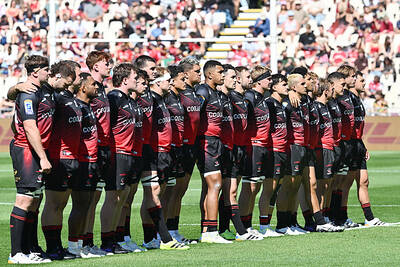
A new NZ$683 million (US$404 million) stadium that was a symbol of Christchurch’s struggle to rebuild after a deadly earthquake struck the New Zealand city is to host its first match tomorrow in front of a sellout crowd. A magnitude 6.2 earthquake killed 185 people in February 2011 and toppled or damaged buildings, including the city’s old Lancaster Park. The stadium, which hosted international rugby and cricket, and was home to the Canterbury Crusaders, was badly damaged and never reopened. It was bulldozed in 2019 and turned into sports fields, leaving the Crusaders without a permanent home. Government funding for a new stadium was


 RSS
RSS