


There was doping. There was a death. There were more medals and more countries than ever before. And there was no stopping the Chinese.
Tiny Qatar's effort to prove that the Arab world is ready to host the Olympics came to a close on Friday as the 15-day Asian Games, the biggest sporting event in the world's most populous continent, wrapped up with an unexpected bonus: the host meeting Iraq in the soccer final, the one event nearly everyone here watches.
Just about everywhere else, however, the games were a celebration of Chinese prowess and possibly a harbinger of things to come when Beijing hosts the 2008 Olympics.
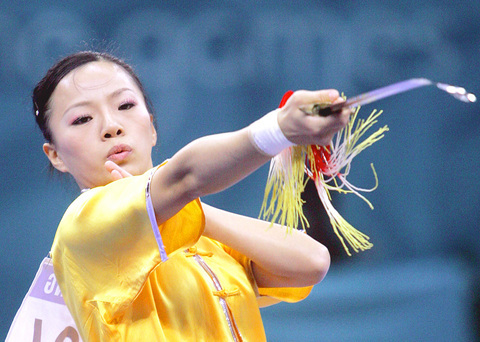
PHOTO: AFP
The Chinese claimed 165 of the 428 golds. The closest competitors were South Korea, with just 58, and Japan with 50.
"I think the Chinese dominance of the games should serve as an impetus for the rest of us to work harder," conceded Tsutomu Hayashi, the head of the Japanese delegation. "There is much for us to learn."
From the track to the pool to the beach volleyball courts, the Chinese demonstrated yet again that they are by far the strongest sports power in Asia.
China did so with an often young team that they are cultivating for the 2008 Olympics.
China brought the largest team to the Asian Games -- 647 athletes.
Of those, 413 were participating in their first major multi-sport games and averaged just 23.3 years old.
Liu Xiang, the world record-holder in the 110m hurdles, headlined China's athletics team.
But he didn't need to shine, breezing to an easy victory in 13.15 seconds for an Asian Games record, nearly half a second slower than his world mark of 12.88.
China had a harder time in the pool, where it had to split the golds with Japan, and South Korea proved strong in the team sports, defeating Chinese opponents in field hockey and volleyball.
In the lesser known sports, the Chinese also allowed others a moment in the limelight. India, for example, won in the tag-like game of kabaddi.
Elsewhere, the Chinese juggernaut was nearly invincible, ending Japan's 20-year dominance in judo and putting a stop to its undefeated status in synchronized swimming as well.
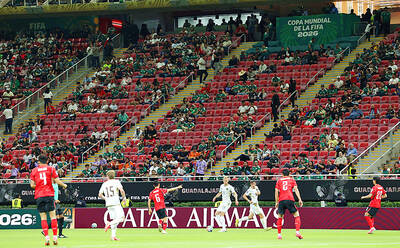
FIFA on Friday blamed the empty seats during the FIFA World Cup match between South Korea and the Czech Republic in Guadalajara, Mexico, on fans who watched from the concourses. There were many visible empty spots at the 45,664-capacity Guadalajara Stadium, with sections in the middle of the stands showing many unoccupied spaces and with other empty seats scattered around the venue. The announced attendance was 44,985 — including FIFA president Gianni Infantino. “Official attendance figures reflect the number of tickets scanned and spectators present within the stadium footprint, rather than visual assessments of seating occupancy at any given moment
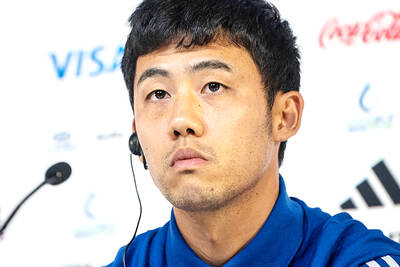
Japan captain Wataru Endo on Thursday was ruled out of the FIFA World Cup with injury and announced his international retirement, three days before his team’s opener against the Netherlands. The Liverpool midfielder pulled out of the tournament after failing to recover from a foot injury and was replaced in Japan’s squad by Shuto Machino. The 33-year-old Endo said on social media that he was “frustrated” at not being able to play, but backed his team to impress in Group F, where they face the Netherlands, Tunisia and Sweden. “There will definitely come a time in the future when Japan win the World

A rotting body was found on Friday in the trunk of a car parked near the stadium where Iran’s FIFA World Cup team is training in Mexico. The gruesome discovery came with games under way in the tournament, which is being jointly hosted by Mexico, the US and Canada. Reporters watched as police in Tijuana opened the trunk of the gray Toyota SUV, which had California plates, in the parking lot of a supermarket directly across from the Caliente Stadium, where Team Melli are training as they prepare for three games in the US. Specialists in white protective suits worked
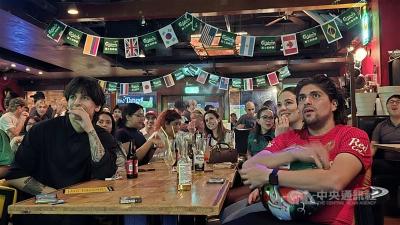
About 100 people gathered at a bar in Taipei to watch the FIFA World Cup kick off in Mexico, despite the early hour of 3am last night. All seats had been reserved before the game started, said a clerk at Brass Monkey, a bar in Taipei where customers can watch live sports broadcasts. The Group A clash between Mexico and South Africa drew supporters from multiple continents to the venue. For Misael Alanis, a Mexican student who has lived in Taiwan for two-and-a-half years, the atmosphere was just as important as the game itself. "There are a lot of Mexicans here and you can


 RSS
RSS