


The Coast Guard Administration (CGA) yesterday used the occasion of its second anniversary celebration to publicize some of the law-enforcement and maritime search-and-rescue achievements it is most proud of.
The CGA, inaugurated on Jan. 28, 2000, said one of its most remarkable accomplishments over the past two years has been the discovery and seizure of NT$11.8 billion worth of smuggled goods, including cigarettes, liquor and oil, as well as agricultural and fishery products.
CGA Director Wang Chun (王郡) said another major accomplishment of the administration has been search-and-rescue missions for around 1,600 people reported missing or stranded in shipwrecks or sea disasters.
"This achievement is indeed something to be proud of. Unfortunately, we were unable to save all those we intended to. There is still much room for improvement. We have yet to upgrade our equipment," Wang said.
President Chen Shui-bian (
With the agency's current equipment, mainly ships, President Chen said the CGA is unable to "have all of Taiwan's territorial waters" under its control.
The president said he expected the CGA to develop "three-dimensional operational capabilities" to make up for its deficiency in surface vessels.
Chen made the remarks in a speech he delivered to the CGA leadership and its staff at the Taipei headquarters of the administration. The three-dimensional operation capabilities Chen mentioned refer mainly to an air arm that the CGA is to bring into service.
The air arm will become operational on Friday, Wang said.
It is basically a fleet of helicopters with search-and-rescue capabilities.
Because of budgetary constraints, the CGA will not own the helicopters. They will be chartered from a civil aviation company on a pay-per-flight basis.
The CGA declined to reveal any further details of the helicopter fleet, such as the number of aircraft involved.
Besides the soon-to-be-established air arm, Wang also announced that the administration will increase the number of fixed coastal radar sites from 45 to 78 over the next few years.
The new radar sites will be built by local firms that won the bidding for the project in December.
The new radar sites will be linked to satellites, an official with the CGA said. It is not known which country the satellites belong to.
The CGA was founded in February 2000 and combined the coast guard command of the military, the marine police under the National Police Administration and certain portions of the customs office under the Ministry of Finance.

The Tourism Administration yesterday announced that it would reward repeat international visitors with incentives of up to NT$8,000 to boost inbound tourism. The incentives are available to all international tourists, it said, adding that repeat visitors would be rewarded with NT$5,000 and would receive an additional NT$3,000 if they bring travel companions. The nation received 2,990,657 inbound visitors during the first quarter, marking a 3.8 percent increase from the same period last year, agency data showed. Japanese nationals are among groups visiting Taiwan the most. About 1.48 million Japanese tourists arrived last year, a year-on-year increase of more than 12
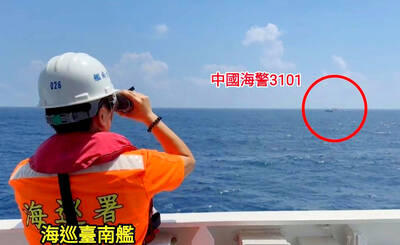
‘BRAZEN’: The holiday did not stop China from activities that infringe on Taiwan’s maritime jurisdiction, but the CGA is ready to defend the nation, Kuan Bi-ling said Beijing is intensifying maritime pressure on Taiwan, but the nation will never yield, Ocean Affairs Council Deputy Minister Sung Chen-en (宋承恩) said. The Coast Guard Administration (CGA) has adopted a “shadowing and monitoring” approach to avoid falling into a Chinese trap to escalate tensions and deepen the conflict, Sung said in an interview published yesterday in the Chinese-language Liberty Times (the Taipei Times’ sister newspaper). China Coast Guard formations patrolling waters east of Taiwan, as well as official Chinese vessels entering areas around Itu Aba Island (Taiping Island, 太平島) and Pratas Islands (Dongsha Islands, 東沙群島) show Beijing’s attempts to significantly step up
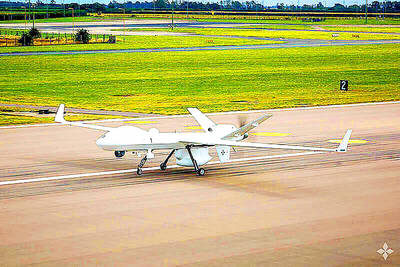
BOOST: By operating the same advanced systems as the US military, Taiwan would be better positioned to share and integrate intelligence with partners, an expert said The first batch of MQ-9B SkyGuardian drones has arrived in Taiwan, and is being assembled and tested by drone manufacturer General Atomics and the military ahead of flight trials as part of the air force’s acquisition to bolster its aerial surveillance capabilities, a source said yesterday. The air force allocated a budget of NT$21.7 billion (US$687 million) from 2022 to 2029 to procure four MQ-9B uncrewed aerial vehicles (UAVs) manufactured by General Atomics along with associated equipment such as ground control stations. The US has agreed to deliver the four MQ-9Bs to Taiwan in two batches this year and next
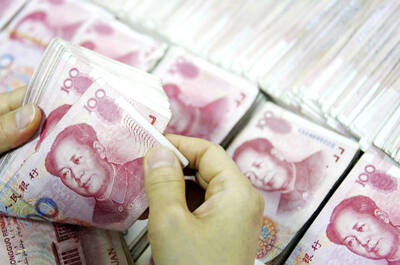
Taiwanese firms’ China investments have dwindled to less than 1 percent of their total foreign investments, putting China-based investments on track for a record low this year, Ministry of Economic Affairs data showed. Taiwan’s investments abroad in the first five months of this year reached US$35.92 billion, Department of Investment Review data showed. Investments outside China totaled US$35.61 billion, up 133.94 percent year-on-year, while investments in China totaled US$310.3 million, down 32.3 percent and about 0.86 percent of the total, data showed. Major overseas projects included Taiwan Semiconductor Manufacturing Co’s (TSMC, 台積電) US$30 billion capital injection into an overseas subsidiary,


 RSS
RSS