


A group of Filipino and Thai workers delegates shook hands and hugged one another in Mailiao yesterday, at a reconciliation session called to ease tensions following the worst foreign labor riot in Taiwan history.
Ritthie Thepwong, a Thai workers' delegate, formally apologized on behalf of the Thai workers. "I'm sorry for the incident that occurred," he said, "this will never happen again."
Eliot S. Cojuangco, a labor representative from the Manila Economic and Trade Office (MECO), accepted the apology and said he should send a warm greeting to the other Thai workers. "We are brothers in Asia so we should help each other as brothers." Cojuangco said Filipinos would follow the rules and regulations of Taiwan.
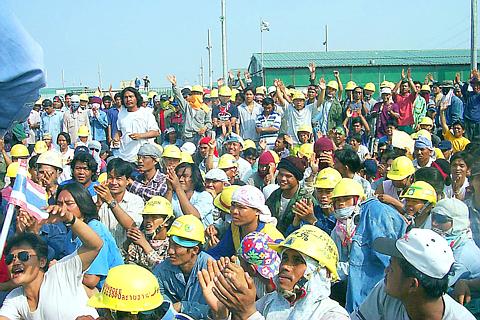
PHOTO: LIN KUO-HSIEN, LIBERTY TIMES
The meeting followed 48 hours of sporadic violence between the two groups at the Formosa Plastic Group's sixth naphtha cracker site, including an eight-hour long running battle Sunday night, that left 20 people injured.
The tensions were sparked by the alleged beating of three Thai men Sunday afternoon who had ended up on a bus filled with Filipino colleagues after going for a health check-up in Taichung. Following the return of the bus to the Mailiao construction site, fighting erupted between the two ethnic groups, ostensibly over the use of telephones in a dormitory.
Some 200 to 300 workers battled one another Sunday night, armed with bats, iron bars and home-made petrol bombs at the height of the feud. But officials say almost 3000 laborers were eventually involved in the unrest.
Steps are being taken to prevent further conflict between the two sides, but tensions remain.
Officials from Formosa Plastics and Samsung Engineering and Construction Company (one of Formosa's subcontractors at the site), spent several hours yesterday trying to rearrange workers' living quarters to ensure the Filipinos are housed several kilometers away from their Thai colleagues.
But efforts to move Filipinos out of the plant drew complaints from both workers and official Philippine representatives. Some 2,000 Filipinos were bused to the nearby Cheng-an temple (
Due to a lack of space in the temple, however, half were asked to sleep outside on the square in front. They were given corrugated paper to sleep on, with their luggage spread all over the square. "How can we sleep here?" said one Filipino worker yesterday, adding their employer had treated them as second-class citizens. However, as of press time, hundreds of Filipino workers still remained camped outside the temple, refusing to return citing security concerns.
Other workers said yesterday they had heard rumors that Samsung was considering hiring all of its workers from just one country as a way to avoid further racial conflicts. However, Tsuai Hsin-chih, managing director of Samsung Construction ruled out such racial factors in hiring.
At yesterday's reconciliation meeting, Tsuai blamed Sunday night's clashes on drinking problems on both sides. He also said the fighting had been fueled by a rumor that two Thai workers had been killed by Filipinos.
"The Thai workers used mobile phones and two-way radios to call their fellow workers from other factories to join the fight. This made the riot beyond our control," he said.
Some Filipino workers backed up Tsuai's contention that alcohol played a part in the uproar, saying beer was sold around workers' dormitories, even though regulations ban alcohol inside the plant. Lin Chin-tzu (林慶賜), deputy manager of the management department at the complex said a decision had been made to stop selling beer inside the plant for the next few days. But he did not say if the ban would be permanent.
Meanwhile, MECO's Conjuangco wants to see more safety measures provided. He asked Formosa Plastics to beef up its protection of Filipino workers. "We want a greater police presence," he said.
The police force in the Mailiao area, however, is not large enough to provide such protection, or to really deal with a large-scale riot. The nearby police station has only 200 people, with another 100 posted elsewhere in the county.
According to Formosa Plastics, at the end of August there were some 18,000 foreign workers at the site -- 8,534 Thais, 7,358 Filipinos and 1,733 Indonesians.
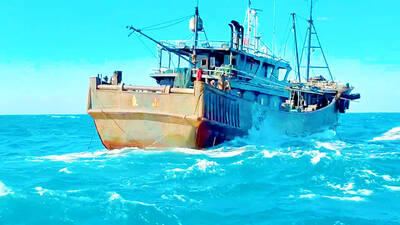
MAKING WAVES: China’s maritime militia could become a nontraditional threat in war, clogging up shipping lanes to prevent US or Japanese intervention, a report said About 1,900 Chinese ships flying flags of convenience and fishing vessels that participated in China’s military exercises around Taiwan last month and in January last year have been listed for monitoring, Coast Guard Administration (CGA) Deputy Director-General Hsieh Ching-chin (謝慶欽) said yesterday. Following amendments to the Commercial Port Act (商港法) and the Law of Ships (船舶法) last month, the CGA can designate possible berthing areas or deny ports of call for vessels suspected of loitering around areas where undersea cables can be accessed, Oceans Affairs Council Minister Kuan Bi-ling (管碧玲) said. The list of suspected ships, originally 300, had risen to about
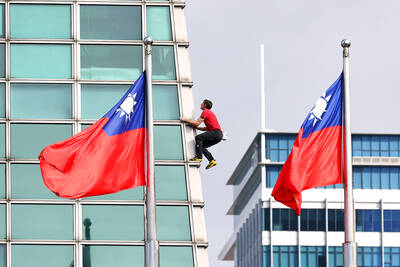
DAREDEVIL: Honnold said it had always been a dream of his to climb Taipei 101, while a Netflix producer said the skyscraper was ‘a real icon of this country’ US climber Alex Honnold yesterday took on Taiwan’s tallest building, becoming the first person to scale Taipei 101 without a rope, harness or safety net. Hundreds of spectators gathered at the base of the 101-story skyscraper to watch Honnold, 40, embark on his daredevil feat, which was also broadcast live on Netflix. Dressed in a red T-shirt and yellow custom-made climbing shoes, Honnold swiftly moved up the southeast face of the glass and steel building. At one point, he stepped onto a platform midway up to wave down at fans and onlookers who were taking photos. People watching from inside
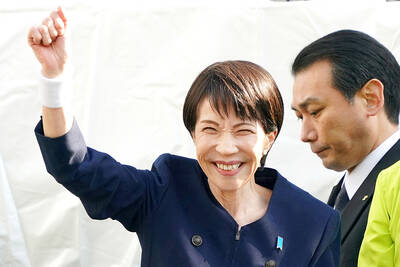
Japan’s strategic alliance with the US would collapse if Tokyo were to turn away from a conflict in Taiwan, Japanese Prime Minister Sanae Takaichi said yesterday, but distanced herself from previous comments that suggested a possible military response in such an event. Takaichi expressed her latest views on a nationally broadcast TV program late on Monday, where an opposition party leader criticized her for igniting tensions with China with the earlier remarks. Ties between Japan and China have sunk to the worst level in years after Takaichi said in November that a hypothetical Chinese attack on Taiwan could bring about a Japanese
STREAMLINED: The dedicated funding would allow the US to transfer equipment to Taiwan when needed and order upgraded replacements for stockpiles, a source said The US House of Representatives on Thursday passed a defense appropriations bill totaling US$838.7 billion, of which US$1 billion is to be allocated to reinforcing security cooperation with Taiwan and US$150 million to replace defense articles provided to the nation. These are part of the Consolidated Appropriation Act, which the US House yesterday passed with 341 votes in favor and 88 against. The act must be passed by the US Senate before Friday next week to avoid another government shutdown. The US House Committee on Appropriations on Monday unveiled the act, saying that it allocates US$1 billion for the Taiwan Security Cooperation Initiative


 RSS
RSS