


The mayor of Hiroshima urged Japan to sign a landmark UN treaty banning nuclear weapons as the city on Tuesday marked 74 years since being targeted in the world’s first atomic attack.
Prime Minister Shinzo Abe led commemorations at the Peace Memorial Park in Hiroshima as residents offered silent prayers, lit candles and placed wreathes to remember those killed in the Aug. 6, 1945 bombing.
Mayor Kazumi Matsui used the occasion to push the Abe administration to sign the UN treaty on the prohibition of nuclear weapons (TPNW), adopted by more than 120 nations, but rejected by the US and other nuclear-armed countries.
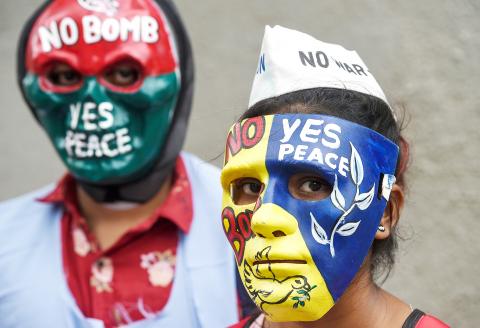
Photo: AFP
照片:法新社
”I call on the government of the only country to experience a nuclear weapon in war to accede to the hibakusha’s (atomic bomb victims) request that the TPNW be signed and ratified,” said Matsui.
“I urge Japan’s leaders to manifest the pacifism of the Japanese constitution by displaying leadership in taking the next step toward a world free from nuclear weapons.”
The ongoing threat from atomic weapons in the region was demonstrated as nuclear-armed North Korea fired two “unidentified projectiles” off its eastern coast — the latest in a series of tests.
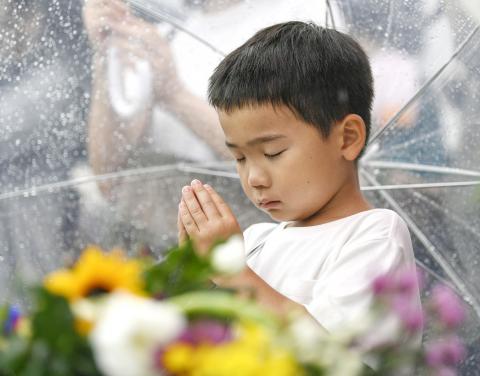
Photo: AP
照片:美聯社
Japan remains the only country to have experienced atomic attacks — against Hiroshima and Nagasaki — days ahead of the country’s surrender on Aug. 15, 1945 to end World War II.
(AFP)
週二是廣島被當作世界首次原子彈攻擊目標的七十四週年,廣島市長呼籲日本政府盡快簽署一份具指標性的聯合國禁止核武器條約。
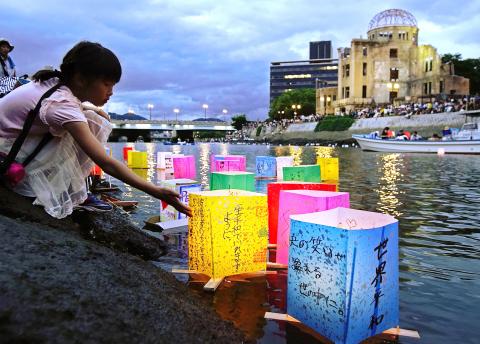
Photo: AFP
照片:法新社
日本首相安倍晉三在廣島的和平紀念公園主持紀念儀式,當地居民默禱、點燃蠟燭,並獻上花環,紀念在一九四五年八月六日那天遭到殺害的人們。
廣島市長松井一實藉由這個場合,督促安倍政府簽署聯合國的禁止核武器條約(TPNW)。這項條約已獲得超過一百二十個國家通過,卻遭到美國以及其他核武器擁有國反對。
廣島市長松井一實表示:「我呼籲日本政府,作為戰時唯一遭受核武器攻擊的國家,應允諾原爆者提出的訴求,簽署並正式批准《禁止核武器條約》。」
「我強烈呼籲日本領導人應展現領導精神,踏出新的一步,邁向沒有核武器的世界,藉此表現出日本憲法的和平主義。」
在東北亞區域,核子武器的威脅仍然持續存在。擁有核武的北韓日前向其東部外海發射了兩枚「不明導彈」,這還只是北韓一系列測試中最近的一次。
日本目前仍然是唯一遭受過原子彈攻擊的國家。當時,廣島和長崎遭到轟炸,日本在數日後於一九四五年八月十五日投降,結束第二次世界大戰。
(台北時報章厚明譯)
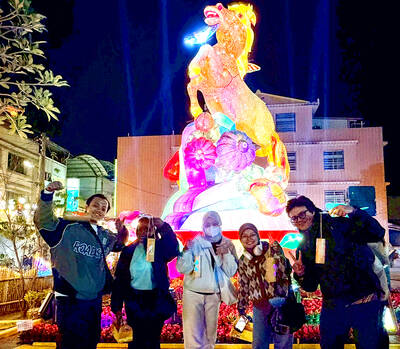
A: Harvard professor Robert Waldinger’s “7-day Happiness Challenge” includes: Day 1: Take stock of your relationships; Day 2: The secret power of an 8-minute phone call; Day 3: Small talk with strangers has big benefits. B: That’s not too hard. What’s next? A: Day 4: Why you should write a “living eulogy;” Day 5: The importance of making work friends; Day 6: Don’t cancel those social plans. B: Good ideas. What’s the final challenge? A: Day 7: Keep happiness going all year long. So, I’m inviting some friends to the Taipei Lantern Festival today to build good relationships. Wanna
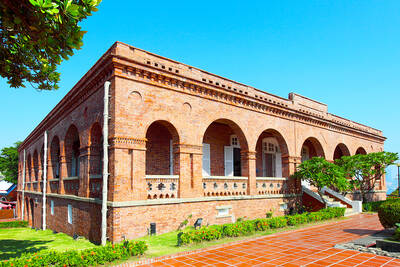
★ 本文由生成式 AI 協作,本刊編輯編修。 For tourists looking for a scenic way to spend an afternoon in Kaohsiung, heading to the British Consular Residence of Takao is the perfect choice. Its elevated position allows one to take in the bustling Kaohsiung Harbor to the east and the dazzling sunset over Sizihwan Bay to the west. This elegant red-brick building also serves as a portal to the city’s rich history. Interestingly, for 70 years, many people mistakenly identified this residence as the actual consulate. The history of “Takao,” the former name of Kaohsiung, began its international chapter in the mid-19th century. As European powers

★ Bilingual Story is a fictionalized account. 雙語故事部分內容純屬虛構。 The fog came before the knock. It covered the street and pressed against the window. Chao Gung-dao lit a small oil lamp, but his makeshift hut stayed dim. Another knock. Chao opened the door. The inspector stepped inside and removed his hat. He did not smile. “You remember me?” the inspector said. Chao resented the question. The inspector looked around the small room. His eyes stopped on a wooden box resting on a low beam above Chao’s head. “What is that?” Chao stayed silent. The inspector pulled the box down and
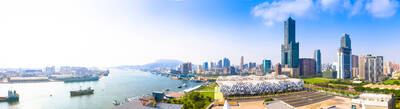
★ 本文由生成式 AI 協作,本刊編輯編修。 Continued from yesterday(延續自昨日) https://www.taipeitimes.com/News/lang Kaohsiung’s deep connection with the sea continues to thrive, with Kaohsiung Harbor remaining a crucial hub for global shipping. In addition to the port, the city has emerged as a major player in another world-class maritime industry—yacht manufacturing, responsible for producing 80 percent of all Taiwan-made yachts. The yacht industry in Taiwan originated in the post-World War II era, when the US military presence in Taiwan provided local boat builders with guidance on making wooden yachts. The resulting craftsmanship was so exquisite that orders soon poured in. In 1977, Taiwan replaced Canada as the main yacht


 RSS
RSS