


Since its debut on the iQiyi online video platform in January, the popularity of “Idol Producer,” a boy band reality show, has soared. The producer of the show, which quickly garnered over 100 million views within the first hour of broadcast, is hit Korean group EXO member Zhang Yixing, also known as Lay.
Among the 100 trainees, Taiwan’s Chen Li-nong, Jack Hsu and Lin Yanjun have drawn a lot of attention from netizens. Chen, nicknamed “Nong Nong,” performed brilliantly and was the only A-rated contestant in the first episode. Hsu, a consummate dancer, has already won an award in a world street dance championship. Lin, meanwhile, was voted the best-looking guy in the group by the other contestants, earning him the name "xiao xian rou" (or hunky boy).
In the first elimination round, Chen won 7.4 million votes and took the second spot. Internet celebrity Cai Xukun was ranked first and Fan Chengcheng — the younger brother of actress Fan Bingbing — was ranked third. Those ranked between 61 and 100 were eliminated.

Photo courtesy of Idol Producer
照片︰偶像練習生提供
(Liberty Times, translated by Eddy Chang)
愛奇藝平台男團實境秀「偶像練習生」於一月開播後人氣暴增。該節目由南韓夯團EXO成員張藝興(Lay)擔任製作人,上線一小時點擊率就突破一億人次。
而在一百位練習生當中,台灣的陳立農、許凱皓和林彥俊,也備受網友矚目。被暱稱為「農農」的陳立農表現亮眼,是首集唯一獲得A等級最高評價的練習生。許凱皓舞技精湛,曾在世界街舞大賽得獎。林彥俊則被所有練習生票選為「顏值擔當」,是公認的「小鮮肉」。

Photo: Wu Chih-wei, Liberty Times
照片︰自由時報記者吳志偉翻攝
首輪淘汰賽中,陳立農獲得約七百四十萬票高居第二名,第一名是網紅蔡徐坤,第三名是女星范冰冰的弟弟范丞丞,第六十一名到一百名的學員則慘遭淘汰。
(自由時報)
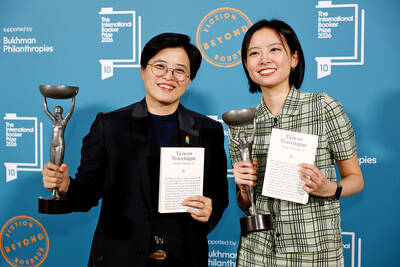
Taiwan Travelogue, the novel by Taiwanese author Yang Shuang-zi and translated into English by Lin King, won the prestigious International Booker Prize in London on May 19. It marks the first time a Taiwanese literary work has received the International Booker Prize, setting a historic milestone both for Taiwanese literature and for the award itself. Prior to this achievement, Taiwan had only once appeared on the Booker radar, when Taiwanese author Wu Ming-yi was longlisted for the Booker Prize in 2018 with The Stolen Bicycle. The International Booker Prize honors works of fiction translated into English and published in the UK or Ireland.

A: While Taiwan is celebrating the 7th anniversary of legalizing same-sex marriage, a poll shows that the support rate for same-sex marriage rose sharply from 37.4 percent seven years ago to 69.9 percent last year. B: Actually, I’m a bit curious about the size of Taiwan’s LGBT population. A: I’m not sure. But if we take a Gallup poll in the US as an example, 9.3 percent of American adults identified as LGBT in 2024. B: Wow, is it because the Americans are relatively open? In many other countries, the figures hover around 5 percent. A: Based on this,
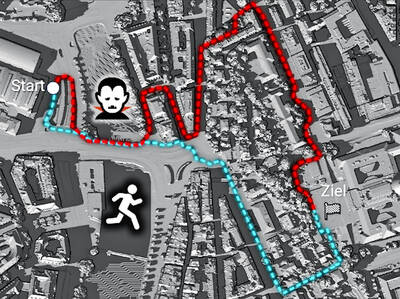
As climate change and urbanization push city temperatures higher, walking outdoors is becoming increasingly uncomfortable in many parts of the world, especially when prolonged time spent in sunlight is involved. As a result, outdoor lovers are now seeking cooler, shaded walking routes. However, most mainstream map apps still do not __1__ shaded footpaths. Enter routing.osm.ch — a Swiss web-based route planner that introduces a novel solution to this problem. Its “Vampire mode,” named after the legendary creatures’ fear of being __2__ natural light, was developed by a Swiss research team led by Professor Stefan Keller. The platform combines open data from

Cities around the world are testing “robotaxis,” hoping that autonomous vehicles will ease traffic and reduce emissions. However, recent analyses suggest these expectations may be overly optimistic. According to consulting firm Kearney, robotaxis could actually make congestion worse rather than better. Because self-driving rides are expected to be cheaper and more convenient than traditional taxis, more people may choose them over walking, biking, or using public transportation. This shift would put more cars on already crowded roads. Another concern is “deadheading,” which refers to robotaxis traveling without passengers between rides. Since autonomous fleets need to reposition themselves throughout the day, these


 RSS
RSS