


To promote Hakka cuisine, the Taichung City government will hold a Dongshih Hakka Cuisine Outdoor Banquet next month. The venue will have one hundred banquet tables and can seat one thousand people. The public can indulge in Hakka cuisine while enjoying a wonderful program of performances and a raffle. Tickets to the event have already gone on sale, with a number of tickets still available; one ticket reserves one table. People that are interested may purchase tickets on the ibon online booking system.
Taichung City Mayor Lin Chia-lung used the slogan “South and north Taiwan eat to get full, while Taichung eats smart” to recommend everyone to head to Dongshih to try out the cuisine. Lin said, aside from eating smart, Taichung food is extordinarily varied, and the authentic cuisine of Dongshih has the purist Hakka flavor. For only NT$3,999, you can enjoy 12 Hakka dishes. Lin recommends that everyone register for the event as early as possible to have a good meal together and experience rich Hakka culture.
The Economic Development Bureau says the Dongshih Hakka Cuisine Outdoor Banquet will bring together Dongshih township’s local Hakka seal meat, drunken chicken and fresh shrimp, assorted Hakka grass jelly, pickled mustard-green pork soup and more, served at an outdoor banquet with one hundred tables and seating for one thousand people. The bureau hopes the event will raise the profile of Taichung’s Hakka food culture.
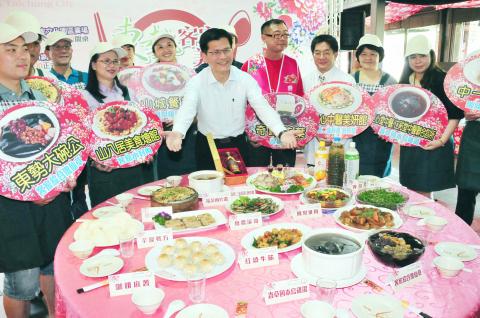
Photo: Lee Chung-hsien, Liberty Times
照片:自由時報記者李忠憲
The bureau says tickets will go on sale on July 15, and there are only a few tickets left. One ticket reserves one table, and one table seats ten people. The city has also arranged for Hakka song and dance performances on the day of the banquet, as well as a raffle with the chance to win the grand prize of a 40 inch LCD TV.(Liberty Times, translated by Zane Kheir)
為推廣客家美食,市府將於下月舉辦「東勢客家美食辦桌囉」活動,現場席開百桌宴千人,民眾可一邊享用客家美食、一邊欣賞精彩節目及摸彩。活動票券已開賣,還有數張名額(一張為一桌),意者可上ibon網路購票系統購買。
市長林佳龍以「南北吃飽,台中吃巧」推薦大家到東勢嚐美食。他說,來台中除了吃巧外,食物還有多重變化,東勢道地美食有最真實的客家風味,只要三九九九元就可以吃到十二道客家美食,他推薦大家盡早報名,一同吃美食並體驗豐富客家文化。
經濟發展局表示,「東勢客家美食辦桌囉」活動集東勢在地客家小封肉、二仙膠醉雞鮮蝦、客家綜合嫩仙草、福菜肉片湯等在地菜色為大成,以百桌千人辦桌方式,盼讓台中客家飲食文化發揚光大。
經發局指出,票券於十五日開賣,目前僅剩幾張名額,一張票等同一桌,一桌十人份,當天還安排客家歌舞演出以及抽獎,有機會抽中最大獎四十吋液晶電視。
(自由時報記者李忠憲)


A: Isn’t the 2026 Coachella Valley Music and Arts Festival — a massive music event held every April — about to open in California? B: Yeah the festival is set to take place over two weekends, from April 10 to 12 and 17 to 19, US time. A: I heard this year’s main stage headliners include Sabrina Carpenter, Justin Bieber, Karol G and EDM DJ Anyma. B: The K-pop army is also making an appearance, with legendary group BigBang, SHINee member Taemin and girl group Katseye debuting for the first time. A: Isn’t Coachella also live-streamed on its YouTube

A: Several Japanese and South Korean acts, such as BigBang, are participating in this year’s Coachella Music Festival. Have any Mando-pop singers ever performed at Coachella? B: Yup, K-pop group GOT7’s Hong Kong member Jackson Wang, and Taiwanese band Sunset Rollercoaster, which primarily performs in English, attended the festival before. A: It’s a pity that we didn’t fly to Coachella. But in fact, Taipei has also gradually become an Asian music hub in recent years. B: That’s true. K-pop sensation Twice just held three concerts at the Taipei Dome, followed by Hong Kong singer G.E.M., who is going

Concertgoers know the rush all too well — the moment the first notes play, your heart races, and nothing else seems to matter. For many, the excitement doesn’t end when the lights come back on. Some fans try to relive the performance by listening to the same songs for days afterward. __1__ A few days after an amazing show, they begin to feel unexpectedly low. Psychologists have coined a term for this phenomenon: “post-concert depression,” or “PCD.” PCD is primarily related to hormone levels. When you’re at a concert, the excitement causes your brain to release feel-good chemicals like
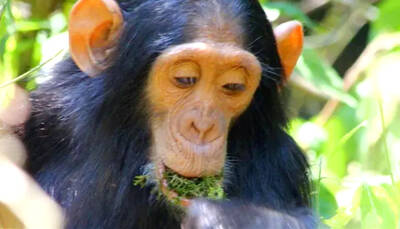
A new study suggests that chimpanzees can weigh evidence and make rational judgments. In the experiment, researchers placed two boxes in front of the chimpanzees. One box was set up to give strong evidence, such as letting the chimpanzees actually see food inside. The other was designed to provide weak evidence, like producing a rattling sound when it was shaken. The chimps consistently chose the box with strong evidence, even when the weaker clue appeared first. This indicated that they were not fooled by the order of presentation. In another trial where no strong evidence was available, the chimps


 RSS
RSS