


Yet another edible oil plant near the Fongshan River watershed in Greater Kaohsiung has officially been shut down. The local government found that Chang Guann Co was dumping toxic water in the river, which makes it the third company in half a year to be shut down for illegal dumping. The highest fine possible of NT$600,000 was handed down to the factory, which was forced to halt operations.
Greater Kaohsiung’s Environmental Protection Bureau says that since 2011 refined edible oils’ manufacturer Chang Guann Co has a record of causing water pollution four times. On April 18 it was also discovered that the company’s disposed toxic wastewater is taking a toll on the water flowing in Fongshan River. The company has been punished and its plant has been closed in accordance with the Water Pollution Control Act.
Yang Han-tsung, head of the bureau’s Environmental Inspection Division, says that the test results for chemical oxygen demand and biochemical oxygen demand were relatively high. Water quality tests were completed on April 25, and fines were issued according to the law, Yang says, adding that the company has not made any statements.
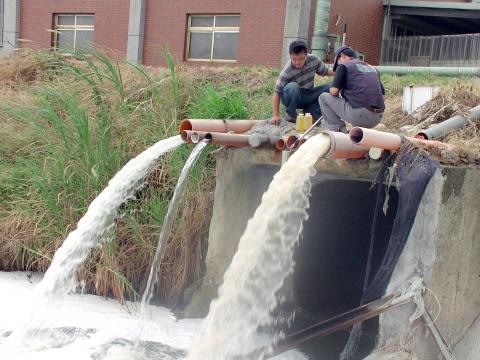
Photo: Lee Jung-ping, Liberty Times
照片:自由時報記者李容萍
It was reported at the beginning of April this year that Fongshan River-based Golden Brand shredded squid-maker Chin Chi Shun Industrial Co was allegedly also illegally dumping toxic wastewater. A vast amount of milky white wastewater was released after the factory finished cleaning squid and other seafood. The company was fined NT$600,000 and the factory was forced to shut down.
Bureau director Derek Chen says that over the past year four companies operating plants at the Fongshan watershed have been forced to shut down, adding that nearly 20 companies operating around Greater Kaohsiung watersheds have been shut down. Chen hopes that these companies will be proactive about improving their treatment of wastewater and properly operate treatment facilities to avoid polluting rivers and harming local residents’ health.
(Liberty Times, Translated by Kyle Jeffcoat)
高雄鳳山溪流域又一食用油廠被勒令停工,市府查獲「強冠企業股份有限公司」放流水超標,為半年來第三次廢水超標,處以最高罰鍰六十萬元並勒令停工。
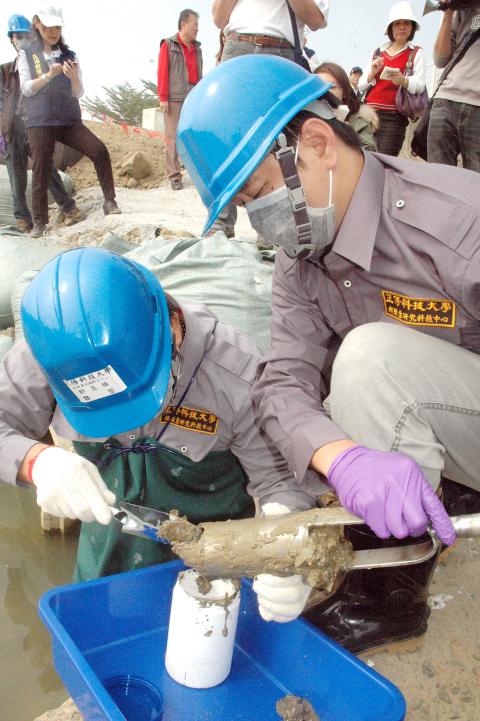
Photo: Fang Chih-hsien, Liberty Times
照片:自由時報記者方志賢
高雄環保局表示,強冠企業製造食品加工用油,二0一一年後有四次違反水污染紀錄,今年四月十八日又發現放流水超標,影響鳳山溪水體,依水污染防治法規定裁處並勒令停工。
環境稽查科長楊漢宗表示,查獲化學需養量、生物需養量濃度偏高,水質檢測於四月二十五日完成,依規定開罰,廠商未表示意見。
今年四月初,鳳山溪生產金牌魷魚絲的金吉順公司,被檢舉涉嫌偷排廢水,工廠清洗魷魚等海產後流出大量乳白色廢水,被罰六十萬元並勒令停工。
環保局局長陳金德強調,近一年來,鳳山溪流域列管事業已陸續稽查四家事業單位停工,而全高雄市各流域停工近二十家,希望相關業者能積極改善廢水處理並妥善操作處理設備,避免污染河川損及市民健康。
(自由時報記者黃旭磊)

A: Hey, the world’s major dictionaries just unveiled their words of the year for 2025. B: Yup, the Cambridge Dictionary chose the word “parasocial,” which refers to a connection that someone feels between themselves and a famous person they don’t really know. A: One-sided parasocial relationships with celebrities, influencers and even AI chatbots have clearly become more common. B: The Oxford Dictionary picked “rage bait” — online content designed to elicit anger by being frustrating, provocative or offensive in order to increase traffic to Web sites or social media accounts. A: The Collins Dictionary picked “vibe coding.” Let’s

A: Apart from the world’s major dictionaries, the online Dictionary.com actually picked “67” as its word of the year. B: What does “67” even mean? A: Even the dictionary wasn’t exactly sure about its meaning. The slang term’s origin might be traced to US rapper Skrilla’s song Doot Doot (67). Aren’t Taiwanese media outlets choosing the Mandarin word for 2025? B: Yeah and after hearing the song Good-for-Nothing, adapted from some catchphrases of Legislator Wang Shih-chien, I’m going to vote for the character “tsung” (hasty) from the lyrics. A: Hopefully, in the new year, we’ll be calm as the

Sea star wasting disease (SSWD) is a strange and serious illness affecting sea stars, or starfish. This disease causes sea stars to develop painful lesions, lose their arms, and eventually turn into a gooey, melted mess. Since it was first observed in 2013, millions of sea stars along the Pacific coast of North America have died from this __1__. Although viruses were once considered a possible cause, researchers now believe that environmental stressors and microorganisms are primarily __2__ for sea star wasting disease. One of the main environmental triggers appears to be warmer ocean water. When the water heats
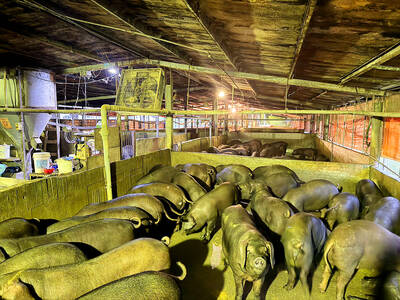
For many people in Taiwan, childhood memories of rural life include pig pens standing beside family homes. Leftover rice, vegetable scraps and soup from daily meals were poured into buckets and fed to pigs. This practice of feeding pigs with household food waste was once a common way of life, both an economic choice and an expression of agricultural society’s deep respect for conserving resources. From a practical standpoint, pigs are omnivorous animals capable of efficiently digesting food scraps that humans can no longer eat. For rural households, food waste cost almost nothing, yet it could be converted into pork, a


 RSS
RSS