


Although the invention of the telegraph marked the beginning of the electrical age, scientists had been conducting experiments with electricity for centuries. The ancient Greeks were aware of electricity, although they were never able to harness its power. Hundreds of years later, Alessandro Volta, Andre-Marie Ampere and Georg Simon Ohm conducted significant work on the nature of electrical currents. Today, volts, amps and ohms are named in their honor.
In today’s experiment you will conduct a simple experiment on a circuit, using a regular pencil as a resistor.
What you will need: a nine-volt bulb, a miniature bulb holder, three lengths of wire with crocodile clips at each end, a nine-volt battery, a pencil sharpener, a pencil and a saw.(JOHN PHILLIPS, STAFF WRITER)
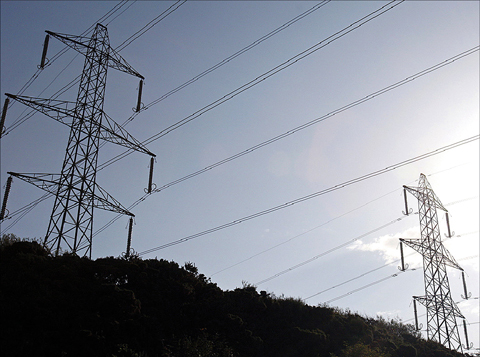
PHOTO: AFP
雖然電報的發明拉開了電氣時代的序幕,但幾世紀以來,科學家們一直在進行與「電」有關的實驗。古希臘人已知電的存在,但他們始終未能利用電力。數百年後,亞力山卓.伏特、安卓禮.馬力.安培和喬治.賽門.歐姆等人對電流的特性有了重大的發現。現今的伏特、安培和歐姆等單位名稱便是以他們的姓氏命名。
在今天的實驗中,你將利用一枝普通的鉛筆作為電阻器,來進行一項簡單的電路實驗。
實驗所需:一顆九伏特的燈泡、一個小燈泡底座、三條兩端附有鱷魚夾的電線、一顆九伏特的電池、一個削鉛筆機、一枝鉛筆和一把鋸子。
(翻譯:袁星塵)
Check the circuit 檢查電路
Step 1: Screw the bulb into the bulb holder. Using the crocodile clip, connect one piece of wire to the positive terminal of the battery and one of the terminals on the bulb holder.
Step 2: Run the second wire between the negative terminal and the spare terminal of the light bulb holder.
Step 3: If the bulb lights up, the circuit works. If it doesn’t light up, check your terminal connections. If it still doesn’t work, either the battery could be dead or the bulb may be broken.
步驟一:把燈泡栓入燈泡底座中。利用一段電線的鱷魚夾連接電池的正極和燈泡底座的一個接頭。
步驟二:把第二條電線接在電池的負極和燈泡底座的另一個接頭間。
步驟三:若燈泡發亮,表示電路是通的。若燈泡沒亮,檢查一下線路連接的情形。若燈泡還是不亮,有可能是電池沒電或燈泡壞了。
Use the resistor 利用電阻器
Step 1: Sharpen your pencil at both ends. Keep the wire between the positive battery terminal and the bulb holder connected. Disconnect the other wire from the bulb holder, and clip the loose end to the lead of the pencil. The crocodile clip should only touch the lead. If it touches the wood, the circuit won’t work.
Step 2: Connect a third wire to the bulb holder terminal and the other end of the pencil. Again, make sure the crocodile clip only touches the lead.
Step 3: The current should flow through the pencil, and light the bulb. Notice that the bulb is dimmer than when you tested it. Make a note of the brightness.
Step 4: Use the saw to shorten the pencil by 2cm. Ask a parent to help you with this. Put the shortened pencil into the circuit and record the brightness. Continue to shorten the pencil, and record the brightness each time.
步驟一:把鉛筆兩端削尖。保留那條連接電池正極和燈泡底座的電線。將另外那條電線連接燈泡底座那端移開,然後夾到鉛筆的「鉛」上。鱷魚夾只能接觸到「鉛」的部分,若碰到木頭部份,電路就會失效。
步驟二:把第三條電線接在燈泡底座的接頭和鉛筆的另一端上。和上個步驟一樣,確認鱷魚夾只碰到鉛的部份。
步驟三:電流應該會通過鉛筆,讓燈泡發亮。注意看燈泡的亮度會比測試時暗一些,記下現在的亮度。
步驟四:用鋸子把鉛筆削短兩公分。請父母幫你做這個步驟。把削短的鉛筆放回電路中,並記下這次燈泡的亮度。然後再繼續削短鉛筆,記錄每次燈泡的亮度。
How it works 實驗原理
Some materials are better at conducting electricity than others. A material that opposes the current is called a resistor. In this experiment, the pencil functions as a resistor, because lead is a worse conductor of electricity than the copper wire. The longer the pencil, the greater the resistance effect on the current.
有些材質比較容易導電;會阻擋電流的材質被稱作電阻器。在今天的實驗中,鉛筆就是扮演電阻器的角色,因為和銅線比起來,鉛的導電性比較差。鉛筆的長度愈長,就愈會阻礙電流通過。

Every February, the US observes Black History Month, a time dedicated to recognizing the contributions, experiences, and achievements of African Americans. The tradition began in 1926, when historian Carter G. Woodson proposed a national week to promote the teaching of Black history in schools. He deliberately chose the second week of February to honor the birthdays of Abraham Lincoln and Frederick Douglass, two figures held in high esteem by the Black community for their roles in ending slavery. In 1976, the initiative expanded into a month-long observance, with then US president Gerald Ford urging Americans to acknowledge the accomplishments of
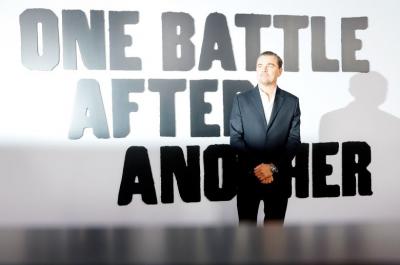
A: The Oscars are set to take place next weekend. It’s a pity that the Taiwanese film “Left-handed Girl” got snubbed. B: And this year, the horror film “Sinners” broke the all-time record with 16 nominations, followed by “One Battle After Another” with 13 nods. Both are nominated for Best Picture. A: What are other Best Picture contenders? B: The nominees are: “Bugonia,” “F1: The Movie,” “Frankenstein,” “Hamnet,” “Marty Supreme,” “The Secret Agent,” “Train Dreams” and Norwegian film “Sentimental Value.” A: It’s so hard to choose from. Some of them haven’t been released in Taiwan yet. I hope they’ll be released soon. A: 本屆奧斯卡獎下週即將揭曉,可惜國片《左撇子女孩》未入圍。 B: 恐怖片《罪人》共獲得16項提名,打破影史紀錄。《一戰再戰》則獲得13項提名緊追在後,都是最佳影片大熱門! A:
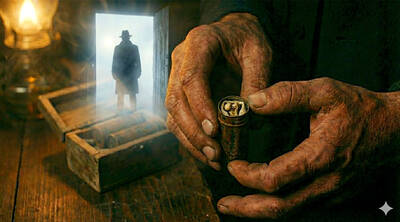
★ Bilingual Story is a fictionalized account. 雙語故事部分內容純屬虛構。 The fog came before the knock. It covered the street and pressed against the window. Chao Gung-dao lit a small oil lamp, but his makeshift hut stayed dim. Another knock. Chao opened the door. The inspector stepped inside and removed his hat. He did not smile. “You remember me?” the inspector said. Chao resented the question. The inspector looked around the small room. His eyes stopped on a wooden box resting on a low beam above Chao’s head. “What is that?” Chao stayed silent. The inspector pulled the box down and
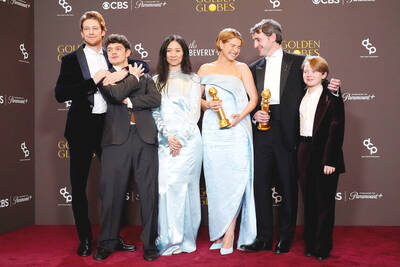
A: As the Oscars are about to shine next weekend, several nominees are set to be released in Taiwan — such as “Hamnet,” with eight nominations. B: The movies that I most want to see this year are “Michael,” “The Devil Wears Prada 2” and “Star Wars: The Mandalorian and Grogu.” A: Other hit movies include “Disclosure Day,” “The Odyssey,” “Spider-Man: Brand New Day,” “Digger,” “Avengers: Doomsday,” “Dune: Messiah” and the live-action adaptation of Disney’s “Moana.” B: Highly anticipated animated films include “The Super Mario Galaxy Movie,” “Toy Story 5,” “Minions 3” and “The Angry Birds Movie 3.” A: Plus, Taiwanese blockbuster “Sunshine


 RSS
RSS