


Mexico's nearly 4,000 years of cultural history have seen huge shifts in the country's government, language and culture. The past few decades have seen Mexico grow economically and expand its international reach, so that today, it has a very promising future. The depth of its past combines with the excitement of Mexico's present and future to make it a fascinating place to learn about.
墨西哥近四千年的文化歷史,在政府、語言和文化上產生巨大變化。過去幾十年來,墨西哥經濟起飛,國際視野大開,未來展望可期。其歷史深度加上今日熱潮與未來欣欣向榮的願景,讓人想了解這個迷人的國家。
A closer look 說古論今
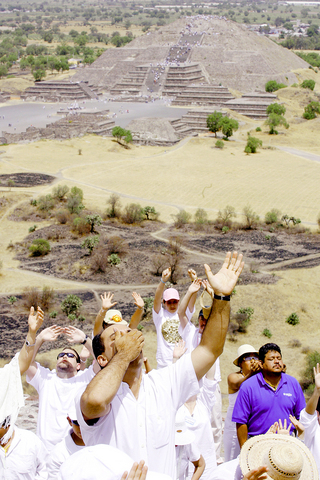
PHOTO: AFP
Although the main language of Mexico today is Spanish, the pre-Spanish part of Mexican history is much longer. There have been several different civilizations in Mexico since about 1800BC, which means that the culture of the Mexican people is almost 4,000 years old. These civilizations had their own gods, their own religions and their own types of food, music and art. They also made a very important gift to the modern world: chocolate. In ancient Mexico, the beans used to make chocolate were so important that they were even used as money sometimes.
In 1519, soldiers from Spain arrived in Mexico. By 1521, they had taken over the capital of the Aztecs, which was then called Tenochlitlan, and is known today as Mexico City. The Spanish killed many of Mexico's original population. By 1600, the number of native people in Mexico dropped from 8 million to 2 million. The soldiers killed many of the people in battles to conquer the rest of the country, which continued over the next 200 years. However, most of the people were killed by diseases brought over from Europe. Today, 99 percent of the people who live in Mexico are either Spanish, native Mexican or some combination of the two (60 percent). Native cultures are no longer the majority in Mexico, but they are important to the people. Altogether, there are 62 different languages spoken in Mexico. Some of the non-Spanish languages, like Mayan, have over 1.5 million speakers. Some of the languages, like Lacadon, have less than 100.
今日墨西哥的主要語言雖是西班牙語,但西班牙語進入前的歷史更長遠。自西元前約一千八百年,墨西哥境內就有不同的文明,顯示其文明約有四千年的歷史。這些文明有自己的神祇、宗教、飲食、音樂和藝術,並且賜給今日世界一件非常重要的禮物 -- 巧克力。製作巧克力的豆子在墨西哥古代極為重要,有時甚至還作為金錢使用。
西元一五一九年,西班牙軍隊抵達墨西哥,於西元一五二一年佔領阿玆提克首都(後來稱為「Tenochlitlan」,也就是今日的墨西哥城)。西班牙人屠殺許多墨西哥原住民,到西元一六○○年,墨西哥原住民人口從八百萬人驟降至兩百萬人,往後兩百年內,西班牙軍隊為征服其餘國土,在戰爭中屠殺許多民眾,不過多數人是死於歐洲傳入的疾病。墨西哥今日 99% 的居民,不是西班牙人,就是墨西哥原住民,或是兩者的混血(約佔 60%)。本土文化不再是墨西哥的文化主流,但對人民仍然重要。墨西哥境內共有六十二種語言,除了西班牙語外,超過一百五十萬人會說馬雅語,卻不到一百人會說萊卡頓語。 (翻譯:鄭湘儀)
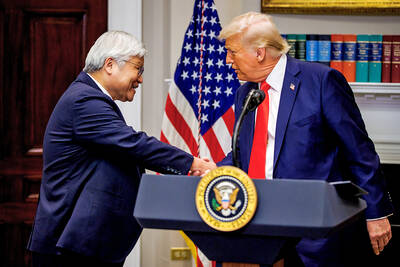
A: Time magazine recently released its list of “The 100 Most Influential People of 2026.” It’s categorized into six groups: Artists, Pioneers, Titans, Icons, Leaders and Innovators. B: TSMC chairman C.C. Wei made the list this year. Which category is he in? A: Wei is actually among the Pioneers, with figures including Disney CEO Josh D’Amaro and MrBeast — the first YouTuber ever to surpass 400 million subscribers. B: Led by Wei, Taiwan’s “silicon shield” TSMC is the sixth-largest company in the world. A: As Nvidia founder Jensen Huang wrote in his introduction, “C.C. Wei is truly one of the

A: In the 2026 Time 100 list, besides TSMC chairman C.C. Wei in the Pioneers category, Blackpink’s Jennie also stands out in the Artists group. B: What about the Titans and Icons? A: The Titans include legendary fashion designer Ralph Lauren, Google CEO Sundar Pichai, and Intel CEO Tan Lip-bu. The Icons include actor Wagner Moura, Olympic gold figure skater Alysa Liu and singer Victoria Beckham. B: What about the Leaders and Innovators? I bet US President Donald Trump and Chinese President Xi Jinping are on the list. A: You got it. Other Leaders include Japanese PM Sanae
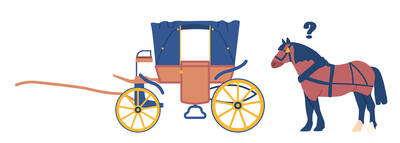
Put the Cart Before the Horse 本末倒置 Iris: I think I’m in love. Carl: What? Iris: We just have so much in common. We like all of the same things. Carl: Yes, but you’ve only chatted with him online. Iris: It doesn’t matter. I know we’ll end up getting married. Carl: I’m afraid you’re putting the cart before the horse. You should at least meet him first. Iris: OK, OK. I’ll do that. 艾瑞絲: 我想我戀愛了。 卡 爾: 什麼? 艾瑞絲: 我們就是有那麼多的共通點。我們喜歡的東西都一樣。 卡 爾: 是沒錯,不過妳和他只在網路上聊過天而已。 艾瑞絲: 那不重要。我知道我們最後一定會步入禮堂。 卡 爾: 妳恐怕是本末倒置了吧。妳至少應該先跟他見個面。 艾瑞絲: 好啦,好啦。我會的啦。 A tough cookie 強悍的人∕堅強的人 Tracy: I heard you went out with Iris last night. Justin: Yeah. We

1. 他非常討厭偽君子。 ˇ He has a deep hatred for hypocrites. χ He has a deep hatred to hypocrites. 註︰表示「對某人懷著愛、恨」等, 常用 have a love for/of, have a hatred for/of。 例如: We have a love for/of science. The working people have a hatred for/of all forms of exploitation. 2. 問題的答案其實不難找。 ˇ The answer to this question is not difficult to find. χ The answer of this question is not difficult to find. 註︰中文中的「的」在英語中不一定都用 of 來表示,有時須用 to。其他的例子如下: 我把房間的鑰匙弄丟了。 I lost the key to the room. 中間矗立著烈士紀念碑。 In the center stands the monument to the martyrs. 這部電影的續集你看過沒有? Have you seen the sequel to the movie? 3. 比起那家餐廳,他更喜歡這家。 ˇ He prefers this restaurant to that one. ˇ He likes


 RSS
RSS