


The subtleties surrounding the sensitive role oil plays in the Iraqi war may have eluded the US Army. Deep in some newspaper coverage Wednesday it was reported that the 101st Airborne Division has named one central Iraq outpost Forward Operating Base Shell and another Forward Operating Base Exxon.
The Pentagon shrugged off concerns that now might not be the time to mention the names of foreign oil companies on Iraqi soil.
"The forward bases are normally refueling points -- they're basically gas stations in the desert," a Pentagon spokeswoman said. "Whether or not we're going to lecture everyone that, due to political sensitivities, you should be careful what you call your gas stations, I don't know if that's something that should be done or would be done."
Neither Royal Dutch/Shell nor Exxon knew about the Iraqi base names. Cerris Tavinor, a spokeswoman for Shell, heard of the base only when a reporter called.
"We don't have anything in Iraq," Tavinor said. "Clearly they pick their names for whatever they want to use."
Tom Cirigliano, a spokesman for Exxon Mobil, said he first heard of the bases when he read a media review Wednesday morning, but the mention did not bother the company, the world's largest publicly traded corporation.
"My first reaction when I saw it was this was not a political statement in any way by the men and women of the 101st," Cirigliano said. "I think the 101st was being pretty creative and naming things after what reminds them of home. And I think that's pretty neat."
But others involved in the oil industry say the Pentagon's indifference to the names of the bases was poorly considered.
"You have this atmosphere of suspicion and apprehension now, and that's just among your allies," Jan Stuart, head of research for global energy futures at ABN Amro, the Dutch investment bank, said. "And in this atmosphere, you call your own supply effort this. It's mind-boggling, the degree of insensitivity. There is little doubt the Americans will win the war, but you have to wonder how people who are so insensitive are going to win the peace."

AGING: As of last month, people aged 65 or older accounted for 20.06 percent of the total population and the number of couples who got married fell by 18,685 from 2024 Taiwan has surpassed South Korea as the country least willing to have children, with an annual crude birthrate of 4.62 per 1,000 people, Ministry of the Interior data showed yesterday. The nation was previously ranked the second-lowest country in terms of total fertility rate, or the average number of children a woman has in her lifetime. However, South Korea’s fertility rate began to recover from 2023, with total fertility rate rising from 0.72 and estimated to reach 0.82 to 0.85 by last year, and the crude birthrate projected at 6.7 per 1,000 people. Japan’s crude birthrate was projected to fall below six,
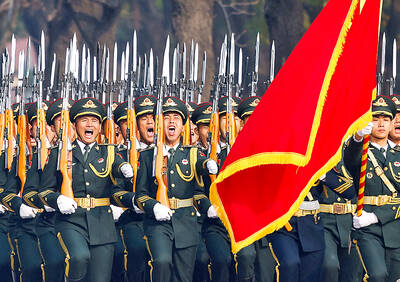
Conflict with Taiwan could leave China with “massive economic disruption, catastrophic military losses, significant social unrest, and devastating sanctions,” a US think tank said in a report released on Monday. The German Marshall Fund released a report titled If China Attacks Taiwan: The Consequences for China of “Minor Conflict” and “Major War” Scenarios. The report details the “massive” economic, military, social and international costs to China in the event of a minor conflict or major war with Taiwan, estimating that the Chinese People’s Liberation Army (PLA) could sustain losses of more than half of its active-duty ground forces, including 100,000 troops. Understanding Chinese
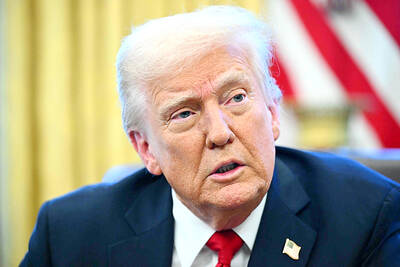
US President Donald Trump in an interview with the New York Times published on Thursday said that “it’s up to” Chinese President Xi Jinping (習近平) what China does on Taiwan, but that he would be “very unhappy” with a change in the “status quo.” “He [Xi] considers it to be a part of China, and that’s up to him what he’s going to be doing, but I’ve expressed to him that I would be very unhappy if he did that, and I don’t think he’ll do that. I hope he doesn’t do that,” Trump said. Trump made the comments in the context
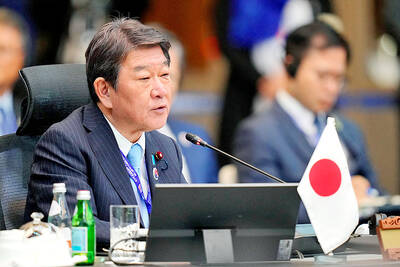
SELF-DEFENSE: Tokyo has accelerated its spending goal and its defense minister said the nation needs to discuss whether it should develop nuclear-powered submarines China is ramping up objections to what it sees as Japan’s desire to acquire nuclear weapons, despite Tokyo’s longstanding renunciation of such arms, deepening another fissure in the two neighbors’ increasingly tense ties. In what appears to be a concerted effort, China’s foreign and defense ministries issued statements on Thursday condemning alleged remilitarism efforts by Tokyo. The remarks came as two of the country’s top think tanks jointly issued a 29-page report framing actions by “right-wing forces” in Japan as posing a “serious threat” to world peace. While that report did not define “right-wing forces,” the Chinese Ministry of Foreign Affairs was


 RSS
RSS