


Chinese Nationalist Party (KMT) Legislator Johnny Chiang (江啟臣) won the party’s chairperson by-election yesterday with nearly 69 percent of the vote over former Taipei mayor Hau Lung-bin (郝龍斌).
Voting favored Chiang in all 22 counties and cities, KMT statistics showed.
In Taipei, where Hau served as mayor from 2006 to 2014, Chiang garnered nearly 60 percent of the votes, gaining about 2,600 more than Hau.
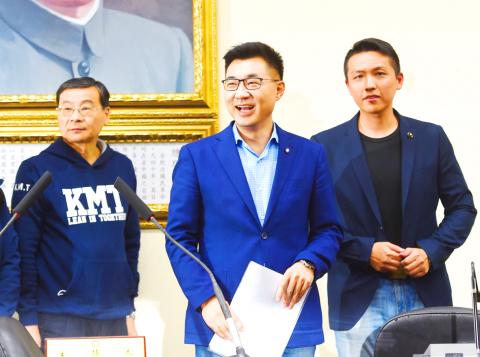
Photo: Fang Pin-chao, Taipei Times
Votes from party members overseas were expected to favor Hau, but the party’s data showed that most went to Chiang.
The by-election had a low turnout of only 35.85 percent, or 124,019 people out of 345,971 who were eligible to vote.
Chiang received 84,860 votes, or 68.8 percent of the valid ballots, while Hau received 38,483. There were 676 invalid votes.
Hau issued a statement at about 6pm — before vote-counting had been completed — acknowledging defeat and congratulating Chiang on winning the election.
Hau thanked the members who voted and the volunteers who helped with the election process.
Chiang has a significant burden to bear over the next year and we hope he lives up to his promise of change, Hau said.
Hau said he has always believed, and still does, that if the KMT is strong, it can help make Taiwan a better place.
Chiang thanked supporters for voting for him and said their choice ensured that the KMT’s handover from the previous generation to the next would be successful.
Chiang said that he would institute organizational changes in the KMT and place less emphasis on party headquarters and more on local party chapters.
This would enable the party to be more connected to local residents, he said.
He promised to upgrade, improve and digitize party affairs, saying that this would be just the beginning of sweeping changes.
“The KMT from now on will be a party that is more modern and swift to respond to demands,” Chiang said.
Chiang said that he had spoken with Hau on the telephone and hopes to work with him to introduce reforms that would improve the KMT.
The by-election was to fill the vacancy left by Wu Den-yih (吳敦義), who stepped down last month after the party’s losses in the Jan. 11 presidential and legislative elections.
The KMT plans to hold an inauguration ceremony for Chiang tomorrow morning.
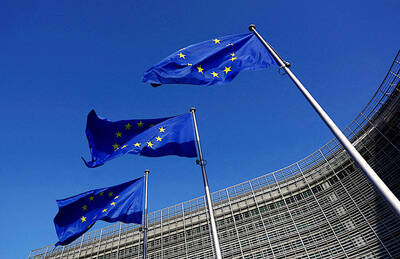
LEVERAGE: China did not ‘need to fire a shot’ to deny Taiwan airspace over Africa when it owns ‘half the continent’s debt,’ a US official said, calling it economic warfare The EU has raised concerns about overflight rights following the delay of President William Lai’s (賴清德) planned state visit to the Kingdom of Eswatini after three African nations denied overflight clearance for his charter at the last minute. Taiwanese allies Paraguay and Saint Kitts and Nevis, as well as several US lawmakers and the Inter-Parliamentary Alliance on China (IPAC) condemned China for allegedly pressuring the countries. Lai was scheduled to fly directly to Taiwan’s only African ally from yesterday to Sunday to celebrate the 40th anniversary of King Mswati III’s accession and his 58th birthday, but Seychelles, Mauritius and Madagascar suddenly revoked
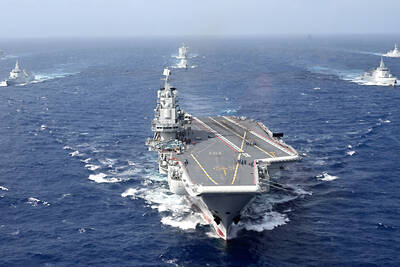
PROVOCATIVE: Chinese Deputy Ambassador to the UN Sun Lei accused Japan of sending military vessels to deliberately provoke tensions in the Taiwan Strait China denounced remarks by Japan and the EU about the South China Sea at a UN Security Council meeting on Monday, and accused Tokyo of provocative behavior in the Taiwan Strait and planning military expansion. Ayano Kunimitsu, a Japanese vice foreign minister, told the Council meeting on maritime security that Tokyo was seriously concerned about the situation in the East China and South China seas, and reiterated Japan’s opposition to any attempt to change the “status quo” by force, and obstruction of freedom of navigation and overflight. Stavros Lambrinidis, head of the EU delegation to the UN, also highlighted South China Sea
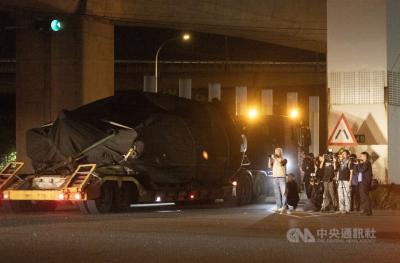
The final batch of 28 M1A2T Abrams tanks purchased from the US arrived at Taipei Port last night and were transported to the Armor Training Command in Hsinchu County’s Hukou Township (湖口), completing the military’s multi-year procurement of 108 of the tanks. Starting at 12:10am today, reporters observed more than a dozen civilian flatbed trailers departing from Taipei Port, each carrying an M1A2T tank covered with black waterproof tarps. Escorted by military vehicles, the convoy traveled via the West Coast Expressway to the Armor Training Command, with police implementing traffic control. The army operates about 1,000 tanks, including CM-11 Brave Tiger
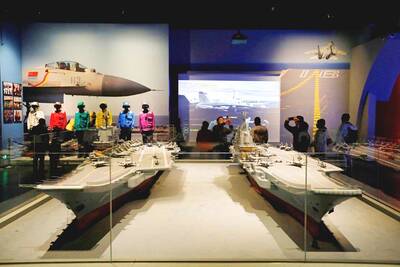
China on Wednesday teased in a video an aircraft carrier that could be its fourth, and the first using nuclear power, while making an allusion to Taiwan and vowing to further build up its islands, as it looks to boost maritime power, secure resources and bolster territorial claims. The video, issued on the eve of the 77th founding anniversary of the Chinese People’s Liberation Army Navy, featured fictional officers with names that are homophones of three commissioned aircraft carriers, the Liaoning (遼寧), Shandong (山東) and Fujian (福建). Titled Into the Deep, it showed a 19-year-old named “Hejian” (何劍) joining the group, sparking


 RSS
RSS