


Premier Su Tseng-chang (蘇貞昌) yesterday approved relief measures totaling at least NT$60 billion (US$2 billion) for sectors affected by an outbreak of COVID-19 in China, including coupons that can be used at night markets and shopping districts.
Relief funds would come in two forms: appropriation from existing budgets of agencies concerned with relief efforts and a planned special budget, which would have a ceiling of NT$60 billion, Executive Yuan spokeswoman Kolas Yotaka said.
The Disaster Prevention and Protection Act (災害防救法) stipulates that government agencies at all levels should appropriate existing budgets to cover more urgent needs for disaster relief, she said, adding that relief funds allocated this way would be disbursed immediately.
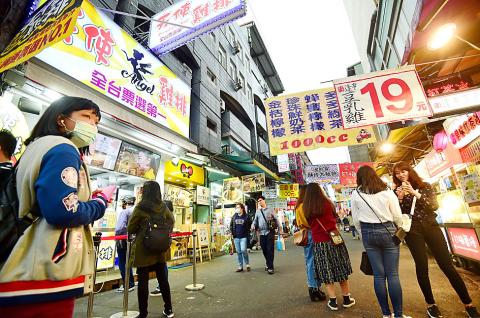
Photo: Liao Yao-tung, Taipei Times
The special budget would be sourced from the government’s surplus revenue and funds freed up by the Directorate-General of Budget, Accounting and Statistics, she said.
The Executive Yuan is drafting a bill for a special relief act, which would serve as the legal basis for the planning of the special budget, Kolas said, adding that legislation would be finalized and submitted to the Legislative Yuan before the start of the new legislative session.
If passed, the duration of the special act and budget would be one year, she said.
Among the plans approved by Su was a Ministry of Economic Affairs proposal to distribute coupons to people when they shop at night markets, shopping districts, traditional markets and retail stores.
Deputy Minister of Economic Affairs Wang Mei-hua (王美花) said that the ministry had proposed allocating NT$2 billion of the proposed special budget for the coupons, but the actual sum would be decided after assessing relief plans proposed by other agencies.
A timetable for the issuance of the coupons has not been set, as that would depend on the Central Epidemic Command Center determining when would be suitable for people to go out shopping, she said.
Asked how the coupons would differ from NT$3,600 consumer vouchers given to people in 2009 by the administration of then-president Ma Ying-jeou (馬英九), Wang said that discounts, rather than face value, would be ascribed to the coupons, meaning that they can only be used when the total value of merchandise purchased reaches a certain sum.
The coupons, along with loans, subsidized loans and loan guarantees planned by the ministry for the relief efforts, would make up NT$16 billion of the proposed special budget, she said.
Meanwhile, the Ministry of Transportation and Communications proposed a relief plan totaling NT$50 billion, including NT$20 billion in aid for the transportation and tourism industries, which is to be covered by the special budget, and a NT$30 billion tourism upgrade and reinvention plan, which is to be proposed under the next phase of the Forward-looking Infrastructure Development Program, Deputy Minister of Transportation and Communications Huang Yu-lin (黃玉霖) said.
Regarding economic losses suffered by the agricultural and fisheries sectors amid diminishing exports to China and reduced sales due to the postponed start of the next academic semester because of the outbreak, the military would increase its procurement of local produce, while the Council of Agriculture would redouble efforts to market seafood and fruit to Singapore, Brunei and Malaysia until late April to make up for the shortfall in exports, council Department of Planning Director-General Tsai Sheng-fu (蔡昇甫) said.
The council has proposed allocating NT$6.8 billion from the special budget to cover eight preferential interest rates for fishers who need to take out loans or extend debt repayment periods, he said.
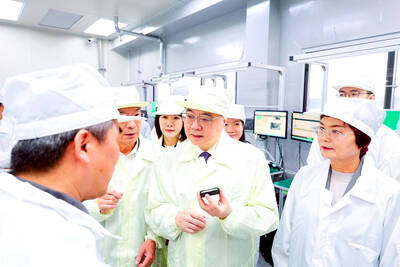
KEY INDUSTRY: The vice premier discussed a plan to create a non-red drone supply chain by next year, which has been allocated a budget of more than NT$7.2 billion The government has budgeted NT$44.2 billion (US$1.38 billion) to cultivate Taiwan’s uncrewed aerial vehicle (UAV) industry over the next five years, which would make the nation a major player in the industry’s democratic supply chain in the Asia-Pacific region, Premier Cho Jung-tai (卓榮泰) said yesterday. Cho made the remarks during a visit to the facilities of Cub Elecparts Inc (為升電裝). Democratic Progressive Party (DPP) Legislator Chen Su-yueh (陳素月) and Chinese Nationalist Party (KMT) Legislator Hsieh Yi-fong (謝依鳳) also participated in the trip. Cub Elecparts has transitioned from the automotive industry to the defense industry, which is the top priority among the nation’s
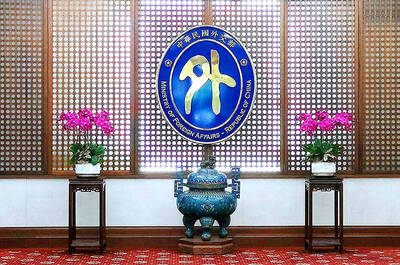
SOUTH KOREA DISPUTE: If Seoul continues to ignore its request, Taiwan would change South Korea’s designation on its arrival cards, the foreign ministry said If South Korea does not reply appropriately to a request to correct Taiwan’s name on its e-Arrival card system before March 31, the government would take corresponding measures to change how South Korea is labeled on the online Taiwan Arrival Card system, the Ministry of Foreign Affairs said yesterday. South Korea’s e-Arrival card system lists Taiwan as “China (Taiwan)” in the “point of departure” and “next destination” fields. Taipei has asked Seoul to change the wording. Since March 1, South Koreans who hold government-issued Alien Resident Certificates (ARC) have been identified as from “South Korea” rather than the “Republic of Korea,” the
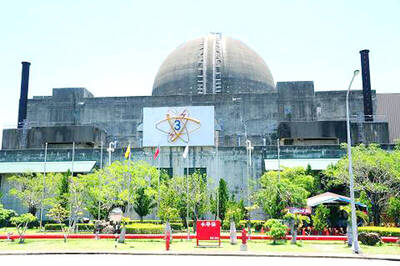
SUFFICIENT: The president said Taiwan has enough oil for next month, with reserves covering more than 100 days and natural gas enough for 12 to 14 days A restart plan for the Guosheng Nuclear Power Plant in New Taipei City’s Wanli District (萬里) and the Ma-anshan Nuclear Power Plant in Pingtung County’s Hengchun Township (恆春) would be submitted to the Nuclear Safety Commission by the end of the month, President William Lai (賴清德) said yesterday, reversing the government’s policy to abolish nuclear energy. On May 17 last year, Taiwan shut down its last nuclear reactor and became the first non-nuclear nation in East Asia, fulfilling the Democratic Progressive Party (DPP) government’s pledge of a “nuclear-free homeland.” Even without nuclear power, Taiwan can maintain a stable electricity supply until 2032,
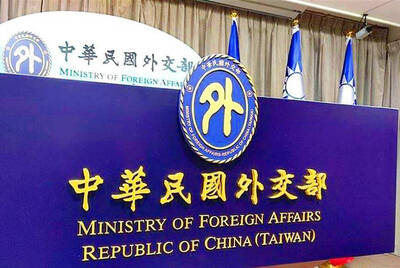
DEROGATORY: WTO host Cameroon’s designation of Taiwan as a ‘province of China’ seriously undermines the nation’s status and rights as a WTO member, MOFA said The Ministry of Foreign Affairs (MOFA) yesterday condemned Cameroon for listing Taiwan as “Taiwan, Province of China” in visa documents for an upcoming WTO ministerial conference, a move that led to Taiwan’s withdrawal from the event. The designation “seriously undermined” Taiwan’s status and rights as a WTO member, the ministry said in a statement. It is the first time since 2001 that Taiwan has declined to attend a WTO Ministerial Conference. The conference is scheduled to take place from Thursday to Sunday next week in Yaounde, the capital of Cameroon. Taiwan had planned to send a delegation led by Minister Without Portfolio


 RSS
RSS