


Taiwan Power Co (Taipower, 台電) is considering an appeal after the Taichung City Government fined it NT$60 million (US$1.96 million) for pollution by its Taichung Power Plant. Taipower cited procedural flaws in the decision.
The Taichung Environmental Protection Bureau earlier yesterday said tests showed that the coal-fired power plant had discharged wastewater containing high levels of the chemical boron.
In a test at one site on Sept. 19, wastewater from the plant’s Nos. 5 to 8 generators was found to contain 121mg per liter (mg/L) of boron — 24 times the regulatory limit of 5mg/L.
Two other tests at different sites on Thursday showed that wastewater from generators Nos. 1 to 4 and Nos. 9 to 10 contained 134mg/L and 141mg/L of boron respectively, or 26 and 28 times the limit, the bureau said in a statement.
As a result, the city government fined the plant NT$20 million for each infraction, according to the Water Pollution Control Act (水污染防治法), bureau Director-General Wu Chih-chao (吳志超) said.
The city government also demanded that Taipower submit an improvement plan by Nov. 15 and complete the recommended improvements in December, while it would continue testing the plant’s wastewater and issue fines for violations, Wu said.
Taipower said it respects the NT$20 million fine for its management of wastewater from generators Nos. 5 to 8, but does not agree with the other two, company spokesman Hsu Tsao-hua (徐造華) said.
“The local bureau tested the two other sites just four days ago and suddenly announced that it was issuing fines, without giving us a chance to state our opinion, which we believe is a procedural flaw,” Hsu said by telephone.
Taipower has told the city government that it would set up a new wastewater treatment facility at the plant by the end of this year, after it was fined in April by the city government for wastewater containing high levels of nitrate nitrogen, Hsu said.
“It is the city government’s right to conduct tests, but we think it was just aiming to fine us, as it knew the plant would not be able to meet the standards because the treatment facility is still under construction,” he said.
Hsu urged the city government to approve its application later this month for the establishment of the treatment facility.
As of yesterday, Taichung Power Plant has stopped discharging any wastewater as it does not want to be fined again, Hsu added.
The plant has halved the output of generators Nos. 1 to 8 and allowed the wastewater to circulate internally, he said.
While it is not a good way to operate, as the wastewater could damage the generators, it should be fine until the plant is able to discharge wastewater again in December, he said.
Taichung Power Plant is the nation’s largest coal-fired plant with a total capacity of 5,500 megawatts, and has been the target of environmentalists in recent years over pollution issues.

PREPAREDNESS: Given the difficulty of importing ammunition during wartime, the Ministry of National Defense said it would prioritize ‘coproduction’ partnerships A newly formed unit of the Marine Corps tasked with land-based security operations has recently replaced its aging, domestically produced rifles with more advanced, US-made M4A1 rifles, a source said yesterday. The unnamed source familiar with the matter said the First Security Battalion of the Marine Corps’ Air Defense and Base Guard Group has replaced its older T65K2 rifles, which have been in service since the late 1980s, with the newly received M4A1s. The source did not say exactly when the upgrade took place or how many M4A1s were issued to the battalion. The confirmation came after Chinese-language media reported
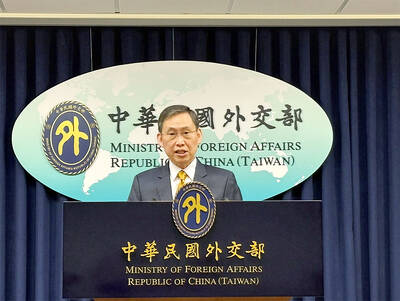
A Ministry of Foreign Affairs official yesterday said that a delegation that visited China for an APEC meeting did not receive any kind of treatment that downgraded Taiwan’s sovereignty. Department of International Organizations Director-General Jonathan Sun (孫儉元) said that he and a group of ministry officials visited Shenzhen, China, to attend the APEC Informal Senior Officials’ Meeting last month. The trip went “smoothly and safely” for all Taiwanese delegates, as the Chinese side arranged the trip in accordance with long-standing practices, Sun said at the ministry’s weekly briefing. The Taiwanese group did not encounter any political suppression, he said. Sun made the remarks when
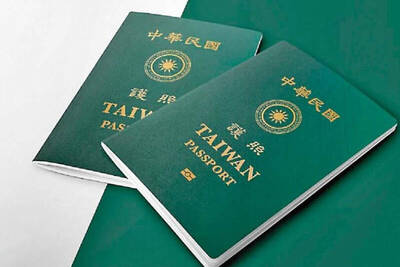
The Taiwanese passport ranked 33rd in a global listing of passports by convenience this month, rising three places from last month’s ranking, but matching its position in January last year. The Henley Passport Index, an international ranking of passports by the number of designations its holder can travel to without a visa, showed that the Taiwan passport enables holders to travel to 139 countries and territories without a visa. Singapore’s passport was ranked the most powerful with visa-free access to 192 destinations out of 227, according to the index published on Tuesday by UK-based migration investment consultancy firm Henley and Partners. Japan’s and
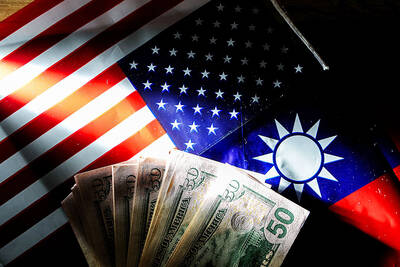
BROAD AGREEMENT: The two are nearing a trade deal to reduce Taiwan’s tariff to 15% and a commitment for TSMC to build five more fabs, a ‘New York Times’ report said Taiwan and the US have reached a broad consensus on a trade deal, the Executive Yuan’s Office of Trade Negotiations said yesterday, after a report said that Washington is set to reduce Taiwan’s tariff rate to 15 percent. The New York Times on Monday reported that the two nations are nearing a trade deal to reduce Taiwan’s tariff rate to 15 percent and commit Taiwan Semiconductor Manufacturing Co (TSMC, 台積電) to building at least five more facilities in the US. “The agreement, which has been under negotiation for months, is being legally scrubbed and could be announced this month,” the paper said,


 RSS
RSS