


Russian military forces crossed the Euphrates River in Syria and moved into positions near the border with Turkey to ensure Kurdish fighters pull back, the Russian Ministry of Defense said yesterday, after a deal between Moscow and Ankara wrested control of the Kurds’ entire heartland.
The ministry said in a statement that a convoy of Russian military police had crossed the river at noon and “advanced toward the Syrian-Turkish border.”
Kurdish forces, who previously controlled nearly a third of Syria, have lost almost everything after Turkey secured the right to remain fully deployed in an Arab-majority area that was the main target of a two-week-old offensive.
The agreement made on Tuesday in Sochi also requires Kurdish militia to pull back to a line 30km from the border along its entire length of 440km, forcing them to relinquish control of some of their main towns.
The deal — hailed as “historic” by Turkish President Recep Tayyip Erdogan — quashes the Kurdish minority’s dreams of a semi-autonomous region and makes way for the absorption of their de facto army into the regime’s military.
Yesterday, Russia’s state Rossiya 24 television channel and TASS news agency quoted the defense ministry as saying Russian military police and Syrian border guards are to “facilitate the removal” of Kurdish People’s Protection Units fighters and their weapons, as according to the Sochi deal.
This withdrawal must be finalised within 150 hours.
Russian and Turkish patrols would then start in two zones stretching 10km to the east and west of Turkey’s safe zone, which is about 120km long and 32km deep.
This would allow Turkey to patrol with Russia in areas inside Syria that were not part of its offensive.
Russian military police patroled the key city of Kobani yesterday, a spokesman for the Kurdish-led Syrian Democratic Forces (SDF) said.
The Syrian Observatory for Human Rights, a Britain-based war monitor, said the area of the “safe zone” was calm yesterday.
In the Kurdish-controlled city of Qamishli — excluded from the Sochi agreement — hundreds demonstrated against the deal, saying it amounted to ethnic cleansing and genocide.
“This deal serves the interests of foreign powers and not the interests of the people,” said Talaat Youndes, an official with the Kurdish administration.
“Turkey’s objective is to kill, displace and occupy the Kurds,” he said, as protesters waved flags and chanted slogans against Ankara’s invading force.
Turkey’s Oct. 9 assault was made possible by a pullback of US troops deployed along the border as a buffer force between their NATO ally Turkey and the Kurdish fighters of the SDF.
The withdrawal by their erstwhile ally left the Kurds completely in the lurch, forcing them to turn to the Damascus regime for protection from an expanded Turkish offensive.
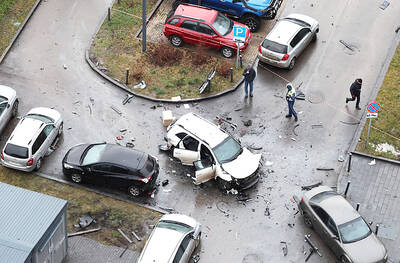
A car bomb killed a senior Russian general in southern Moscow yesterday morning, the latest high-profile army figure to be blown up in a blast that came just hours after Russian and Ukrainian delegates held separate talks in Miami on a plan to end the war. Kyiv has not commented on the incident, but Russian investigators said they were probing whether the blast was “linked” to “Ukrainian special forces.” The attack was similar to other assassinations of generals and pro-war figures that have either been claimed, or are widely believed to have been orchestrated, by Ukraine. Russian Lieutenant General Fanil Sarvarov, 56, head
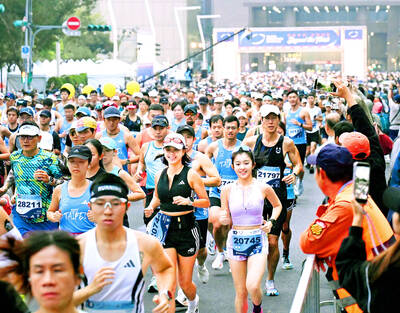
SAFETY FIRST: Double the number of police were deployed at the Taipei Marathon, while other cities released plans to bolster public event safety Authorities across Taiwan have stepped up security measures ahead of Christmas and New Year events, following a knife and smoke bomb attack in Taipei on Friday that left four people dead and 11 injured. In a bid to prevent potential copycat incidents, police deployments have been expanded for large gatherings, transport hubs, and other crowded public spaces, according to official statements from police and city authorities. Taipei Mayor Chiang Wan-an (蔣萬安) said the city has “comprehensively raised security readiness” in crowded areas, increased police deployments with armed officers, and intensified patrols during weekends and nighttime hours. For large-scale events, security checkpoints and explosives
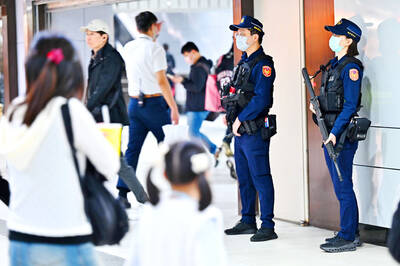
PUBLIC SAFETY: The premier said that security would be tightened in transport hubs, while President Lai commended the public for their bravery The government is to deploy more police, including rapid response units, in crowded public areas to ensure a swift response to any threats, President William Lai (賴清德) said yesterday after a knife attack killed three people and injured 11 in Taipei the previous day. Lai made the remarks following a briefing by the National Police Agency on the progress of the investigation, saying that the attack underscored the importance of cooperation in public security between the central and local governments. The attack unfolded in the early evening on Friday around Taipei Main Station’s M7 exit and later near the Taipei MRT’s Zhongshan
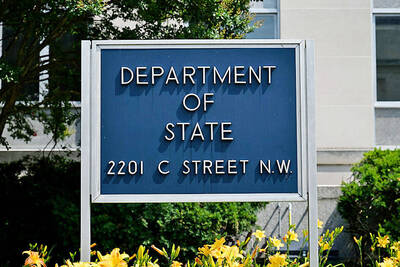
REBUFFED: In response to Chinese criticism over recent arms sales, Washington urged Beijing to engage in meaningful dialogue instead of threats and intimidation Washington’s long-term commitment to Taiwan would not change, the US Department of State said yesterday, urging Beijing to stop pressuring Taiwan and engage in meaningful bilateral dialogues. The remarks came in response to a backlash from Beijing about Washington’s latest approval of arms sales to Taiwan. The US Defense Security Cooperation Agency said in a statement on Wednesday that the Taipei Economic and Cultural Representative Office in the US has asked to purchase an arms package, including Tactical Mission Network Software; AH-1W helicopter spare and repair parts; M109A7 self-propelled howitzers; HIMARS long range precision strike systems; tube-launched, optically tracked, wire-guided missiles; Javelin


 RSS
RSS