


Democratic Progressive Party (DPP) lawmakers yesterday proposed amendments to the Trade Secrets Act (營業秘密法) to increase fines and allow for sentences of life in jail for people convicted of industrial espionage as the number of cases climbs.
DPP Legislator Chao Tien-lin (趙天麟) said that industrial espionage has cost the nation’s economy NT$170 billion (US$5.42 billion) since the act’s promulgation in 2013.
“Huge economic losses have resulted from these crimes. We need to protect the development of Taiwan’s industries and safeguard the stability of our economy,” Chao said.
The losses stem from 89 cases handled by the Ministry of Justice’s Investigation Bureau from 2013 to the end of last year, for an average of nearly NT$2 billion per case, he said.
“Ninety percent were carried out by people taking orders from Chinese companies,” Chao said, adding that one involved Kaohsiung-based Dairen Chemical Group (大連化工).
“In the past, most people thought that businesses and industries were not tainted by espionage activities or foreign spies, or that these crimes were committed by companies in the private sector,” he said.
“However, China has been using every means to derive financial benefits for its businesses and industries, and has been hiding behind these crimes in which its agencies or intelligence apparatus provide assistance, or are directly involved. These had a detrimental effect on Taiwan’s overall social and economic development,” he added.
Amid a trade spat between the US and China, it is imperative that the penalties for stealing trade secrets and industrial espionage be increased to have a deterrent effect, Chao said.
The act divides illegally obtaining trade secrets and proprietary technology into domestic and foreign origins. Provisions for domestic origins stipulate a prison term of up to five years and a fine of NT$1 million to NT$10 million.
For cases in which the destination of the obtained secrets is a foreign nation or territory, including China, Hong Kong and Macau, the prison term is up to 10 years with a fine of NT$3 million to NT$50 million.
The proposed amendments call for increased penalties for foreign agents, who are defined as people working for foreign companies or institutions to gather, gain access to and pass on information, files or materials related to trade secrets.
The proposal seeks a prison term of 10 years to life and a fine of NT$3 million to NT$100 million, and calls for imposing the maximum penalty for repeat offenses.
“Besides consideration for our economy and industries, we should view business and industrial espionage cases as infringing upon our national security,” Chao said.
Trying to leak trade secrets to foreign companies or institutions could involve theft and other illegal conduct, in which case the prosecution must apply the appropriate law, he added.
DPP Legislator Ho Chih-wei (何志偉) said he would support the proposal, while DPP Legislator Lai Jui-lung (賴瑞隆) said further assessment is needed to find a balance between fines and prison terms.
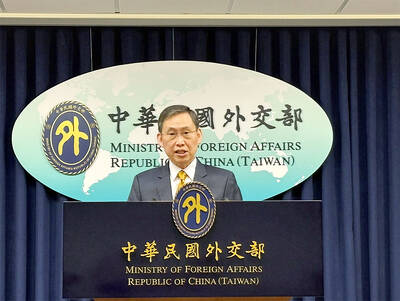
A Ministry of Foreign Affairs official yesterday said that a delegation that visited China for an APEC meeting did not receive any kind of treatment that downgraded Taiwan’s sovereignty. Department of International Organizations Director-General Jonathan Sun (孫儉元) said that he and a group of ministry officials visited Shenzhen, China, to attend the APEC Informal Senior Officials’ Meeting last month. The trip went “smoothly and safely” for all Taiwanese delegates, as the Chinese side arranged the trip in accordance with long-standing practices, Sun said at the ministry’s weekly briefing. The Taiwanese group did not encounter any political suppression, he said. Sun made the remarks when
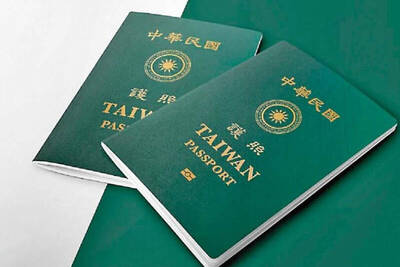
The Taiwanese passport ranked 33rd in a global listing of passports by convenience this month, rising three places from last month’s ranking, but matching its position in January last year. The Henley Passport Index, an international ranking of passports by the number of designations its holder can travel to without a visa, showed that the Taiwan passport enables holders to travel to 139 countries and territories without a visa. Singapore’s passport was ranked the most powerful with visa-free access to 192 destinations out of 227, according to the index published on Tuesday by UK-based migration investment consultancy firm Henley and Partners. Japan’s and
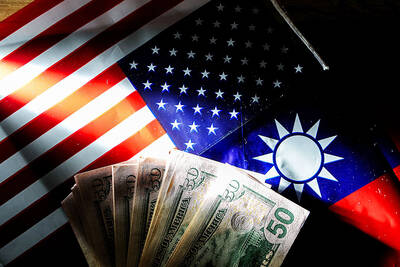
BROAD AGREEMENT: The two are nearing a trade deal to reduce Taiwan’s tariff to 15% and a commitment for TSMC to build five more fabs, a ‘New York Times’ report said Taiwan and the US have reached a broad consensus on a trade deal, the Executive Yuan’s Office of Trade Negotiations said yesterday, after a report said that Washington is set to reduce Taiwan’s tariff rate to 15 percent. The New York Times on Monday reported that the two nations are nearing a trade deal to reduce Taiwan’s tariff rate to 15 percent and commit Taiwan Semiconductor Manufacturing Co (TSMC, 台積電) to building at least five more facilities in the US. “The agreement, which has been under negotiation for months, is being legally scrubbed and could be announced this month,” the paper said,
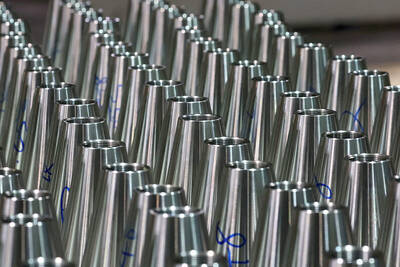
MIXED SOURCING: While Taiwan is expanding domestic production, it also sources munitions overseas, as some, like M855 rounds, are cheaper than locally made ones Taiwan and the US plan to jointly produce 155mm artillery shells, as the munition is in high demand due to the Ukraine-Russia war and should be useful in Taiwan’s self-defense, Armaments Bureau Director-General Lieutenant General Lin Wen-hsiang (林文祥) told lawmakers in Taipei yesterday. Lin was responding to questions about Taiwan’s partnership with allies in producing munitions at a meeting of the legislature’s Foreign Affairs and National Defense Committee. Given the intense demand for 155mm artillery shells in Ukraine’s defense against the Russian invasion, and in light of Taiwan’s own defensive needs, Taipei and Washington plan to jointly produce 155mm shells, said Lin,


 RSS
RSS