


The Executive Yuan is ready to budget NT$3.6 billion (US$115.8 million) to subsidize domestic travelers in the fall and winter in response to China’s suspension of its individual travelers program to Taiwan, Minister of Transportation and Communications Lin Chia-lung (林佳龍) said yesterday.
The subsidies would apply to group travelers and individuals going on domestic tours, he said on Facebook, adding that further details would be announced soon.
“Facing suppression from China, the government will not leave tourism operators hung out to dry,” Lin said.
Politics should have no place in the tourism industry, he said, adding that any oppressive move by Beijing would only serve to unite Taiwanese.
“Apparently, China is attempting to hold the tourism industry hostage by exerting its control over individual visitors and in turn interfere in Taiwan’s elections,” Lin said.
In anticipation of the possibility that Beijing could further reduce the number of Chinese tourists visiting Taiwan, Lin said that he has spoken with Premier Su Tseng-chang (蘇貞昌) and Vice Premier Chen Chi-mai (陳其邁) multiple times about potential responses, adding that President Tsai Ing-wen (蔡英文) has been briefed on such plans.
The government was prepared for Beijing’s threatening move and will not let China suppress Taiwan without a fight, he said.
About 6 million international tourists visited Taiwan during the first half of this year, Lin said, adding that the number of visitors from countries other than China rose from 7.17 million in 2016 to 8.37 million last year.
The Chinese Ministry of Culture and Tourism yesterday announced on its Web site that “in view of the current status of cross-strait relations, the trial program allowing Chinese residents from 47 cities to travel in Taiwan individually would be temporarily suspended, starting Aug. 1.”
It is the first time that Beijing has restricted the number of individual travelers to Taiwan. It has previously only imposed similar restrictions on group travelers.
Some Chinese netizens said that the move could be related to Taiwan’s presidential election in January next year, while others said that it served as punishment for Taipei supporting protests in Hong Kong against a proposed bill to enable extraditions to China.
About 1.67 million Chinese visitors arrived in Taiwan from January to June, Tourism Bureau and National Immigration Agency statistics showed, a 30 percent increase from the same period last year.
Of those who came for tourism purposes, about 573,000 were part of a tour group and 633,000 were individuals, the data showed.
Last year, the nation welcomed about 754,000 group travelers and 1.07 million individual travelers from China, the data showed.
It was unfortunate that Beijing made such an announcement, the bureau said, adding that it would continue to welcome visits by Chinese travelers.
“We hope that China will quickly resume the program. There should be normal and positive interactions in the tourism industries across the Taiwan Strait, which should not be affected political or any specific factors,” the bureau said in a statement, adding that it would continue to monitor the number of Chinese visitors.
Local tourism operators estimated that the nation could lose 500,000 to 700,000 Chinese tourists in the next six months after China starts implementing the policy, saying that the repercussions of the policy could start to become evident in the middle of this month.

Conflict with Taiwan could leave China with “massive economic disruption, catastrophic military losses, significant social unrest, and devastating sanctions,” a US think tank said in a report released on Monday. The German Marshall Fund released a report titled If China Attacks Taiwan: The Consequences for China of “Minor Conflict” and “Major War” Scenarios. The report details the “massive” economic, military, social and international costs to China in the event of a minor conflict or major war with Taiwan, estimating that the Chinese People’s Liberation Army (PLA) could sustain losses of more than half of its active-duty ground forces, including 100,000 troops. Understanding Chinese
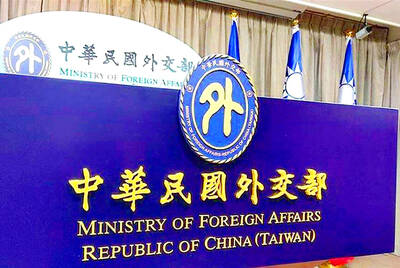
The Ministry of Foreign Affairs (MOFA) yesterday said it is closely monitoring developments in Venezuela, and would continue to cooperate with democratic allies and work together for regional and global security, stability, and prosperity. The remarks came after the US on Saturday launched a series of airstrikes in Venezuela and kidnapped Venezuelan President Nicolas Maduro, who was later flown to New York along with his wife. The pair face US charges related to drug trafficking and alleged cooperation with gangs designated as terrorist organizations. Maduro has denied the allegations. The ministry said that it is closely monitoring the political and economic situation

UNRELENTING: China attempted cyberattacks on Taiwan’s critical infrastructure 2.63 million times per day last year, up from 1.23 million in 2023, the NSB said China’s cyberarmy has long engaged in cyberattacks against Taiwan’s critical infrastructure, employing diverse and evolving tactics, the National Security Bureau (NSB) said yesterday, adding that cyberattacks on critical energy infrastructure last year increased 10-fold compared with the previous year. The NSB yesterday released a report titled Analysis on China’s Cyber Threats to Taiwan’s Critical Infrastructure in 2025, outlining the number of cyberattacks, major tactics and hacker groups. Taiwan’s national intelligence community identified a large number of cybersecurity incidents last year, the bureau said in a statement. China’s cyberarmy last year launched an average of 2.63 million intrusion attempts per day targeting Taiwan’s critical

AGING: As of last month, people aged 65 or older accounted for 20.06 percent of the total population and the number of couples who got married fell by 18,685 from 2024 Taiwan has surpassed South Korea as the country least willing to have children, with an annual crude birthrate of 4.62 per 1,000 people, Ministry of the Interior data showed yesterday. The nation was previously ranked the second-lowest country in terms of total fertility rate, or the average number of children a woman has in her lifetime. However, South Korea’s fertility rate began to recover from 2023, with total fertility rate rising from 0.72 and estimated to reach 0.82 to 0.85 by last year, and the crude birthrate projected at 6.7 per 1,000 people. Japan’s crude birthrate was projected to fall below six,


 RSS
RSS