


A Chinese woman married to a Taiwanese man was found to have illegally lent her National Health Insurance (NHI) card to her cousin so that she could undergo NHI-funded cancer treatment in Taiwan, the National Health Insurance Administration said yesterday.
The cousin, who was in Taiwan illegally, used the card to receive stomach cancer treatment from March 2016 until she died in November that year, NHI Director-General Lee Po-chang (李伯璋) said.
The patient used the card to consult a doctor, and to cover hospitalization and surgery costs at a medical center, which totaled about NT$900,000 (US$28,937 at the current exchange rate), he said.
It was the biggest single amount in any NHI card fraud case, and it was not revealed until the hospital was about to issue a death certificate in the cardholder’s name that she confessed to loaning the card to her cousin, Lee said.
The cardholder was tried and sentenced to four months in prison, suspended for two years. The agency last year also demanded compensation of NT$1.12 million from the woman, Lee said.
The agency has discovered 35 NHI card fraud cases since 2014, in which more than NT$1.75 million worth of medical resources were used illegally, Lee said. Nineteen of them were committed by foreigners, most of whom were unaccounted-for migrant workers, and 16 by Taiwanese, he said.
Most of the cases were reported by healthcare personnel, the National Immigration Agency or members of the public, he added.
Medical costs in NHI fraud cases can range from several hundred to tens of thousands of New Taiwan dollars, Lee said.
Many offenders face no prosecution at all or deferred prosecution due to the small amounts involved, he said, adding that the cases that were prosecuted might only be the tip of the iceberg.
The agency has instructed health facilities to ask for identification cards with photographs from people whose NHI cards do not have a photograph.
Under the National Health Insurance Act (全民健康保險法), the agency can refuse to reimburse medical expenses if a health facility fails to verify a patient’s identity and can impose a fine up to 20 times the expense if the facility knowingly accepts a person using someone else’s NHI card, agency official Tung Yu-yun (董玉芸) said.
A regulation that took effect in January last year requires those applying for or renewing NHI cards to provide a photo.
Additional reporting by CNA
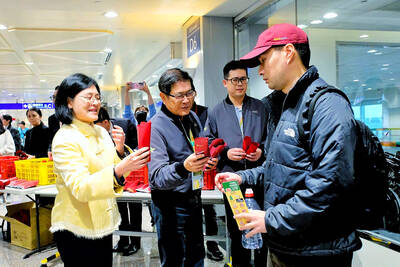
An Emirates flight from Dubai arrived at Taiwan Taoyuan International Airport yesterday afternoon, the first service of the airline since the US and Israel launched strikes against Iran on Saturday. Flight EK366 took off from the United Arab Emirates (UAE) at 3:51am yesterday and landed at 4:02pm before taxiing to the airport’s D6 gate at Terminal 2 at 4:08pm, data from the airport and FlightAware, a global flight tracking site, showed. Of the 501 passengers on the flight, 275 were Taiwanese, including 96 group tour travelers, the data showed. Tourism Administration Deputy Director-General Huang He-ting (黃荷婷) greeted Taiwanese passengers at the airport and

POSSIBILITIES EMERGE: With Taiwan’s victory and Japan’s narrow win over Australia, Taiwan now have a chance to advance if South Korea also beat the Aussies Taiwan has high hopes that the national baseball team would advance to the World Baseball Classic (WBC) quarter-finals after clinching a crucial 5-4 victory over South Korea in a nail-biting extra-inning game at the Tokyo Dome yesterday. Boosted by three home runs — two solo shots by Yu Chang (張育成) and Cheng Tsung-che (鄭宗哲) and a two-run homer by Stuart Fairchild — the triumph gave Taiwan a much-needed second victory in the five-team Pool C, where only the top two finishers would advance to the knockout stage in Miami, Florida. Entering extra innings with the game tied at four apiece, Taiwan scored
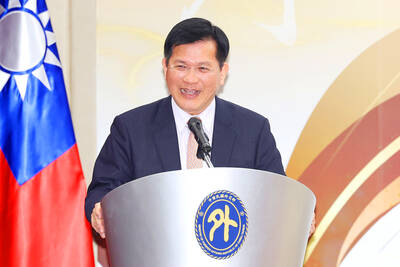
MISSION OF PEACE: The foreign minister urged Beijing to respect Taiwan’s existence as an independent nation, and work together to ensure peace and stability in the region Minister of Foreign Affairs Lin Chia-lung (林佳龍) yesterday rejected Chinese Minister of Foreign Affairs Wang Yi’s (王毅) comments about Taiwan, criticizing China as a “troublemaker” in the international community and a disruptor of cross-strait peace. Speaking at a news conference on the sidelines of the Chinese National People’s Congress, Wang said that Taiwan has always been a territory of China and that it would be impossible for it to become its own country. The “return” of Taiwan to China was the natural outcome of the Chinese people’s resistance against Japan in World War II, and that any pursuit of independence was “doomed
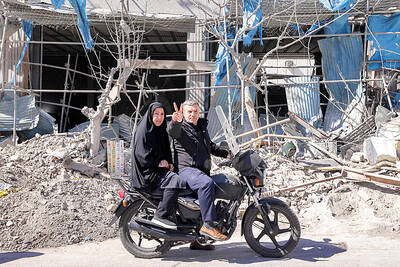
STRAIT OF HORMUZ: In the case of a prolonged blockade by Iran, Taiwan would look to sources of LNG outside the Middle East, including Australia and the US Taiwan would not have to ration power due to a shortage of natural gas, Minister of Economic Affairs Kung Ming-hsin (龔明鑫) said yesterday, after reports that the Strait of Hormuz was closed amid the conflict in the Middle East. The government has secured liquefied natural gas (LNG) supplies for this month and contingency measures are in place if the conflict extends into next month, Kung told lawmakers. Saying that 25 percent of Taiwan’s natural gas supplies are from Qatar, Chinese Nationalist Party (KMT) caucus secretary-general Lin Pei-hsiang (林沛祥) asked about the situation in light of the conflict. There would be “no problems” with


 RSS
RSS