


Iran’s foreign minister has praised his country’s relations with China during talks with his Chinese counterpart in Beijing amid heightened tensions and efforts by Tehran to keep its world markets open following the US’ withdrawal from the Iran nuclear deal.
Iranian Minister of Foreign Affairs Mohammad Javad Zarif on Friday met with Chinese State Councilor Wang Yi (王毅), whose country has been a major customer for Iranian oil, at the Diaoyutai State Guesthouse.
“We consider [China] one of our closest partners in the world,” Zarif said in opening remarks at the start of the meeting.
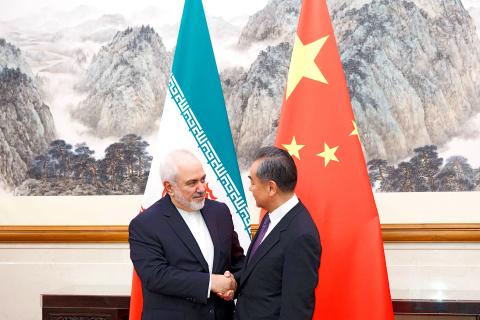
Photo: AFP
Iran wants to cooperate with China “bilaterally and multilaterally, in order to preserve the interests of our two peoples ... for peace and security,” Zarif said.
Wang told Zarif in the meeting that China hopes the Iran nuclear deal can be “fully implemented.”
“China firmly opposes unilateral sanctions and the so-called ‘long-arm’ jurisdiction imposed by the United States on Iran,” Wang was quoted as saying by China’s official Xinhua news agency.
Wang pledged to maintain the nuclear deal and work with Iran to eliminate “complicated disturbing factors,” Xinhua said.
Along with ratcheting up pressure on the Islamic Republic, Washington has been engaged in an increasingly bitter tariff battle with China.
The talks came after Saudi Arabia accused Iran of being behind a drone attack that shut down a key oil pipeline in the kingdom.
A local newspaper linked to the Al Saud royal family on Thursday called for the US to launch “surgical strikes” on Tehran.
Zarif arrived in China following a visit to Japan — which, like China, is a major importer of crude oil from the Persian Gulf — as part of intense diplomatic efforts to salvage Tehran’s nuclear deal with world powers at the center of a crisis unfolding between Iran and the US, as well as keep markets open to Iranian exports amid the sanctions.
Conflict with Taiwan could leave China with “massive economic disruption, catastrophic military losses, significant social unrest, and devastating sanctions,” a US think tank said in a report released on Monday. The German Marshall Fund released a report titled If China Attacks Taiwan: The Consequences for China of “Minor Conflict” and “Major War” Scenarios. The report details the “massive” economic, military, social and international costs to China in the event of a minor conflict or major war with Taiwan, estimating that the Chinese People’s Liberation Army (PLA) could sustain losses of more than half of its active-duty ground forces, including 100,000 troops. Understanding Chinese
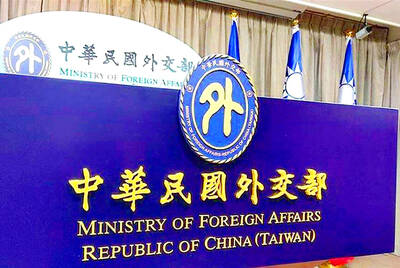
The Ministry of Foreign Affairs (MOFA) yesterday said it is closely monitoring developments in Venezuela, and would continue to cooperate with democratic allies and work together for regional and global security, stability, and prosperity. The remarks came after the US on Saturday launched a series of airstrikes in Venezuela and kidnapped Venezuelan President Nicolas Maduro, who was later flown to New York along with his wife. The pair face US charges related to drug trafficking and alleged cooperation with gangs designated as terrorist organizations. Maduro has denied the allegations. The ministry said that it is closely monitoring the political and economic situation

UNRELENTING: China attempted cyberattacks on Taiwan’s critical infrastructure 2.63 million times per day last year, up from 1.23 million in 2023, the NSB said China’s cyberarmy has long engaged in cyberattacks against Taiwan’s critical infrastructure, employing diverse and evolving tactics, the National Security Bureau (NSB) said yesterday, adding that cyberattacks on critical energy infrastructure last year increased 10-fold compared with the previous year. The NSB yesterday released a report titled Analysis on China’s Cyber Threats to Taiwan’s Critical Infrastructure in 2025, outlining the number of cyberattacks, major tactics and hacker groups. Taiwan’s national intelligence community identified a large number of cybersecurity incidents last year, the bureau said in a statement. China’s cyberarmy last year launched an average of 2.63 million intrusion attempts per day targeting Taiwan’s critical

AGING: As of last month, people aged 65 or older accounted for 20.06 percent of the total population and the number of couples who got married fell by 18,685 from 2024 Taiwan has surpassed South Korea as the country least willing to have children, with an annual crude birthrate of 4.62 per 1,000 people, Ministry of the Interior data showed yesterday. The nation was previously ranked the second-lowest country in terms of total fertility rate, or the average number of children a woman has in her lifetime. However, South Korea’s fertility rate began to recover from 2023, with total fertility rate rising from 0.72 and estimated to reach 0.82 to 0.85 by last year, and the crude birthrate projected at 6.7 per 1,000 people. Japan’s crude birthrate was projected to fall below six,


 RSS
RSS