


Australian Prime Minister Scott Morrison’s conservative government yesterday appeared poised to claim a come-from-behind victory in Australia’s election against the left-leaning Labor Party.
While opinion polls had pointed to a Labor win, the Australian Broadcasting Corp predicted that the Liberal-National coalition would form a government, but it remained unclear whether it would get the 76 seats needed for a majority.
Morrison, 51, narrowed Labor’s lead in a five-week campaign with a promise of sweeping tax cuts and record of sound economic management.
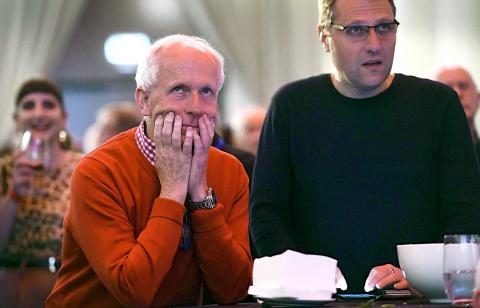
Photo: AFP
He relentlessly attacked Labor leader Bill Shorten’s detailed policy platform that included tougher action against climate change and a boost to the minimum wage, saying that Labor was a threat to growth just as the economy appears to be running out of steam.
“We outlined a comprehensive plan. The negative campaign against us has worked,” Labor lawmaker Brendan O’Connor said.
With 52 percent of the vote counted as of press time last night, the national broadcaster projected the coalition would win at least 73 seats and Labor 64, with eight seats still in doubt.
The vote count showed that Morrison’s conservatives avoided losing ground in the key state of Queensland.
Still, former Australian prime minister Tony Abbott was an early casualty, losing his formerly ultra-safe Sydney seat and ending his 25-year parliamentary career.
Whoever wins is to inherit an economy showing signs of strain amid record household debt, a falling property market and stagnant wages.
Independents are among the election’s 1,514 candidates. They could hold the balance of power in the Australian Senate, making the task of legislating policy difficult for either a Morrison or Shorten-led government.
The coalition has been in office since 2013 and boasts a solid economic record over its two terms.
The budget is on track to return to surplus next year after more than a decade of deficits. A hiring boom saw unemployment this year fall as low as 4.9 percent, compared with 5.7 percent when it took office.
However, a closer look reveals why many Australians simply feel they are not reaping the spoils of the nation’s boom years. While company profits have soared more than 40 percent since mid-2016, wages have grown at a snail’s pace — just 8 percent.
The Reserve Bank of Australia, which has kept the benchmark interest rate at a record-low 1.5 percent since August 2016, is under pressure to cut again.
On top of the economic challenges, the government must shore up ties with Beijing that have been strained since the coalition last year introduced laws aimed at ending Chinese interference in national affairs and barred telecommunications giant Huawei Technologies Co (華為) from participating in its 5G network on security grounds.
Labor’s campaign focused on creating a “fairer society” with tax cuts aimed at the lower paid and increased spending on hospitals, schools and childcare.
The party also campaigned heavily on taking stronger measures to combat climate change and encourage renewable energy.
“We are going to take real action on climate change. We’re going to tackle the problem of low wages growth. We’re going to tackle the issue of cost of living,” Shorten said in a nationally televised interview on Thursday.
Morrison built his campaign around the coalition’s traditional reputation for strong economic management and support for business.
His key pledge was a six-year plan to cut income taxes and streamline tax brackets.
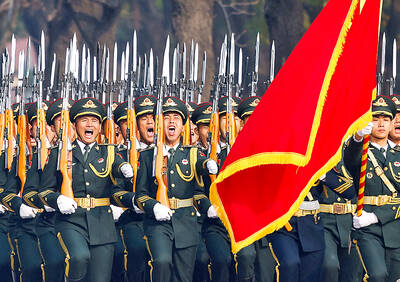
Conflict with Taiwan could leave China with “massive economic disruption, catastrophic military losses, significant social unrest, and devastating sanctions,” a US think tank said in a report released on Monday. The German Marshall Fund released a report titled If China Attacks Taiwan: The Consequences for China of “Minor Conflict” and “Major War” Scenarios. The report details the “massive” economic, military, social and international costs to China in the event of a minor conflict or major war with Taiwan, estimating that the Chinese People’s Liberation Army (PLA) could sustain losses of more than half of its active-duty ground forces, including 100,000 troops. Understanding Chinese
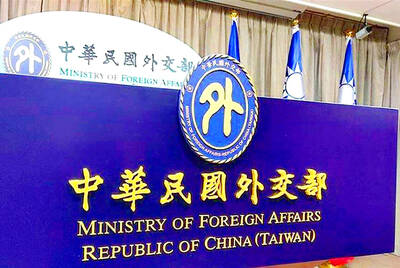
The Ministry of Foreign Affairs (MOFA) yesterday said it is closely monitoring developments in Venezuela, and would continue to cooperate with democratic allies and work together for regional and global security, stability, and prosperity. The remarks came after the US on Saturday launched a series of airstrikes in Venezuela and kidnapped Venezuelan President Nicolas Maduro, who was later flown to New York along with his wife. The pair face US charges related to drug trafficking and alleged cooperation with gangs designated as terrorist organizations. Maduro has denied the allegations. The ministry said that it is closely monitoring the political and economic situation

UNRELENTING: China attempted cyberattacks on Taiwan’s critical infrastructure 2.63 million times per day last year, up from 1.23 million in 2023, the NSB said China’s cyberarmy has long engaged in cyberattacks against Taiwan’s critical infrastructure, employing diverse and evolving tactics, the National Security Bureau (NSB) said yesterday, adding that cyberattacks on critical energy infrastructure last year increased 10-fold compared with the previous year. The NSB yesterday released a report titled Analysis on China’s Cyber Threats to Taiwan’s Critical Infrastructure in 2025, outlining the number of cyberattacks, major tactics and hacker groups. Taiwan’s national intelligence community identified a large number of cybersecurity incidents last year, the bureau said in a statement. China’s cyberarmy last year launched an average of 2.63 million intrusion attempts per day targeting Taiwan’s critical
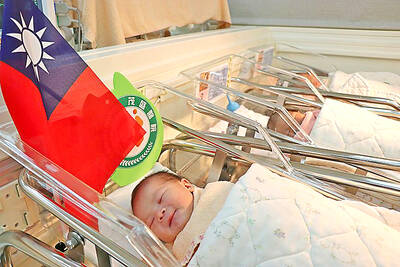
AGING: As of last month, people aged 65 or older accounted for 20.06 percent of the total population and the number of couples who got married fell by 18,685 from 2024 Taiwan has surpassed South Korea as the country least willing to have children, with an annual crude birthrate of 4.62 per 1,000 people, Ministry of the Interior data showed yesterday. The nation was previously ranked the second-lowest country in terms of total fertility rate, or the average number of children a woman has in her lifetime. However, South Korea’s fertility rate began to recover from 2023, with total fertility rate rising from 0.72 and estimated to reach 0.82 to 0.85 by last year, and the crude birthrate projected at 6.7 per 1,000 people. Japan’s crude birthrate was projected to fall below six,


 RSS
RSS