


Construction of China’s first full-sized aircraft carrier is well under way, according to satellite images obtained and analyzed by a US think tank.
The images from last month, provided to Reuters by the Center for Strategic and International Studies (CSIS) in Washington, reveal considerable activity over the past six months on a large vessel at the Jiangnan shipyard outside Shanghai.
China has not formally confirmed that it is building a third carrier, despite hints in state media, and the timing and extent of its carrier program are state secrets.
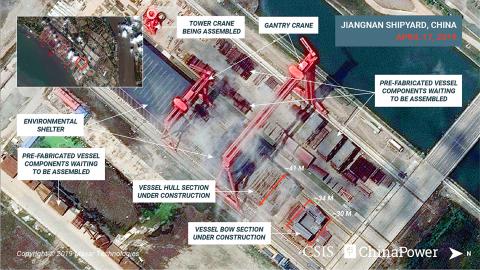
Photo: CSIS / ChinaPower / Maxar Technologies 2019 / Handout via Reuters
The Pentagon last week said that China had begun construction, but no images have emerged until now.
Both Asian and Western militaries, and regional security analysts, are seeking information on the carrier, which is expected to be China’s first large, modern platform capable of leading a full range of strike group operations.
The effort to build a large, locally designed carrier is seen as a core part of China’s extensive military modernization drive.
The CSIS images show a bow section that appears to end with a flat 30m front and a separate 41m-wide hull section, with gantry cranes looming overhead.
That suggests a vessel, which China has dubbed Type 002, somewhat smaller than the US’ 100,000-tonne carriers, but larger than France’s 42,500-tonne Charles de Gaulle, analysts said.
Fabrication halls the size of several soccer fields have been built nearby and work appears to be continuing on a floodable basin, possibly to float the finished hull into the nearby Yangtze River.
“While details regarding the Type 002 are limited, what is observable at Jiangnan is consistent with what is expected for the People’s Liberation Army Navy’s third aircraft carrier,” the think tank said in the analysis, which was to be published on its Web site yesterday.
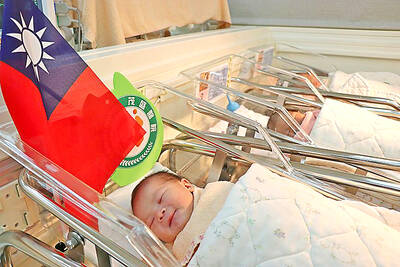
AGING: As of last month, people aged 65 or older accounted for 20.06 percent of the total population and the number of couples who got married fell by 18,685 from 2024 Taiwan has surpassed South Korea as the country least willing to have children, with an annual crude birthrate of 4.62 per 1,000 people, Ministry of the Interior data showed yesterday. The nation was previously ranked the second-lowest country in terms of total fertility rate, or the average number of children a woman has in her lifetime. However, South Korea’s fertility rate began to recover from 2023, with total fertility rate rising from 0.72 and estimated to reach 0.82 to 0.85 by last year, and the crude birthrate projected at 6.7 per 1,000 people. Japan’s crude birthrate was projected to fall below six,
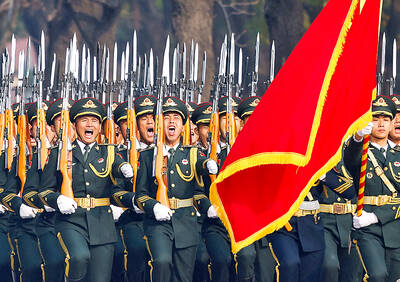
Conflict with Taiwan could leave China with “massive economic disruption, catastrophic military losses, significant social unrest, and devastating sanctions,” a US think tank said in a report released on Monday. The German Marshall Fund released a report titled If China Attacks Taiwan: The Consequences for China of “Minor Conflict” and “Major War” Scenarios. The report details the “massive” economic, military, social and international costs to China in the event of a minor conflict or major war with Taiwan, estimating that the Chinese People’s Liberation Army (PLA) could sustain losses of more than half of its active-duty ground forces, including 100,000 troops. Understanding Chinese
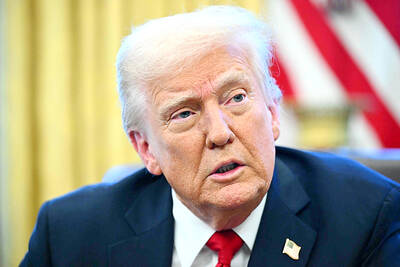
US President Donald Trump in an interview with the New York Times published on Thursday said that “it’s up to” Chinese President Xi Jinping (習近平) what China does on Taiwan, but that he would be “very unhappy” with a change in the “status quo.” “He [Xi] considers it to be a part of China, and that’s up to him what he’s going to be doing, but I’ve expressed to him that I would be very unhappy if he did that, and I don’t think he’ll do that. I hope he doesn’t do that,” Trump said. Trump made the comments in the context
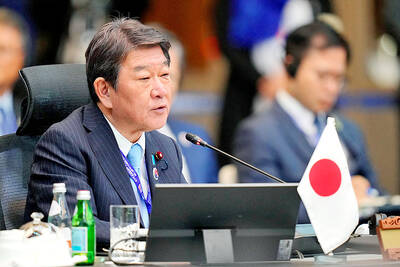
SELF-DEFENSE: Tokyo has accelerated its spending goal and its defense minister said the nation needs to discuss whether it should develop nuclear-powered submarines China is ramping up objections to what it sees as Japan’s desire to acquire nuclear weapons, despite Tokyo’s longstanding renunciation of such arms, deepening another fissure in the two neighbors’ increasingly tense ties. In what appears to be a concerted effort, China’s foreign and defense ministries issued statements on Thursday condemning alleged remilitarism efforts by Tokyo. The remarks came as two of the country’s top think tanks jointly issued a 29-page report framing actions by “right-wing forces” in Japan as posing a “serious threat” to world peace. While that report did not define “right-wing forces,” the Chinese Ministry of Foreign Affairs was


 RSS
RSS