


Two Reuters journalists jailed for their reporting on the Rohingya crisis in Myanmar yesterday walked out of prison, freed in a presidential amnesty after a vigorous global campaign — and backroom diplomacy — for their release.
Wa Lone and Kyaw Soe Oo were mobbed by media as they stepped out of Naypyidaw’s Insein Prison after more than 16 months in detention.
Their December 2017 arrests made them an international cause celebre and a sign of Myanmar’s deteriorating press freedoms under Nobel laureate and Burmese State Councillor Aung San Suu Kyi.
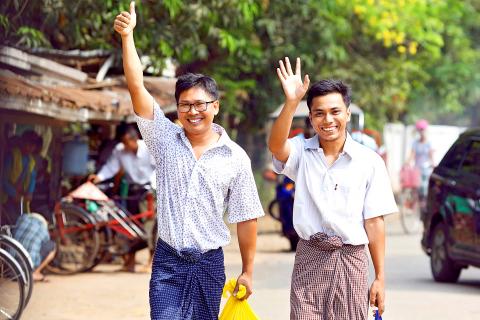
Photo: AFP
Wa Lone, 33, thanked people from “around the world” for advocating for their release and vowed that he would return to work.
“I can’t wait to go to my newsroom,” he said. “I am a journalist and I am going to continue.”
“We are enormously pleased that Myanmar has released our courageous reporters,” Reuters editor-in-chief Stephen Adler said. “Since their arrests 511 days ago, they have become symbols of the importance of press freedom around the world. We welcome their return.”
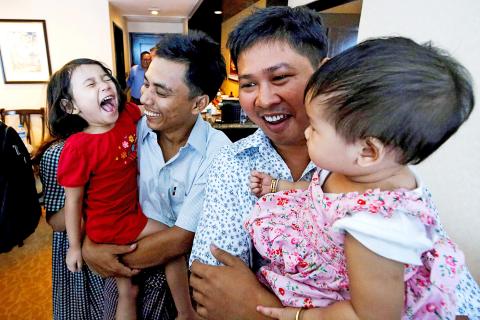
Photo: AFP
The two men, who were freed in an amnesty that included more than 6,000 prisoners, waved and smiled broadly as they left the jail.
While inside, the duo missed numerous family milestones, including the birth of Wa Lone’s daughter.
Their families were overjoyed with the news.
“We are very happy,” Chit Su Win, who is married to Kyaw Soe Oo, told reporters.
A reunion photograph of both couples celebrating, smiling and holding each of their daughters was widely shared on Twitter.
The case against them became a byword for the war against press freedom and prompted a campaign that attracted the support of prominent rights lawyer Amal Clooney, who yesterday said it had been an “honor to represent” her clients.
Rights groups and legal experts have said that the prosecution’s case was riddled with irregularities.
A whistle-blowing police officer testified during their trial that his superior had ordered his team to trap the reporters in a sting — testimony the judge chose to ignore.
The now-former officer Moe Yan Naing told reporters that he was “delighted” that the families were back together, and expressed interest in meeting the journalists if they wanted to.
Media advocates, the UN and rights organizations praised the release, but slammed the original arrest and conviction.
“We congratulate Wa Lone and Kyaw Soe Oo on walking free from unjust imprisonment and applaud that they have now been reunited with their families,” Human Rights Watch deputy director for Asia Phil Robertson said, adding that they should never have been arrested in the first place.
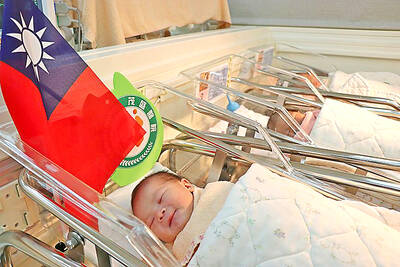
AGING: As of last month, people aged 65 or older accounted for 20.06 percent of the total population and the number of couples who got married fell by 18,685 from 2024 Taiwan has surpassed South Korea as the country least willing to have children, with an annual crude birthrate of 4.62 per 1,000 people, Ministry of the Interior data showed yesterday. The nation was previously ranked the second-lowest country in terms of total fertility rate, or the average number of children a woman has in her lifetime. However, South Korea’s fertility rate began to recover from 2023, with total fertility rate rising from 0.72 and estimated to reach 0.82 to 0.85 by last year, and the crude birthrate projected at 6.7 per 1,000 people. Japan’s crude birthrate was projected to fall below six,
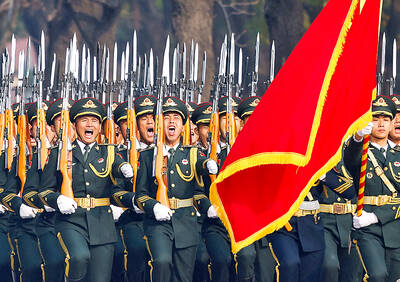
Conflict with Taiwan could leave China with “massive economic disruption, catastrophic military losses, significant social unrest, and devastating sanctions,” a US think tank said in a report released on Monday. The German Marshall Fund released a report titled If China Attacks Taiwan: The Consequences for China of “Minor Conflict” and “Major War” Scenarios. The report details the “massive” economic, military, social and international costs to China in the event of a minor conflict or major war with Taiwan, estimating that the Chinese People’s Liberation Army (PLA) could sustain losses of more than half of its active-duty ground forces, including 100,000 troops. Understanding Chinese
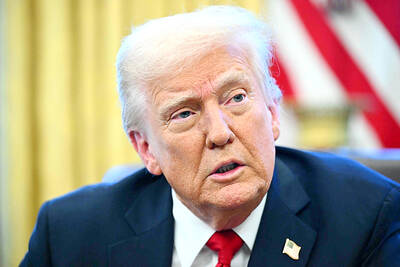
US President Donald Trump in an interview with the New York Times published on Thursday said that “it’s up to” Chinese President Xi Jinping (習近平) what China does on Taiwan, but that he would be “very unhappy” with a change in the “status quo.” “He [Xi] considers it to be a part of China, and that’s up to him what he’s going to be doing, but I’ve expressed to him that I would be very unhappy if he did that, and I don’t think he’ll do that. I hope he doesn’t do that,” Trump said. Trump made the comments in the context
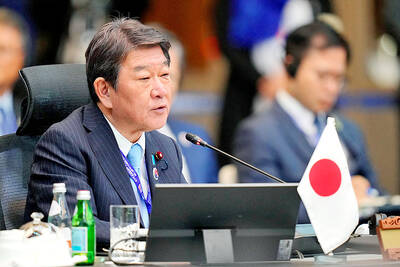
SELF-DEFENSE: Tokyo has accelerated its spending goal and its defense minister said the nation needs to discuss whether it should develop nuclear-powered submarines China is ramping up objections to what it sees as Japan’s desire to acquire nuclear weapons, despite Tokyo’s longstanding renunciation of such arms, deepening another fissure in the two neighbors’ increasingly tense ties. In what appears to be a concerted effort, China’s foreign and defense ministries issued statements on Thursday condemning alleged remilitarism efforts by Tokyo. The remarks came as two of the country’s top think tanks jointly issued a 29-page report framing actions by “right-wing forces” in Japan as posing a “serious threat” to world peace. While that report did not define “right-wing forces,” the Chinese Ministry of Foreign Affairs was


 RSS
RSS