


Indonesian President Joko Widodo was on track to be re-elected leader of the world’s third-biggest democracy as unofficial results put him in a comfortable lead over firebrand former general Prabowo Subianto after voting closed yesterday across the 17,000-island archipelago.
While official results are not due until next month, a series of so-called “quick counts” by pollsters showed Widodo, 57, as much as 11 percentage points ahead.
The vote ended at 1pm in Sumatra, although some of the 800,000 polling stations across the nation remained open late due to delays and long lines.
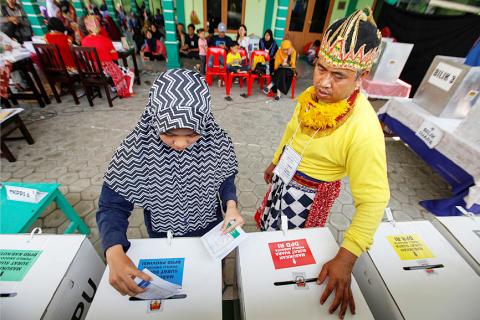
Photo: Reuters
The quick counts have proven reliable indicators in past elections, but Widodo held off declaring victory.
“We’ve all seen exit poll and quick-count numbers, but we still need to wait for the official results,” he told supporters in Jakarta.
His 67-year-old rival — who lost to Widodo in their 2014 presidential contest and said he would challenge this year’s results if he lost — insisted that exit polls suggested he was in the lead. He did not cite specific evidence.
“I’m calling on my supporters to keep calm and don’t get provoked,” he said.
The campaign was punctuated by mudslinging and a slew of fabricated online news stories.
“I hope after this that there will be a call for reconciliation, because ... we’ve been living in a very polarized atmosphere,” political analyst Gun Gun Heryanto told Kompas TV.
Yesterday saw millions of Indonesians cast their ballots in one of the world’s biggest exercises in democracy.
More than 190 million voters were asked to choose between Widodo and his fiery nationalist rival, who has strong ties to the nation’s three-decade dictatorship of former Indonesian president Suharto.
Widodo in his campaign pointed to his ambitious drive to build much-needed infrastructure, but he has seen his rights record criticized owing to an uptick in discriminatory attacks on religious and other minorities.
His choice of conservative cleric Ma’ruf Amin as his running mate also raised fears about the future of Indonesia’s reputation for moderate Islam.
The soft-spoken Widodo stands in stark contrast to Subianto, a strongman who courted Muslim hardliners and promised a boost to military and defense spending.
Echoing US President Donald Trump, Subianto vowed to put “Indonesia first” by reviewing billions of US dollars in Chinese investment.
Subianto — who moved to soften his strongman image with an Instagram account featuring his cat, Bobby — ordered the abduction of democracy activists as the authoritarian regime collapsed in 1998 and was accused of committing atrocities in East Timor.
A record 245,000 candidates ran for public office, from the presidency and parliamentary seats to local positions — the first time all were held on the same day.
About 2 million military and civil protection force members were deployed to ensure the vote went smoothly, including in mountainous Papua, where rebels have been fighting for decades to split from Indonesia.
Papua election officials dressed in traditional headgear and grass skirts, as others strapped on superhero costumes to entertain voters in other parts of the nation.
“This only happens once in five years, so we have to exercise our [voting] rights,” I Gusti Ketut Sudarsa, 65, said from Bali. “This will determine the path of our nation.”

SILENCING CRITICS: In addition to blocking Taiwan, China aimed to prevent rights activists from speaking out against authoritarian states, a Cabinet department said The Ministry of Foreign Affairs (MOFA) yesterday condemned transnational repression by Beijing after RightsCon, a major digital human rights conference scheduled to be held in Zambia this week, was abruptly canceled due to Chinese pressure over Taiwanese participation. This year’s RightsCon, the world’s largest conference discussing issues “at the intersection of human rights and technology,” was scheduled to take place from tomorrow to Friday in Lusaka, and expected to draw 2,600 in-person attendees from 150 countries, along with 1,100 online participants. However, organizers were forced to cancel the event due to behind-the-scenes pressure from China, the ministry said, expressing its “strongest condemnation”
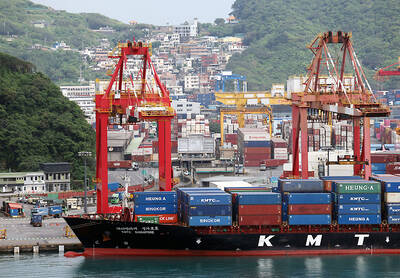
Taiwan’s economy grew far faster than expected in the first quarter, as booming demand for artificial intelligence (AI) applications drove a surge in exports, spilling over into investment and consumption, the Directorate-General of Budget, Accounting and Statistics (DGBAS) said yesterday. GDP growth was 13.69 percent year-on-year during the January-to-March period, beating the DGBAS’ February forecast by 2.23 percentage points and marking the most robust growth in nearly four decades, DGBAS senior official Chiang Hsin-yi (江心怡) told a news conference in Taipei. The result was powered by exports, which remain the backbone of Taiwan’s economy, Chiang said. Outbound shipments jumped 51.12 percent year-on-year to
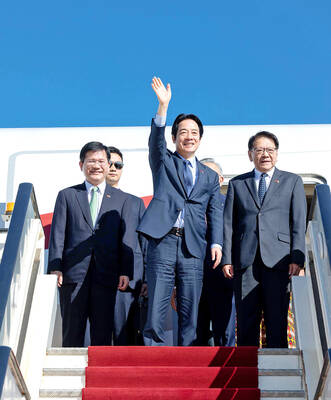
DELAYED BUT DETERMINED: The president’s visit highlights Taiwan’s right to international engagement amid regional pressure from China President Willaim Lai (賴清德) yesterday arrived in Eswatini, more than a week after his planned visit to Taiwan’s sole African ally was suspended because of revoked overflight permits. “The visit, originally scheduled for April 22, was postponed due to unforeseen external factors,” Lai wrote on social media. “After several days of careful arrangements by our diplomatic and national security teams, we successfully arrived today.” Lai said he looked forward to further deepening Taiwan-Eswatini relations through closer cooperation in the economy, agriculture, culture and education, as well as advancing the nation’s international partnerships. The president was initially scheduled to arrive in time to celebrate
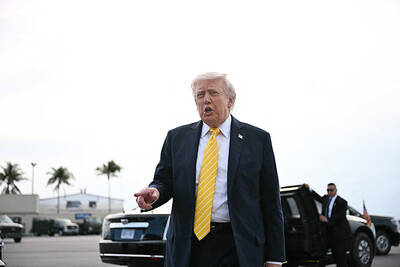
Iran’s Islamic Revolutionary Guard Corp (IRGC) yesterday said the US faced a choice between an “impossible” military operation or a “bad deal” with Tehran, after US President Donald Trump disparaged Iran’s latest peace proposal. Negotiations between the two countries have been deadlocked since a ceasefire came into effect on April 8, with only one round of direct peace talks held so far. Iran’s Tasnim and Fars news agencies reported that Tehran had submitted a 14-point proposal to mediator Pakistan, but Trump was quick to cast doubt on it. “I will soon be reviewing the plan that Iran has just sent to us, but


 RSS
RSS