


Thousands of people yesterday marched in Kaohsiung against air pollution, calling on the city government to regulate coal burning and scrap a planned petrochemical plant near an elementary school.
The march started at Kaohsiung MRT Central Park Station at 1pm, from where protesters made their way to Kaohsiung City Hall.
It was the second of three marches against air pollution planned for this month and drew nearly 5,000 people, event organizer Southern Taiwan Anti-Air Pollution Alliance convener Chen Jiau-hua (陳椒華) said.
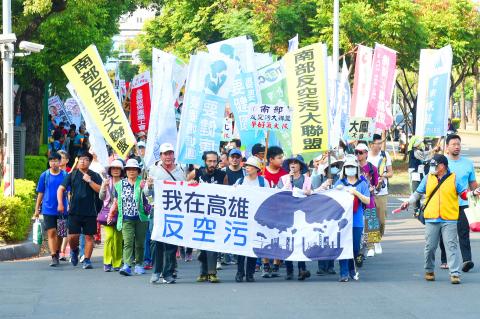
Photo: Wang Jung-hsiang, Taipei Times
The alliance has five demands: that the city government limit local plants’ coal use; a trade mechanism between stationary and mobile pollution sources stipulated in the Air Pollution Control Act (空氣污染防制法) be abolished; China Steel Corp (中鋼, CSC) transform its coke wet quenching tower into a dry one; Taiwan Power Co (台電) convert coal-fired units at the city’s Sinda (興達) and Dalin (大林) power plants to gas-fired ones; and that Taiwan-Japan Oxo Chemical Industries Inc (曄揚) scrap a plan to build petrochemical plant 200m from an elementary school, it said.
Kaohsiung mayoral candidates Chen Chi-mai (陳其邁) of the Democratic Progressive Party and Han Kuo-yu (韓國瑜) of the Chinese Nationalist Party (KMT) also joined the march.
Proposing several plans to alleviate air pollution, Chen said that if elected, he would re-evaluate the allowable and actual emission levels for local factories, use artificial intelligence to predict and control air quality, establish an air quality regulation committee and transform the heavily polluted Kaohsiung into a green and livable city.
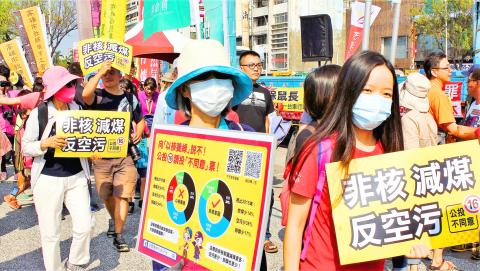
Photo: CNA
Han, along with KMT Tainan mayoral candidate Kao Su-po (高思博), pasted stickers bearing angry facial expressions onto Environmental Protection Administration (EPA) Minister Lee Ying-yuan’s (李應元) image in front of city hall.
The EPA and the Kaohsiung Bureau of Environmental Protection both issued statements responding to the appeals.
The Sinda plant’s four coal-fired units would be decommissioned by 2023 and 2024 at the earliest, and it would be equipped with three gas-fired units that would become operational from 2023, the EPA said, adding that the Dalin plant is planing to install ultra-supercritical coal-fired units to reduce pollution.
CSC is planning to build a dry coke quenching tower as the alliance has suggested, the EPA said.
The agency did not accept the protesters’ request to abolish the pollution trade mechanism, but said it has imposed regulations to regulate the trade and a 10-year sunset clause.
Establishing new regulations for coal use is not feasible, considering that the Yunlin County Government’s regulations were not approved by the Executive Yuan and those of the Taichung City Government do not stipulate any penalties for violators, the bureau said.
Instead, it has restricted power plants’ coal use by reducing the maximum amount of coal use in their permits, the bureau said.
Since the Kaohsiung City Government’s Regulation Standards for Air Pollutants Emitted by Burning Facilities (燃燒設備空氣污染物排放標準) took effect in July, it has required 2,282 facilities to bring their emissions to the level of gas-fired facilities, thereby eliminating 1,900 tonnes of sulfur oxides emissions and 480 tonnes of nitrogen oxides emissions as of September, the bureau said.
State-run factories and top 20 polluters in the city have also eliminated 5,736 tonnes of emissions in the first nine months of this year, it added.
The bureau said it would continue to strictly supervise Taiwan-Japan Oxo Chemical’s construction project and require it to continue communicating with local residents.
The company is CPC Corp, Taiwan’s (台灣中油) joint venture with Japanese petrochemical firm KH Neochem Co, whose plant is expected to be completed by the end of 2020.
Additional reporting by Tsai Ching-hua
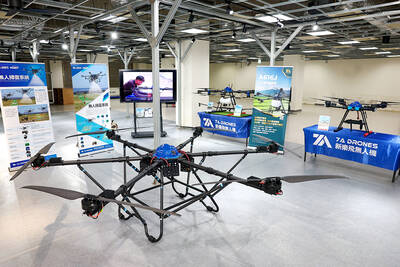
DRONE CENTRAL: Taiwan aims to become Asia’s democratic hub for drones, with most exports focused on high-quality military-grade models, an official said Taiwan’s drone industry is expected to expand significantly by 2030, producing 100,000 units per month and exporting half of them, the Ministry of Economic Affairs said yesterday. Current drone production capacity is about 15,000 units per month, but the industry can quickly scale up as demand increases, Industrial Development Administration Director-General Chiou Chyou-huey (邱求慧) told a news conference in Taipei. Taiwan’s drone output grew 2.5-fold last year to NT$12.9 billion (US$408.3 million) under a government program to develop the uncrewed vehicle sector, he said. The Executive Yuan in October last year approved plans to invest NT$44.2 billion into domestic production of uncrewed aerial
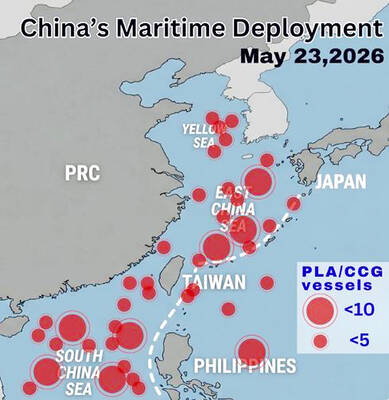
WARNING: China should stop engaging in actions that undermine regional peace and stability, as it would only build resentment among people across the Strait, the CGA said China has deployed more than 100 navy, coast guard and other vessels in waters from the Yellow Sea to the South China Sea and the western Pacific since US President Donald Trump and Chinese President Xi Jinping (習近平) met in Beijing, National Security Council Secretary-General Joseph Wu (吳釗燮) said yesterday. “In this part of the world, #China is the one & only PROBLEM wrecking the #StatusQuo & threatening regional peace & stability,” Wu wrote on X. In a separate post, he said Beijing was coercing Taiwan’s maritime domain, calling it illegal and provocative, after the Coast Guard Administration (CGA) expelled a

VERBOSE VESSELS: A CGA cutter and a China Coast Guard exchanged verbal barbs for more than a day in Taiwanese-controlled waters before the Chinese vessel left The Taiwanese and Chinese coast guards had a standoff near the strategically located Pratas Islands (Dongsha Islands, 東沙群島) in the north of the South China Sea, the Coast Guard Administration (CGA) said yesterday. The two sides engaged in intense radio exchanges over sovereignty claims during the 33-hour standoff. China Coast Guard vessel 3501 eventually left the restricted waters, 26.6 nautical miles (49.2km) west of the Pratas Islands, at 5pm yesterday, the CGA said. Lying approximately between southern Taiwan and Hong Kong, the Taiwan-controlled Pratas are seen by some security experts as vulnerable to Chinese attack due to their distance — more than
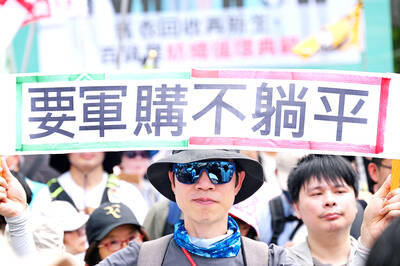
More than 8,000 people took part in a rally in Taipei yesterday to express support for more defense spending, after the opposition slashed the Cabinet’s proposed NT$1.25 trillion (US$39.6 billion) special defense budget and capped it at NT$780 billion. The demonstrators urged the Cabinet to propose another bill. Taiwan Economic Democracy Union convener Lai Chung-chiang (賴中強) said the main problem of the passed budget plan is the removal of funding for critical items, not just that the total amount is smaller. Critical budget items included purchasing or developing uncrewed vehicles, Strong Bow (強弓) missile systems, additional ammunition, artificial intelligence-powered combat systems and Taiwan-US


 RSS
RSS