


Super Typhoon Trami is likely to turn north and move toward Japan after approaching Taiwan’s east coast, the Central Weather Bureau said yesterday, adding that a sea alert might still be issued.
As of 2pm yesterday, the typhoon’s center, located 890km southeast of Oluanpi (鵝鑾鼻), was inching northward at 4kph, with a radius of 250km and maximum winds of 234kph, bureau data showed.
Gauging the development of Pacific high pressure again tomorrow would enable the bureau to predict the storm’s path more accurately, it said, adding that a weakening pressure system over the Pacific would move the typhoon northward, close to the Ryukyu Islands, and reduce its effect on Taiwan.
As of press time last night, the bureau forecast that the eye was not likely to make landfall in Taiwan. Although the typhoon’s projected path could change, the storm might pass between Taiwan and the Ryukyu Islands, the bureau said.
The typhoon’s circumference would bring rain to northern and eastern Taiwan, it said, adding that the rest of the nation could expect isolated showers.
The typhoon lacks a clear guiding airstream, which causes its center to appear stagnant, bureau technical specialist Wu Wan-hua (伍婉華) said, but added that the high-pressure system would keep Trami moving.
The bureau would continue to monitor how close the typhoon might come to the nation’s east coast before continuing northward, she said.
Whether a sea alert would be issued on Friday or Saturday needs further observation, she added.
Weather authorities worldwide have offered diverse predictions of Trami’s possible routes over the past few days, but the forecasts are becoming more similar, Weatherrisk Explore forecaster Lai Chun-wei (賴忠瑋) said.
“The forecasts showed that the Pacific high-pressure system would extend its influence toward the west, leading Trami toward Okinawa and Japan. Their projected paths showed that the typhoon would come closest to the nation on Saturday, approaching the northeast coast. Taiwan’s northern and northeastern regions would be close to the storm’s edge,” he said.
Former bureau forecast center director Daniel Wu (吳德榮) said the paths projected by weather authorities worldwide have a 70 percent uncertainty, meaning that Taiwan might not totally escape the typhoon.
More observation is needed, because Japan and the US have forecast that Taiwan would be enveloped by the storm, he added.

South Korea has adjusted its electronic arrival card system to no longer list Taiwan as a part of China, a move that the Ministry of Foreign Affairs said would help facilitate exchanges between the two sides. South Korea previously listed “Taiwan” as “Taiwan (China)” in the drop-down menus of its online arrival card system, where people had to fill out where they came from and their next destination. The ministry had requested South Korea make a revision and said it would change South Korea’s name on Taiwan’s online immigration system from “Republic of Korea” to “Korea (South),” should the issue not be

Tainan, Taipei and New Taipei City recorded the highest fines nationwide for illegal accommodations in the first quarter of this year, with fines issued in the three cities each exceeding NT$7 million (US$220,639), Tourism Administration data showed. Among them, Taipei had the highest number of illegal short-term rental units, with 410. There were 3,280 legally registered hotels nationwide in the first quarter, down by 14 properties, or 0.43 percent, from a year earlier, likely indicating operators exiting the market, the agency said. However, the number of unregistered properties rose to 1,174, including 314 illegal hotels and 860 illegal short-term rental
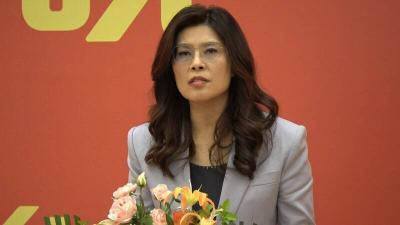
Both sides of the Taiwan Strait share a political foundation based on the “1992 consensus” and opposition to Taiwanese independence, Chinese Nationalist Party (KMT) Chairwoman Cheng Li-wun (鄭麗文) today said during her meeting with Chinese President Xi Jinping (習近平). Both sides of the Strait should plan and build institutionalized and sustainable mechanisms for dialogue and cooperation based on that foundation to make peaceful development across the Strait irreversible, she said. Peace is a shared moral value across the Strait, and both sides should move beyond political confrontation to seek institutionalized solutions to prevent war, she said. Mutually beneficial cross-strait relations are what the

ECONOMIC COERCION: Such actions are often inconsistently applied, sometimes resumed, and sometimes just halted, the Presidential Office spokeswoman said The government backs healthy and orderly cross-strait exchanges, but such arrangements should not be made with political conditions attached and never be used as leverage for political maneuvering or partisan agendas, Presidential Office spokeswoman Karen Kuo (郭雅慧) said yesterday. Kuo made the remarks after China earlier in the day announced 10 new “incentive measures” for Taiwan, following a landmark meeting between Chinese President Xi Jinping (習近平) and Chinese Nationalist Party (KMT) Chairwoman Cheng Li-wun (鄭麗文) in Beijing on Friday. The measures, unveiled by China’s Xinhua news agency, include plans to resume individual travel by residents of Shanghai and China’s Fujian


 RSS
RSS