


The National Women’s League, under the leadership of then-chairwoman Cecilia Koo (辜嚴倬雲), from 2006 to 2016 donated NT$236 million (US$8.07 million at the current exchange rate) to entities owned by her extended family, a source told the Chinese-language Liberty Times (the sister newspaper of the Taipei Times).
The Koo family is one of the nation’s most powerful business dynasties and its members own many enterprises in the banking, securities, and rubber and cement sectors, among others.
The source, who requested anonymity, said the league funneled donations to the Koo family’s foundations registered as contributions to projects ranging from breast cancer research to establishing disaster relief centers.
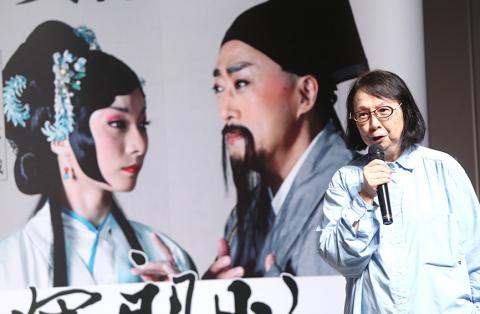
Photo: CNA
However, the league directed the largest share of the donations, about NT$130 million, to the Taipei Li-yuan Peking Opera Theatre (台北新劇團), a theater group owned by Koo’s daughter, Vivien Ku (辜懷群).
C.F. Koo Foundation (辜公亮文教基金會) received NT$31 million, the Koo Foundation Sun Yat-sen Cancer Center (和信治癌中心) received NT$55 million and St John’s University in New Taipei City’s Tamsui District (淡水) received NT$20 million in league donations.
The league also moved more than NT$700 million to foundations created by the league, including more than NT$500 million to Cheng Hsin General Hospital, NT$150 million to the National Women’s League Foundation for the Hearing Impaired and NT$9 million to the Taipei Chinese Women’s Foundation (台北市華夏婦女文教基金會), among others.
Meanwhile, league chairwoman Joanna Lei (雷倩) said that Cecilia Koo’s call to nationalize the league’s remaining assets was a ploy by the Koo family to shield its interests.
In a Facebook post, Lei compared Cecilia Koo’s proposal with “suicide,” adding that implementing the plan would be tantamount to “completely dissolving the league.”
“Colleagues who have long worked for [Cecelia Koo] are absolutely convinced that the latest proposal was a plot concocted by other members of the Koo family,” she said.
An employee of the Koo family has reportedly admitted to shredding 170 boxes of league financial records, which could have potentially helped the league in its battle against the Ill-gotten Party Assets Settlement Committee, Lei said, adding that this suggests there was a conspiracy by members of the Koo family.
“The truth about the situation between December [last year] and January is increasingly clear, even though the reason behind it is still unknown to members,” she said.
The league issued a statement saying that Lei had tendered her resignation yesterday for the third time, but board members had again persuaded her to stay on.
Democratic Progressive Party Legislator Chuang Ruei-hsiung (莊瑞雄) said many of the donations were made to take care of Koo’s daughter and other family members instead of military veterans and their dependents — one of the main founding purposes of the league.
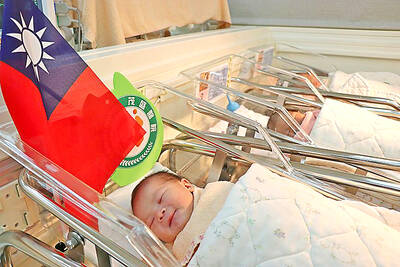
AGING: As of last month, people aged 65 or older accounted for 20.06 percent of the total population and the number of couples who got married fell by 18,685 from 2024 Taiwan has surpassed South Korea as the country least willing to have children, with an annual crude birthrate of 4.62 per 1,000 people, Ministry of the Interior data showed yesterday. The nation was previously ranked the second-lowest country in terms of total fertility rate, or the average number of children a woman has in her lifetime. However, South Korea’s fertility rate began to recover from 2023, with total fertility rate rising from 0.72 and estimated to reach 0.82 to 0.85 by last year, and the crude birthrate projected at 6.7 per 1,000 people. Japan’s crude birthrate was projected to fall below six,
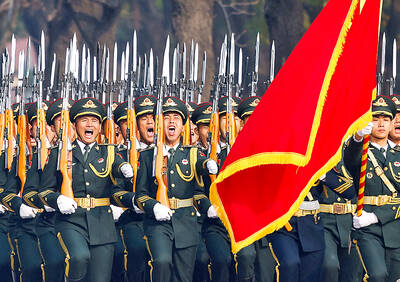
Conflict with Taiwan could leave China with “massive economic disruption, catastrophic military losses, significant social unrest, and devastating sanctions,” a US think tank said in a report released on Monday. The German Marshall Fund released a report titled If China Attacks Taiwan: The Consequences for China of “Minor Conflict” and “Major War” Scenarios. The report details the “massive” economic, military, social and international costs to China in the event of a minor conflict or major war with Taiwan, estimating that the Chinese People’s Liberation Army (PLA) could sustain losses of more than half of its active-duty ground forces, including 100,000 troops. Understanding Chinese
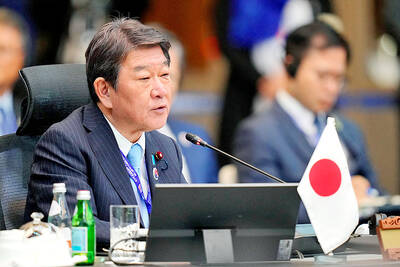
SELF-DEFENSE: Tokyo has accelerated its spending goal and its defense minister said the nation needs to discuss whether it should develop nuclear-powered submarines China is ramping up objections to what it sees as Japan’s desire to acquire nuclear weapons, despite Tokyo’s longstanding renunciation of such arms, deepening another fissure in the two neighbors’ increasingly tense ties. In what appears to be a concerted effort, China’s foreign and defense ministries issued statements on Thursday condemning alleged remilitarism efforts by Tokyo. The remarks came as two of the country’s top think tanks jointly issued a 29-page report framing actions by “right-wing forces” in Japan as posing a “serious threat” to world peace. While that report did not define “right-wing forces,” the Chinese Ministry of Foreign Affairs was
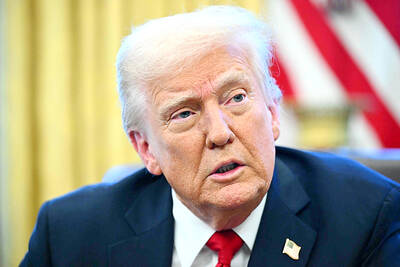
US President Donald Trump in an interview with the New York Times published on Thursday said that “it’s up to” Chinese President Xi Jinping (習近平) what China does on Taiwan, but that he would be “very unhappy” with a change in the “status quo.” “He [Xi] considers it to be a part of China, and that’s up to him what he’s going to be doing, but I’ve expressed to him that I would be very unhappy if he did that, and I don’t think he’ll do that. I hope he doesn’t do that,” Trump said. Trump made the comments in the context


 RSS
RSS