


Declassified historical files retrieved from the archives of the US, Australia and the UN would help to shed new light on the 228 Incident, historians said yesterday at the launch at the Academia Historica in Taipei of a book about the Incident.
International View of the 228 Incident (解密‧國際檔案的二二八事件) is an anthology of documents from the US National Archives and Records Administration, the National Archives of Australia and the UN Archives and Records Management Section seen last year at the request of the Kaohsiung Museum of History.
The museum requested that historians be allowed to access documents on post-World War II Taiwan, including international coverage of the Incident, Academia Historica said.
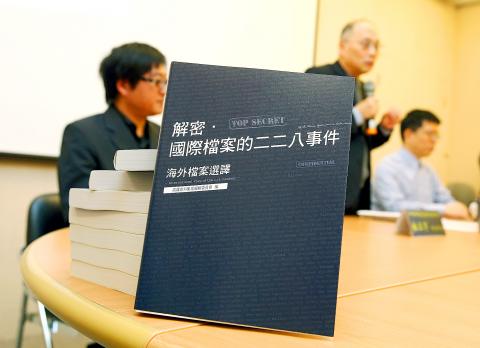
Photo: CNA
“The greatest impact the 228 Incident had on post-World War II Taiwan was that it sparked the Taiwanese independence movement,” said historian Su Yao-tsung (蘇瑤崇), a professor at Providence University, citing documents sourced from the US.
“The 228 Incident brought about a tremendous change. People were shocked by the suppression — that the government would slaughter its own people — and they started to entertain the idea of independence; to make Taiwan a nation independent of China,” Su said.
According to files retrieved from the US, two other prominent political views permeated Taiwanese society between the end of the war and the 228 Incident in 1947, with both revolving around calls for the US to claim “trusteeship” over Taiwan.
Mainstream public opinion at the time was divided between those that believed that the Chinese Nationalist Party (KMT) should govern China while “trusting” Taiwan to the US as it underwent some kind of reform, while others believed that Taiwan might as well be governed by the US before the KMT suffered its ultimate defeat in the Chinese Civil War, which they thought was only a matter of time, Su said.
The book features letters by then-US vice consul in Taipei George Kerr.
In a letter Kerr addressed to then-US ambassador to China John Stuart on March 5, 1947, he said that he had received word from a settlement committee, assembled by then-Taiwan governor-general officials and representatives, that Chiang Kai-shek (蔣介石) would dispatch troops to Taiwan to quash the public pushback triggered by the massacre the next day.
Kerr passed on the delegation’s request that Chiang scratch his plan to send troops to Taiwan to quash dissent, as it would only cause bloodshed and all hopes to salvage the situation would be lost.
In a declassified letter addressed to Stuart on March 10, 1947, Kerr asked him to relay to Washington his suggestion that then-Taiwan governor-general Chen Yi (陳儀) be replaced with an educated person of integrity.
“The US should encourage Chiang to replace Chen to avoid shouldering responsibility for a military operation with an infinite cost, as well as to reassure Taiwan’s strategic position, so that it does not fall prey to communism,” Kerr wrote.
Also on March 5, 1947, a petition addressed to then-US secretary of state George Marshall, penned by 21 members of the Taiwan Revolution Alliance, reported corruption, embezzlement, nepotism and exploitation, among other vices, by a “fascist” Taiwan Governor-General’s Office, and requested that the US file a motion at the UN to take over Taiwan until the KMT could prove its self-governance ability.
Hailing the book as a “breakthrough” in research on the 228 Incident, Academia Historica director Wu Mi-cha (吳密察) said the systematic presentation of data gathered from overseas agencies allows people to view the Incident from new perspectives.
The book’s greatest significance lies in its attempt to restore a historical event from a diversity of angles, Wu said, adding that he hopes that the government would continue efforts to make public more files held in overseas archives.
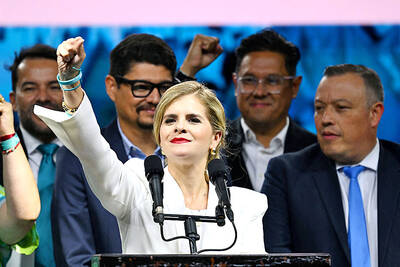
Right-wing political scientist Laura Fernandez on Sunday won Costa Rica’s presidential election by a landslide, after promising to crack down on rising violence linked to the cocaine trade. Fernandez’s nearest rival, economist Alvaro Ramos, conceded defeat as results showed the ruling party far exceeding the threshold of 40 percent needed to avoid a runoff. With 94 percent of polling stations counted, the political heir of outgoing Costa Rican President Rodrigo Chaves had captured 48.3 percent of the vote compared with Ramos’ 33.4 percent, the Supreme Electoral Tribunal said. As soon as the first results were announced, members of Fernandez’s Sovereign People’s Party
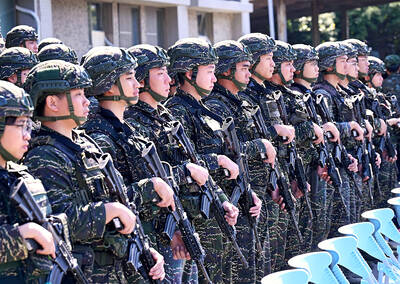
MORE RESPONSIBILITY: Draftees would be expected to fight alongside professional soldiers, likely requiring the transformation of some training brigades into combat units The armed forces are to start incorporating new conscripts into combined arms brigades this year to enhance combat readiness, the Executive Yuan’s latest policy report said. The new policy would affect Taiwanese men entering the military for their compulsory service, which was extended to one year under reforms by then-president Tsai Ing-wen (蔡英文) in 2022. The conscripts would be trained to operate machine guns, uncrewed aerial vehicles, anti-tank guided missile launchers and Stinger air defense systems, the report said, adding that the basic training would be lengthened to eight weeks. After basic training, conscripts would be sorted into infantry battalions that would take
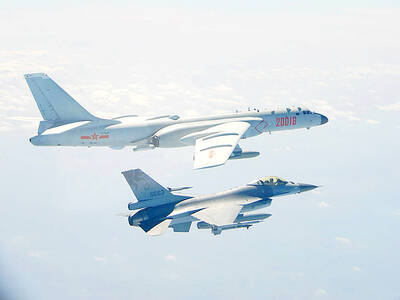
GROWING AMBITIONS: The scale and tempo of the operations show that the Strait has become the core theater for China to expand its security interests, the report said Chinese military aircraft incursions around Taiwan have surged nearly 15-fold over the past five years, according to a report released yesterday by the Democratic Progressive Party’s (DPP) Department of China Affairs. Sorties in the Taiwan Strait were previously irregular, totaling 380 in 2020, but have since evolved into routine operations, the report showed. “This demonstrates that the Taiwan Strait has become both the starting point and testing ground for Beijing’s expansionist ambitions,” it said. Driven by military expansionism, China is systematically pursuing actions aimed at altering the regional “status quo,” the department said, adding that Taiwan represents the most critical link in China’s
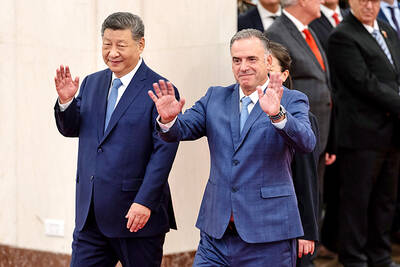
EMERGING FIELDS: The Chinese president said that the two countries would explore cooperation in green technology, the digital economy and artificial intelligence Chinese President Xi Jinping (習近平) yesterday called for an “equal and orderly multipolar world” in the face of “unilateral bullying,” in an apparent jab at the US. Xi was speaking during talks in Beijing with Uruguayan President Yamandu Orsi, the first South American leader to visit China since US special forces captured then-Venezuelan president Nicolas Maduro last month — an operation that Beijing condemned as a violation of sovereignty. Orsi follows a slew of leaders to have visited China seeking to boost ties with the world’s second-largest economy to hedge against US President Donald Trump’s increasingly unpredictable administration. “The international situation is fraught


 RSS
RSS