


The Environmental Protection Administration (EPA) yesterday introduced a series of plans to reduce the use of plastic products that cause marine pollution, with the use of plastic straws expected to be limited next year and disposable tableware banned by 2030.
The plans were jointly drafted by the agency and eight environmental groups, which formed a coalition on marine waste disposal in July last year.
“Marine pollution has become another serious environmental problem for the world, in addition to global warming,” said Tse-xin Organic Agriculture Foundation member Chen Li-hsin (陳立信), who discussed their collaboration over the past six months at a news conference in Taipei.
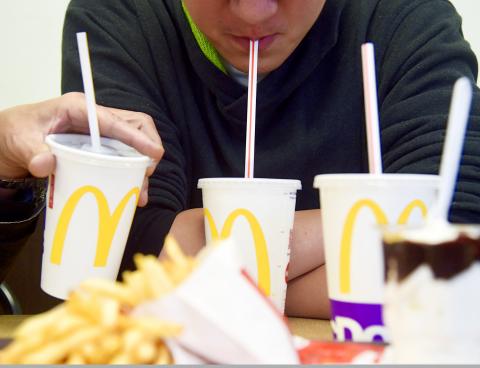
Photo: Huang Yao-cheng, Taipei Times
The coalition has launched 67 action plans that focus on four areas: source reduction; prevention and removal of marine waste; research and investigation; and expanding public participation, he said.
In particular, the plans target plastic bags, disposable tableware, plastic straws and beverage cups, many of which end up as garbage on beaches, Chen said, adding that the coalition hopes to gradually ban the use of those products in 12 years.
With 2020 as the first signpost, the EPA would require restaurants to stop providing plastic straws, while extending its ban on plastic shopping bags to all stores that give invoices for consumption, it said.
By 2025, the bans on plastic bags, disposable tableware, take-out beverage cups and plastic straws are to be extended to more businesses, the agency said, adding that it would increase their prices to restrict their use.
By 2030, it would ban the use of all plastic shopping bags, tableware, take-out beverage cups and straws.
These plans aim to create a sustainable environment for future generations, EPA Minister Lee Ying-yuan (李應元) said.
Most businesses have been willing to cooperate with the expanded ban on plastic bags that took effect last month, he said.
The EPA will also conduct more beach cleanup activities and ask local environmental bureaus in municipalities near the sea to monitor beaches every season to investigate the sources of garbage, Department of Water Quality Protection Director-General Yeh Chun-hung (葉俊宏) said.
The other members of the coalition are the Wild at Heart Legal Defense Association, the Taiwan Environmental Information Association, Hiin Studio, the Society of Wilderness, the Sea Citizens Foundation, Greenpeace Taiwan and the Kuroshio Ocean Education Foundation.
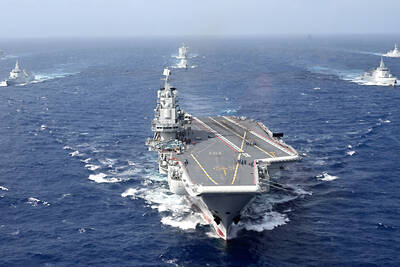
PROVOCATIVE: Chinese Deputy Ambassador to the UN Sun Lei accused Japan of sending military vessels to deliberately provoke tensions in the Taiwan Strait China denounced remarks by Japan and the EU about the South China Sea at a UN Security Council meeting on Monday, and accused Tokyo of provocative behavior in the Taiwan Strait and planning military expansion. Ayano Kunimitsu, a Japanese vice foreign minister, told the Council meeting on maritime security that Tokyo was seriously concerned about the situation in the East China and South China seas, and reiterated Japan’s opposition to any attempt to change the “status quo” by force, and obstruction of freedom of navigation and overflight. Stavros Lambrinidis, head of the EU delegation to the UN, also highlighted South China Sea
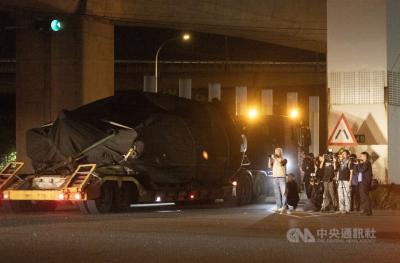
The final batch of 28 M1A2T Abrams tanks purchased from the US arrived at Taipei Port last night and were transported to the Armor Training Command in Hsinchu County’s Hukou Township (湖口), completing the military’s multi-year procurement of 108 of the tanks. Starting at 12:10am today, reporters observed more than a dozen civilian flatbed trailers departing from Taipei Port, each carrying an M1A2T tank covered with black waterproof tarps. Escorted by military vehicles, the convoy traveled via the West Coast Expressway to the Armor Training Command, with police implementing traffic control. The army operates about 1,000 tanks, including CM-11 Brave Tiger
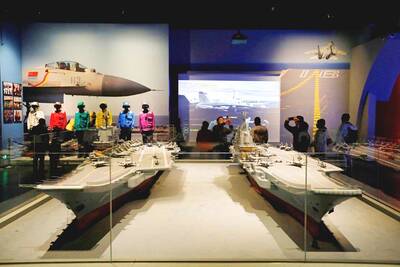
China on Wednesday teased in a video an aircraft carrier that could be its fourth, and the first using nuclear power, while making an allusion to Taiwan and vowing to further build up its islands, as it looks to boost maritime power, secure resources and bolster territorial claims. The video, issued on the eve of the 77th founding anniversary of the Chinese People’s Liberation Army Navy, featured fictional officers with names that are homophones of three commissioned aircraft carriers, the Liaoning (遼寧), Shandong (山東) and Fujian (福建). Titled Into the Deep, it showed a 19-year-old named “Hejian” (何劍) joining the group, sparking
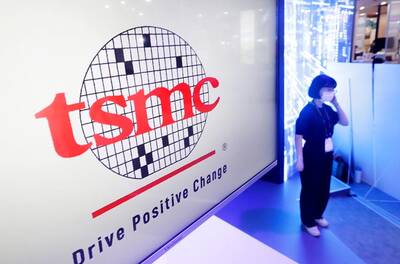
BIG YEAR: The company said it would also release its A12 chip the same year to keep a ‘reliable stream of new silicon technologies’ flowing to its customers Taiwan Semiconductor Manufacturing Co (TSMC, 台積電) yesterday said its newest A13 chip is to enter volume production in 2029 as the chipmaker seeks to hold onto its tech leadership and demand for next-generation chips used in artificial intelligence (AI), high-performance-computing (HPC) and mobile applications. TSMC, the world’s biggest contract chipmaker, also unveiled its A12 chip at its annual technology symposium in Santa Clara, California. The A12 chip, which features TSMC’s super-power-rail technology to provide backside power delivery for AI and HPC applications, is also to enter volume production in 2029, a year after the scheduled release of the A14 chip. The technology moves


 RSS
RSS