


The nation will remain committed to cross-strait peace despite increasing military threats from China, which is expected to project its military power beyond the first island chain on a regular basis, Minister of National Defense Feng Shih-kuan (馮世寬) said yesterday.
As China is building new aircraft carriers, the East China and Yellow seas will no longer be enough for the Chinese People’s Liberation Army (PLA) to conduct training on open seas, and long-distance military operations beyond the first island chain, and even near the second island chain, would become common, Feng told a forum on national security strategy hosted by Tamkang University in New Taipei City.
China’s military power has grown exponentially, with its aircraft carrier group and bomber fleets capable of conducting training around and beyond Taiwan’s airspace, he said.
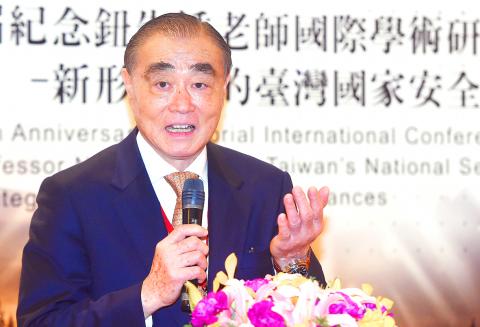
Photo: Liao Chen-huei, Taipei
“Each of [the PLA’s] distant sea training exercises and operations circling Taiwan has mounted pressure on us, and we have been forced to raise the level of combat readiness,” Feng said.
He called on the public to be prepared for a Chinese military presence around Taiwan’s airspace, as the PLA has broken through the first island chain during exercises and will continue to do so on a regular basis.
The decades-long peace across the Taiwan Strait has been maintained with extreme caution on Taiwan’s part, he said.
The nation’s armed forces are under strict orders not to launch any pre-emptive attack under any circumstance, even if that means soldiers on the front line have to be sacrificed, Feng said.
“We are committed to the political promise of maintaining the ‘status quo’ across the Taiwan Strait. We do not provoke China and do everything we can to prevent conflict,” Feng said.
Taiwan would not develop nuclear weapons to deter China, he said.
“We are not North Korea. It is not that we do not have the ability [to develop nuclear weapons], but we will never follow in the footsteps of North Korea and create a nuclear crisis as a bargaining chip,” Feng said.
Maintaining peace across the Strait has been the government’s top priority, the success of which is contingent on a flexible use of military, economic, political and diplomatic means, and a deepened democracy, he added.
The nation has to improve its asymmetric and electronic warfare capabilities with locally developed weapons, Feng said, adding that the aerospace, shipbuilding and information sectors will be the core of the government’s focus when building up the defense industry.
Taiwan has to establish good rapport with first island chain nations to survive in the increasingly precarious international environment, he said.
The nation has contributed to the peaceful development of the first island chain and Southeast Asia, but the contribution has gone unrecognized, Feng added.
He urged Beijing to drop its belligerent attitude and help attain regional peace and development, but added that China would not stop its saber-rattling against Taiwan until a new framework is established across the Strait.
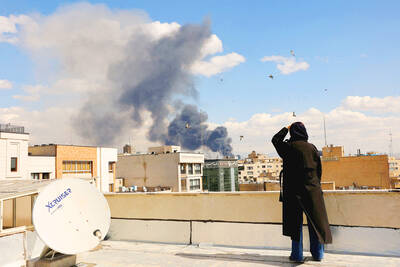
CHAOS: Iranians took to the streets playing celebratory music after reports of Khamenei’s death on Saturday, while mourners also gathered in Tehran yesterday Iranian Supreme Leader Ayatollah Ali Khamenei was killed in a major attack on Iran launched by Israel and the US, throwing the future of the Islamic republic into doubt and raising the risk of regional instability. Iranian state television and the state-run IRNA news agency announced the 86-year-old’s death early yesterday. US President Donald Trump said it gave Iranians their “greatest chance” to “take back” their country. The announcements came after a joint US and Israeli aerial bombardment that targeted Iranian military and governmental sites. Trump said the “heavy and pinpoint bombing” would continue through the week or as long

An Emirates flight from Dubai arrived at Taiwan Taoyuan International Airport yesterday afternoon, the first service of the airline since the US and Israel launched strikes against Iran on Saturday. Flight EK366 took off from the United Arab Emirates (UAE) at 3:51am yesterday and landed at 4:02pm before taxiing to the airport’s D6 gate at Terminal 2 at 4:08pm, data from the airport and FlightAware, a global flight tracking site, showed. Of the 501 passengers on the flight, 275 were Taiwanese, including 96 group tour travelers, the data showed. Tourism Administration Deputy Director-General Huang He-ting (黃荷婷) greeted Taiwanese passengers at the airport and
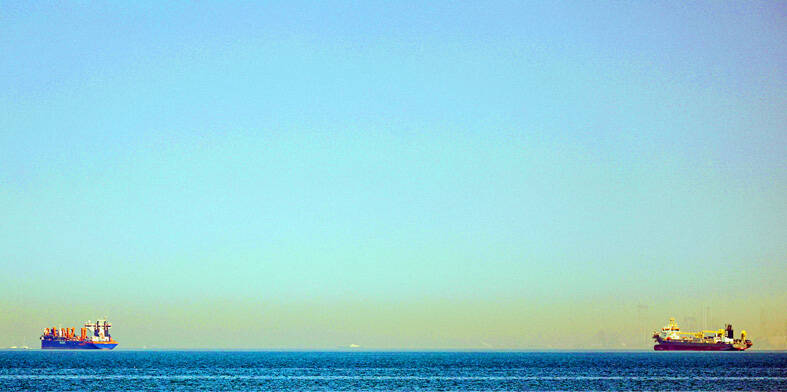
State-run CPC Corp, Taiwan (CPC, 台灣中油) yesterday said that it had confirmed on Saturday night with its liquefied natural gas (LNG) and crude oil suppliers that shipments are proceeding as scheduled and that domestic supplies remain unaffected. The CPC yesterday announced the gasoline and diesel prices will rise by NT$0.2 and NT$0.4 per liter, respectively, starting Monday, citing Middle East tensions and blizzards in the eastern United States. CPC also iterated it has been reducing the proportion of crude oil imports from the Middle East and diversifying its supply sources in the past few years in response to geopolitical risks, expanding
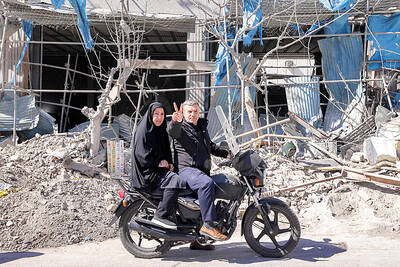
STRAIT OF HORMUZ: In the case of a prolonged blockade by Iran, Taiwan would look to sources of LNG outside the Middle East, including Australia and the US Taiwan would not have to ration power due to a shortage of natural gas, Minister of Economic Affairs Kung Ming-hsin (龔明鑫) said yesterday, after reports that the Strait of Hormuz was closed amid the conflict in the Middle East. The government has secured liquefied natural gas (LNG) supplies for this month and contingency measures are in place if the conflict extends into next month, Kung told lawmakers. Saying that 25 percent of Taiwan’s natural gas supplies are from Qatar, Chinese Nationalist Party (KMT) caucus secretary-general Lin Pei-hsiang (林沛祥) asked about the situation in light of the conflict. There would be “no problems” with


 RSS
RSS